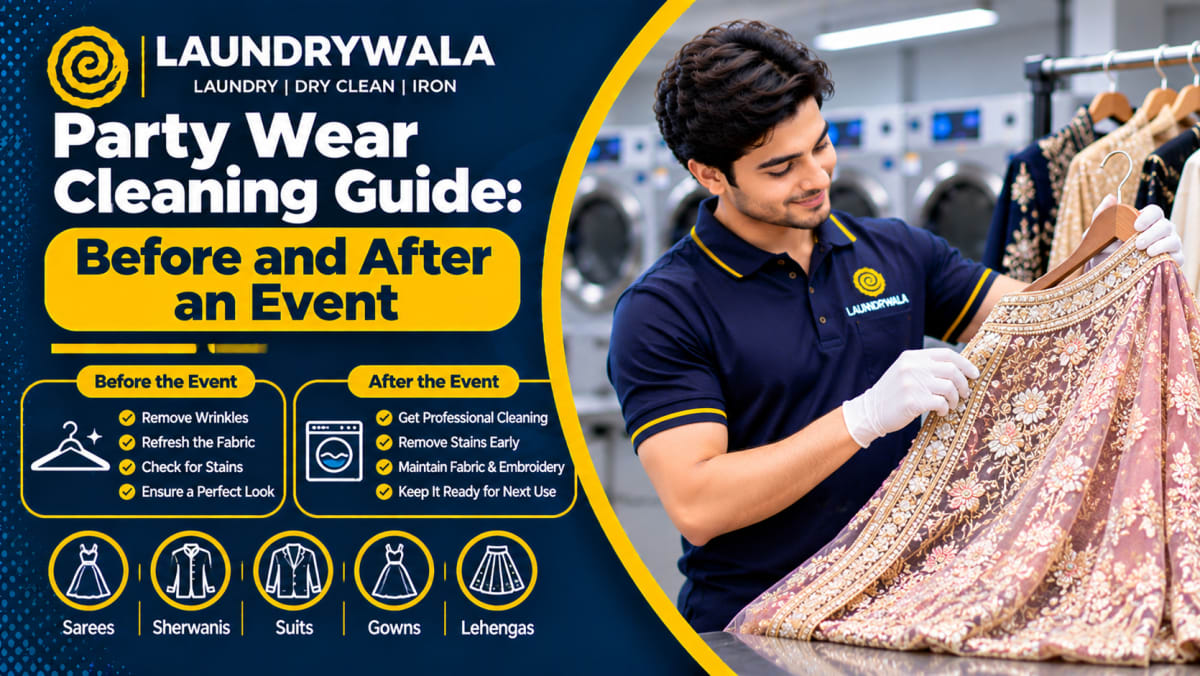

Chikankari suits are admired for their delicate threadwork, floral patterns, jaali designs and handcrafted appearance. However, the same embroidery that makes a Chikankari outfit beautiful can also make it difficult to clean, press and store safely.
A Chikankari suit may be made from cotton, mulmul, georgette, chiffon, rayon, silk, organza, linen or a blended fabric. Some garments also include mukaish work, sequins, beads, pearls, mirrors or metallic decoration. Therefore, the correct cleaning method depends on the complete garment—not just the embroidery or base fabric.
A professional Chikankari suit dry cleaning service can inspect the fabric, embroidery, dye, lining, stains and decorative details before recommending a suitable process.
Quick answer: Check the care label before cleaning a Chikankari suit. Simple cotton Chikankari may sometimes be washable, but silk, georgette, rayon, heavily embroidered, lined or embellished suits may require professional care. Avoid scrubbing, bleach, hot water, hard brushing and direct ironing over the embroidery.
What Is Chikankari Embroidery?
Chikankari is a traditional embroidery craft closely associated with Lucknow, Uttar Pradesh. The embroidery is created using delicate stitches that form floral, leaf, creeper, paisley and architectural patterns.
The Government of India’s official Lucknow Chikan Craft profile explains that traditional Chikankari involves stages such as block printing, embroidery and washing. It also identifies stitches such as bakhia, murri and phanda and notes that modern Chikankari may include sequins, beads, mukaish, mirrors and other decorative elements.
Traditional Chikankari was commonly created using white cotton thread on fine white fabric. Today, the craft appears on many colours and materials, including:
- Cotton
- Mulmul
- Voile
- Chiffon
- Georgette
- Linen
- Silk
- Organza
- Rayon
- Polyester blends
- Khadi
- Terry cotton
The Government of India’s GI craft information for Lucknow Chikan recognises Lucknow’s Chikankari as an important embroidered textile craft used for kurtis, suits, sarees, dupattas and other products.
Because Chikankari is now produced on many fabrics and with different decorations, there is no single cleaning method suitable for every garment.
Why Does a Chikankari Suit Need Special Cleaning?
Chikankari embroidery often contains raised stitches, open jaali work, shadow stitching and delicate thread patterns. These details can catch on jewellery, brushes, zips, washing-machine drums or other garments.
Incorrect cleaning may cause:
- Embroidery threads to loosen
- Jaali sections to tear or stretch
- White thread to become dull
- Coloured thread to bleed
- The base fabric to shrink
- Georgette or chiffon to lose shape
- Rayon to weaken when wet
- Silk to develop water rings
- Mukaish work to become dull
- Sequins or beads to detach
- Lining and outer fabric to shrink differently
- Stains to spread into the embroidery
- Ironing to flatten raised stitches
- Direct heat to damage synthetic fabric
A cotton Chikankari kurta without embellishments may tolerate a label-approved wash. A silk Chikankari suit with lining and mukaish work may require a very different process.
This is why a professional cleaner should assess the entire outfit before deciding whether it needs washing, dry cleaning, professional wet cleaning or another controlled treatment.
Should Chikankari Suits Be Dry Cleaned?
Some Chikankari suits can be professionally dry cleaned, but not every Chikankari garment automatically requires or permits dry cleaning.
The decision should be based on:
- Manufacturer’s care instructions
- Base fabric
- Embroidery thread
- Colourfastness
- Lining
- Decorative work
- Garment structure
- Stain type
- Existing damage
- Previous cleaning treatment
Professional dry cleaning may be appropriate when:
- The care label recommends dry cleaning
- The suit is made from silk, organza or delicate georgette
- The garment contains heavy embroidery
- Mukaish, sequins, beads or pearls are present
- The outfit has a structured lining
- Several contrasting colours are combined
- The garment is expensive or designer-made
- The suit has oil, makeup or difficult stains
- The fabric or thread may shrink in water
- The material cannot be identified confidently
However, if the care label displays a “Do Not Dry Clean” instruction, the garment should not be placed into a standard dry-cleaning process. A professional may recommend another label-compatible treatment.
Laundrywala’s guide explaining which clothes should be professionally dry cleaned provides additional information about delicate, embroidered and structured garments.
Check the Care Label Before Cleaning
The care label is the most important starting point when choosing a cleaning method.
It may include instructions such as:
- Hand wash
- Machine wash on a delicate cycle
- Wash separately
- Do not bleach
- Dry flat
- Dry in shade
- Do not tumble dry
- Iron at low temperature
- Iron on the reverse side
- Dry clean
- Dry clean using a mild process
- Do not dry clean
The GINETEX care-labelling guidance explains that care symbols consider the garment’s colour, finish, buttons, zips and decorative applications—not only its principal fibre.
The FTC’s official garment-care rule also explains that care instructions should address cleaning, drying, ironing and warnings needed to prevent damage.
For a simpler explanation of common symbols, read Laundrywala’s guide on how to understand fabric-care labels.
If the label is missing, do not select a cleaning process based only on the garment’s appearance. Request an individual fabric and embroidery assessment.
Cleaning Requirements for Different Chikankari Fabrics
The embroidery may look similar across garments, but the base material can change the cleaning requirements significantly.
| Chikankari fabric | Main cleaning concerns | Safer approach |
|---|---|---|
| Cotton | Shrinkage, colour bleeding and thread distortion | Follow the label; use gentle washing only when permitted |
| Mulmul | Tearing, stretching and surface abrasion | Minimise friction and handle carefully |
| Linen | Creasing, shrinkage and embroidery stress | Use label-approved cleaning and controlled finishing |
| Georgette | Snagging, shape loss and heat sensitivity | Consider professional care for decorated garments |
| Chiffon | Pulling, tearing and distortion | Avoid scrubbing, twisting and heavy pressure |
| Rayon or viscose | Weakness when wet, shrinkage and dye movement | Follow the label and avoid uncontrolled soaking |
| Silk | Water marks, colour changes and texture damage | Seek professional assessment |
| Organza | Creasing, pulled threads and heat damage | Use low-friction handling and controlled finishing |
| Polyester blend | Heat sensitivity and decoration damage | Use label-approved temperature and process |
| Velvet details | Flattened pile and pressure marks | Avoid direct ironing and hard pressing |
| Mukaish work | Tarnishing, dullness and thread damage | Request inspection before cleaning |
| Sequins or beads | Detachment, melting and colour changes | Avoid direct heat and strong mechanical action |
The most sensitive component should guide the treatment. A washable cotton base does not automatically make glued sequins, metallic decoration or a delicate lining washable.
Can Cotton Chikankari Suits Be Washed at Home?
Some ordinary cotton Chikankari suits can be washed at home when the manufacturer’s care label permits it.
Before washing:
- Inspect the embroidery for loose threads.
- Check the garment for colour transfer.
- Close hooks and zips where appropriate.
- Turn the garment inside out.
- Separate it from heavy or rough clothes.
- Use a suitable mild detergent.
- Select the temperature stated on the label.
- Avoid bleach unless the label specifically permits it.
- Do not scrub the embroidered surface.
- Avoid twisting or hard wringing.
Hand washing is not automatically safer than professional cleaning. Soaking, rubbing and wringing by hand can still stretch the embroidery or distort the garment.
Machine washing should only be used when the care label specifically permits it. Place the garment in a suitable laundry bag and select the recommended cycle where appropriate.
Do not wash a garment at home merely because another Chikankari suit was washable. Fabric, dye, thread and decoration can differ between two visually similar outfits.
Which Chikankari Suits Should Not Be Washed at Home?
Home washing carries greater risk when the suit contains:
- Silk or organza
- Fine chiffon or georgette
- Rayon with unstable colour
- Heavy hand embroidery
- Mukaish or badla work
- Sequins, beads or pearls
- Mirror work
- Zari or metallic thread
- Structured lining
- Several contrasting colours
- Adhesive-backed decoration
- Delicate lace
- Hand-painted sections
- Loose stitches or torn jaali
- Old or weakened fabric
Laundrywala’s guide on professional care for delicate clothes explains why inspection, controlled cleaning, appropriate drying and fabric-safe finishing are important for sensitive garments.
For valuable or premium outfits, also review the precautions in How to Clean Expensive Designer Clothes Safely.
How Are Stains Treated on Chikankari Suits?
Stain treatment can be difficult because the mark may affect both the base fabric and embroidered thread.
Common stains include:
- Makeup
- Lipstick
- Foundation
- Perfume
- Perspiration
- Deodorant
- Tea and coffee
- Food and cooking oil
- Gravy
- Ink
- Mud
- Mehendi
- Storage marks
- Colour transfer
The correct treatment depends on the stain, fabric, dye, age and previous cleaning attempts.
Food and Oil Stains
Ghee, butter, gravy and cooking oil can penetrate both the fabric and embroidery.
Remove solid food gently with a clean spoon. Blot excess oil using a white absorbent cloth without rubbing. Do not add hot water or apply a hard brush.
Makeup and Lipstick
Cosmetics may contain oil, wax and pigment. Avoid using sanitiser, acetone, hairspray or nail-polish remover.
These products may remove the garment’s colour or leave a ring around the treated area. Laundrywala’s guide on removing makeup stains safely contains additional fabric-care precautions.
Tea and Coffee
Blot fresh liquid without spreading it. Do not apply heat, as heat may make some stains more difficult to remove.
Milk, sugar and cream can create a combination stain that requires more than one type of treatment.
Sweat and Deodorant
Perspiration and deodorant can affect the underarms, neckline and upper back. Even when no strong mark is visible, residue may gradually create yellowing, odour or stiffness.
Tell the cleaner where perspiration is likely to be present.
Ink
Do not rub ink into the embroidery. Avoid alcohol or sanitiser unless the garment manufacturer has specifically approved the treatment.
Protect the stained area from touching another section of the suit and arrange professional inspection promptly.
The American Cleaning Institute’s stain-removal guide recommends treating stains early, following fabric-care instructions and avoiding dryer heat while a stain remains. Delicate Chikankari still requires fabric-specific assessment rather than automatic home laundering.
Chikankari Stain-Removal Mistakes to Avoid
Do not apply random home remedies to an expensive Chikankari suit.
Avoid:
- Chlorine bleach
- Undiluted vinegar
- Lemon juice
- Baking-soda paste
- Toothpaste
- Dishwashing liquid
- Sanitiser
- Acetone
- Nail-polish remover
- Hard toothbrushes
- Metal scrapers
- Boiling water
- Direct dryer heat
- Aggressive scrubbing
Bleach can weaken fibres, change dye and make white embroidery appear different from the base fabric. Acids may affect colour or metallic work. Hard brushing can lift embroidery threads and damage jaali sections.
Laundrywala’s guide on whether dry cleaning removes stains explains why complete stain removal depends on the stain, fabric, age and treatments previously attempted.
How Does a Professional Chikankari Suit Dry Cleaning Service Work?
The exact method depends on the individual outfit. A professional process may include the following stages.
1. Garment Registration
Every part of the outfit is counted and tagged. This may include:
- Kurta or kameez
- Bottom or trousers
- Dupatta
- Inner lining
- Jacket
- Belt
- Detachable tassels
- Decorative accessories
Matching pieces should generally be submitted together so they receive consistent assessment and finishing.
2. Care-Label Review
The cleaner checks the manufacturer’s washing, drying, ironing and professional-cleaning instructions.
3. Fabric Identification
The base material is assessed to determine whether it is cotton, mulmul, linen, rayon, georgette, chiffon, silk, organza or a blend.
4. Embroidery Inspection
The Chikankari work is examined for:
- Loose threads
- Broken stitches
- Pulled embroidery
- Torn jaali
- Missing embellishments
- Weak seams
- Previous repairs
- Surface abrasion
5. Colour Assessment
Contrasting fabrics and embroidery threads may require colourfastness testing. The cleaner should also check whether the dupatta or lining may transfer colour.
6. Stain Identification
The cleaner records the stain’s likely source, age and location. Oil, makeup, tannin, perspiration and ink do not respond to the same treatment.
7. Process Selection
Depending on the care label and garment condition, the outfit may receive:
- Professional dry cleaning
- Mild professional dry cleaning
- Professional wet cleaning
- Gentle laundering
- Localised stain treatment
- Surface cleaning
- Specialist hand treatment
A professional service should not promise that every Chikankari garment will receive the same process.
8. Controlled Cleaning
Mechanical action, moisture, temperature and cleaning time may need to be limited to protect the embroidery and base fabric.
9. Careful Drying
The suit should be supported properly during drying. Heavy embroidery can stretch lightweight material when the garment is wet or handled carelessly.
10. Finishing and Quality Inspection
The garment is checked for stain results, colour, shape, odour, embroidery condition and finishing before packaging.
Laundrywala’s professional dry-cleaning service provides inspection-based care for eligible embroidered, delicate and premium clothing.
Can Mukaish Chikankari Be Dry Cleaned?
Mukaish, also known in some contexts as badla work, adds metallic decoration to Chikankari garments. It can create small dots or patterns that reflect light.
Mukaish work requires additional caution because:
- Metallic elements may become dull
- Moisture may affect the finish
- Strong chemicals may cause discolouration
- Hard pressing may flatten the decoration
- Rough movement may pull the work
- Perfume may leave marks around metallic details
The cleaner should examine how the decoration is attached and whether the care label permits dry cleaning.
Do not assume that a treatment safe for plain Chikankari is automatically safe for Chikankari with mukaish. Request a garment-specific assessment.
What About Chikankari With Sequins, Beads or Mirror Work?
Modern Chikankari outfits may combine traditional threadwork with sequins, beads, stones, pearls or small mirrors.
Each added element creates another cleaning consideration:
- Sequins may lose colour or shape.
- Beads may crack or become loose.
- Stones may be attached using solvent-sensitive adhesive.
- Pearls may have delicate coatings.
- Mirrors may crack or snag the fabric.
- Metallic thread may tarnish.
- Glue may weaken under heat or solvent.
Laundrywala’s guide on whether mirror-work clothes can be dry cleaned safely explains why the attachment method, fabric and decoration must all be checked.
Heavily decorated Chikankari should not be placed in an ordinary laundry load.
Can You Iron a Chikankari Suit?
Chikankari suits can often be ironed when the care label permits it, but the heat and pressure must suit the base fabric and embroidery.
Direct heavy pressure may flatten:
- Murri work
- Phanda stitches
- Raised floral embroidery
- Jaali effects
- Beadwork
- Sequins
- Mukaish decoration
Safer precautions may include:
- Checking the ironing symbol
- Turning the garment inside out
- Using a clean pressing cloth
- Selecting the correct temperature
- Avoiding direct pressure on embroidery
- Keeping the iron away from sequins and beads
- Using suitable padding under raised work
- Testing an inconspicuous area first
GINETEX’s official care-symbol guidance states that ironing temperature should be selected according to the care label, with additional caution for embossed effects and decorative applications.
If you are unsure about the correct temperature, use a professional finishing service instead of experimenting with a valuable garment.
Can Chikankari Suits Be Steam Ironed?
Steam may help remove creases, but it is not suitable for every Chikankari suit.
Excessive steam may:
- Create water marks on silk
- Affect rayon or viscose
- Disturb unstable dyes
- Weaken adhesive-backed decorations
- Tarnish metallic work
- Stretch lightweight fabric
- Flatten raised stitches
Follow the care label. When professional steam finishing is allowed, pressure and moisture should be controlled according to the most sensitive component.
Laundrywala’s professional ironing service can assist with suitable garments in serviceable locations.
How Should a Chikankari Suit Be Prepared for Pickup?
Before sending the outfit for cleaning:
- Empty every pocket.
- Count every piece in the set.
- Photograph the front, back and care label.
- Point out visible stains.
- Mention what caused each stain.
- Disclose any home remedy already applied.
- Identify loose threads or torn jaali.
- Remove detachable jewellery when appropriate.
- Place detached beads or sequins in a labelled pouch.
- Avoid ironing over stained areas.
- Keep the matching dupatta and bottom together.
- Inform the cleaner if the outfit is needed for an upcoming event.
For Chikankari used as festive or occasion wear, Laundrywala’s festive-wear dry-cleaning guide provides additional advice about sending complete outfits and identifying stains before pickup.
How Often Should a Chikankari Suit Be Cleaned?
A Chikankari suit does not automatically require full cleaning after every short use.
The decision depends on:
- Duration of wear
- Perspiration
- Weather and humidity
- Visible stains
- Odour
- Skin contact
- Fabric type
- Colour
- Decoration
- Future storage period
A lightly worn cotton outfit may only require label-approved cleaning when soiled. A silk or heavily embellished Chikankari suit may need professional assessment after an event, particularly when it contains perspiration, makeup, perfume or food stains.
Avoid unnecessary repeated cleaning, but never store a stained or damp garment for a long period.
How Should Chikankari Suits Be Stored?
Clean the garment before long-term storage. Invisible perspiration, body oil, food or perfume residue can become more noticeable over time.
Follow these storage precautions:
- Ensure the outfit is completely dry.
- Use a clean, breathable cotton or muslin cover.
- Avoid sealed plastic for long-term storage.
- Keep the garment away from damp walls.
- Protect it from direct sunlight.
- Use acid-free tissue between decorated sections.
- Do not create tight folds across embroidery.
- Avoid placing heavy garments over fine jaali work.
- Store metallic accessories separately.
- Do not spray perfume inside the storage cover.
- Refold the garment periodically.
- Inspect it for moisture, odour and insect activity.
Lightweight kurtas suitable for hanging should be placed on broad, padded hangers. Heavy Chikankari outfits may be safer when stored flat because their weight can stretch shoulder seams.
Laundrywala’s guide on storing clothes without smell, moisture or damage provides further long-term storage advice.
When Should You Choose Professional Cleaning?
Professional assessment is advisable when:
- The label says “Dry Clean Only”
- The garment is silk, organza, chiffon or delicate georgette
- The suit contains mukaish, sequins, beads or mirrors
- The embroidery is loose or damaged
- The outfit contains several contrasting colours
- Oil, makeup or ink is present
- The garment has a structured lining
- Home treatment has created a visible patch
- The fabric cannot be identified
- The suit is expensive, designer-made or sentimental
- The outfit must be prepared for an important event
A responsible cleaner may decline or modify treatment when the fabric is extremely weak, the dye is unstable or the decorative work is already severely damaged.
Why Choose Laundrywala for Chikankari Suit Care?
Laundrywala provides professional laundry, dry cleaning and ironing services with doorstep pickup and delivery in serviceable locations.
A Chikankari suit can be inspected for:
- Base fabric
- Care-label instructions
- Embroidery condition
- Dye stability
- Stain type
- Lining
- Mukaish work
- Sequins, beads or mirrors
- Existing damage
- Suitable cleaning process
- Finishing requirements
The final process depends on the individual garment. No cleaner should select a treatment solely because the outfit is called Chikankari.
Explore Laundrywala’s complete garment-care services or use the Laundrywala store locator to find the nearest serviceable outlet.
For inspection and pickup information, contact Laundrywala or call 1800 889 3225.
FAQs about best Dry Cleaning Tips
Get answers about premium dry cleaning processes, delicate garment handling, and how we care for your fabrics.
Still have questions?
Can't find what you're looking for? Our fabric care specialists and franchise advisors are here to help.