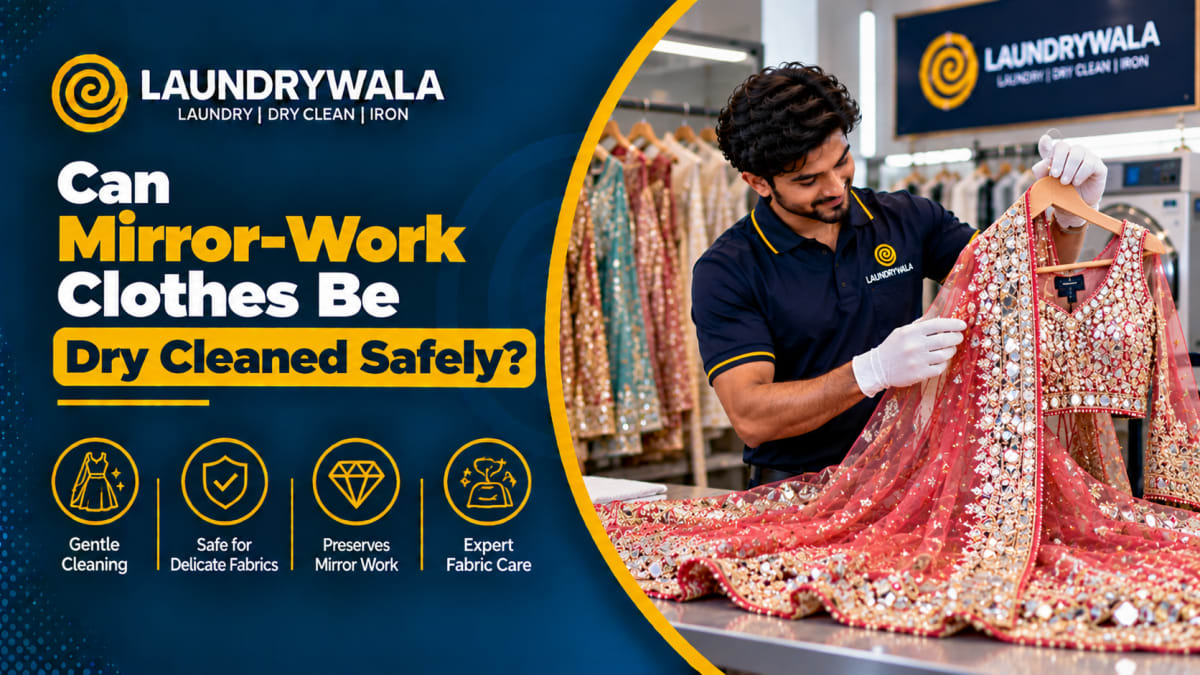

Festive outfits use fabrics and decorative details that can be difficult to clean at home. Silk sarees, layered gowns, structured suits and designer dresses may combine delicate fibres, zari, sequins, beads, lace, linings and several colours.
A professional festive wear dry cleaning service assesses these elements before choosing a process. Proper care should protect colour, shape, drape and decorative work as far as the garment’s condition allows.
Quick answer: Check the care label, avoid rubbing stains and do not machine-wash an expensive festive outfit unless its manufacturer specifically permits it. Photograph the garment, identify stains and send every matching piece together. A professional cleaner should inspect the fabric, dye, embellishments and existing damage before confirming the treatment, price and turnaround time.
Why Festive Wear Needs Specialised Cleaning
Everyday cotton clothes are often designed for regular washing. Festive wear is different because appearance and construction may be more important than washability.
A gown can combine net, lace, satin lining, boning, padding, beadwork and contrasting dyes. A saree may combine silk with zari, while a suit depends on interfacing, shoulder structure and lining.
Incorrect cleaning may cause:
- Colour bleeding or fading
- Silk losing its natural feel
- Shrinkage or distortion
- Zari becoming dull or discoloured
- Sequins, beads or stones becoming loose
- Water rings and uneven patches
- Fabric snagging or surface abrasion
- Lining shrinkage
- Adhesive weakening
- Loss of suit or sherwani structure
- Permanent setting of stains through heat
Laundrywala’s professional dry-cleaning service is designed for eligible delicate, formal and premium garments that require inspection and garment-specific care.
What Is Professional Dry Cleaning?
Dry cleaning does not mean that no liquid is used. It is a professional cleaning process that generally uses a suitable liquid solvent instead of treating the garment like an ordinary water-wash load.
The process may include inspection, stain treatment, controlled cleaning, drying, steam finishing and quality checking. The cleaner selects a suitable professional method according to the label and garment construction.
The GINETEX explanation of textile-care symbols states that care symbols communicate the maximum treatment permitted without irreversible damage. The circle symbol relates to professional textile care, while a crossed circle indicates that dry cleaning is not permitted.
Laundrywala’s detailed guide explaining how dry cleaning works describes the main stages from inspection and stain treatment to cleaning, finishing and packaging.
Which Festive Garments Can Be Professionally Cleaned?
Many occasion-wear garments can be professionally cleaned after inspection, including:
- Silk, Banarasi, Kanjeevaram and designer sarees
- Bridal, evening and festive gowns
- Saree blouses and petticoats
- Dupattas, stoles and shawls
- Men’s and women’s suits
- Sherwanis and bandhgalas
- Nehru jackets and waistcoats
- Anarkalis and designer dresses
- Embroidered kurtas and kurta sets
- Gowns and cocktail dresses
- Velvet occasion wear
- Children’s festive clothing
Each item requires assessment of its fibre, dye, label, decorations and condition.
| Garment | Common materials or details | Main cleaning concerns |
|---|---|---|
| Silk saree | Silk, zari, woven border | Dye movement, zari and water marks |
| Festive gown | Net, lace, satin, beads, sequins | Bodice structure, decoration and multiple layers |
| Formal suit | Wool blend, lining, interfacing | Shape, lapels, padding and finishing |
| Sherwani | Brocade, velvet, buttons, lining | Structure, embroidery and metal details |
| Designer gown | Lace, net, beadwork, layered fabric | Snagging, adhesive and uneven drying |
| Embroidered kurta | Silk blend, threadwork, decorative buttons | Colourfastness and surface friction |
Saree Dry Cleaning for Silk, Zari and Designer Fabrics
Sarees can look simple when laid flat, but their fibres, weave, border and decoration may react differently to water, detergent, solvents and heat.
Unsuitable washing may affect a silk saree’s colour, lustre and texture. Zari sarees need attention to metallic threads and borders, while organza, chiffon and georgette can crease, snag or distort.
Before cleaning a saree, inspect:
- Pallu and lower border
- Blouse and fall area
- Underarm and waist sections
- Food, oil and makeup stains
- Zari condition
- Loose threads or pulled weave
- Old fold lines
- Colour transfer
- Tears or weak sections
Do not apply bleach, sanitiser, acetone or a strong stain remover to a valuable saree. Rubbing a local spot can produce fading or a permanent ring.
Laundrywala’s dedicated saree dry-cleaning service guide provides more information about silk, Banarasi, bridal and designer saree care.
Gown Dry Cleaning for Lace, Beadwork and Layered Fabrics
Festive and evening gowns can combine a structured bodice, lace sleeves, satin lining, net overlay, cups, boning, pleats, sequins and a long train. These components may react differently to cleaning and heat.
A professional cleaner should examine:
- Lace, net and tulle panels
- Sequins, beads, pearls and stones
- Adhesive-backed decoration
- Structured bodice, cups and boning
- Satin, velvet or metallic sections
- Hooks, zips and detachable straps
- Inner lining and layered skirts
- Makeup around the neckline
- Food and drink stains on the front
- Dust and soil along the hem or train
Machine washing may twist the lining, distort the bodice, snag lace or loosen beadwork. Direct ironing can flatten pleats, melt synthetic net or damage decorative surfaces. A heavy gown should also be supported properly during handling so its weight does not stretch the shoulders.
Laundrywala’s guide to clothes that should be professionally dry cleaned covers formal gowns, embroidered dresses and embellished garments that require care-label-based assessment.
Suit, Blazer and Sherwani Dry Cleaning
Formal suits and sherwanis depend on lapels, padding, lining and interfacing for their shape. Machine washing may shrink outer and internal layers differently, causing puckering or structural distortion.
Before cleaning, check:
- Collar and cuff soil
- Perspiration around the underarms
- Food or beverage marks
- Loose buttons and hooks
- Pocket contents
- Trouser hems
- Shoulder shape
- Lining condition
- Decorative buttons or brooches
- Velvet, brocade or embroidered panels
Send all parts of a matching suit or sherwani set together. Cleaning the jacket but not the trousers can leave differences in freshness, colour appearance or finishing.
Read the Care Label Before Cleaning
The care label indicates whether an item can be washed, professionally cleaned, dried or ironed.
The Bureau of Indian Standards care-labelling standard covers symbols for washing, bleaching, drying, ironing and professional textile care. The US Federal Trade Commission’s care-label guidance also explains the role of washing and dry-cleaning instructions in appropriate garment care.
Common instructions include:
- Dry clean
- Professional dry clean, mild process
- Professional wet clean
- Hand wash
- Do not wash
- Do not dry clean
- Do not tumble dry
- Iron at low temperature
- Do not iron
“Dry Clean Only” should not be interpreted as permission for aggressive stain treatment. Similarly, a “Do Not Dry Clean” label must not be ignored simply because the garment is expensive. A professional should recommend a label-compatible alternative.
If the label is missing, share available brand information and request an individual assessment. Unknown construction increases treatment risk.
Common Festive-Wear Stains
Food, Ghee and Cooking Oil
Oil can penetrate silk, satin and blended fabrics. Blot excess gently with a clean, absorbent white cloth. Avoid rubbing, adding water or applying heat.
Makeup and Lipstick
Foundation, concealer and lipstick may contain pigment, wax and oil. Sanitiser and nail-polish remover can remove dye or damage surface finishes along with the stain.
Perspiration and Deodorant
Perspiration may leave rings, odour or gradual discolouration around the neckline and underarms. Tell the cleaner where the garment was exposed, even when no strong mark is visible.
Tea, Coffee and Sugary Drinks
These can produce combination stains involving tannin, sugar, milk and colour. Blot the spill without spreading it and arrange treatment promptly.
Mehendi, Kumkum and Rangoli Colour
Do not brush coloured powder deeper into the weave or use bleach on a coloured garment. Lift loose particles carefully and identify the substance for the cleaner.
Perfume and Attar
Perfume oils may leave rings on silk and other sensitive fabrics. Spray fragrance before dressing rather than directly onto festive wear.
The American Cleaning Institute’s official stain-removal guide recommends treating stains promptly, checking care instructions and avoiding heat before a washable stain is removed. Delicate festive garments still require fabric-specific professional treatment.
Laundrywala’s guide on whether dry cleaning removes stains explains why results depend on the stain, fabric, colour, age and previous treatment. Complete stain removal cannot be guaranteed in every case.
Festive-Wear Dry-Cleaning Process
1. Garment Registration
Every garment and matching accessory is counted and tagged. Existing tears, missing stones, loose buttons and damaged zips should be recorded.
2. Fabric and Colour Assessment
The cleaner reviews the care label, construction, dyes, embroidery, lining and decorative parts. Colourfastness or decoration testing may be necessary.
3. Stain Identification
The stain’s source, age and previous treatment are considered before selecting a pre-treatment. Oil, protein, tannin and pigment stains do not respond to one universal product.
4. Decoration Protection
Delicate buttons, hooks, tassels or decorative sections may require protection or separate handling. The decision depends on how they are attached.
5. Controlled Cleaning
The garment receives an appropriate professional process based on its care instructions and condition. Heavily embellished items may require lower mechanical action or specialised handling.
6. Finishing
Steam and controlled pressing help restore shape and drape. Temperature and pressure must suit the fabric; embroidery, velvet pile and sequins should not be flattened.
7. Quality Inspection
The cleaner checks stain results, smell, colour, shape, embellishments, closures and matching pieces before packaging.
How to Prepare Festive Clothes for Pickup
Correct preparation helps the cleaner assess an order efficiently.
- Empty every pocket.
- Count all pieces in each outfit.
- Photograph the front, back and care label.
- Point out every known stain.
- Mention when and how the stain occurred.
- Declare any home remedy already applied.
- Identify loose stones, threads or buttons.
- Ask how detachable accessories should be handled.
- Confirm the price and expected turnaround.
- Keep the order receipt and garment count.
Do not place a wet or heavily soiled outfit in a sealed plastic bag for a long period. If an item is damp, ask the service provider how it should be prepared before pickup.
How Long Does Festive-Wear Dry Cleaning Take?
Turnaround varies by garment and location. A lightly soiled suit may be easier to process than a layered gown with beadwork, a long train and several stains.
Time can be affected by:
- Number of garments
- Fabric and construction
- Embroidery and embellishments
- Stain type and age
- Testing requirements
- Drying and finishing needs
- Repairs requested separately
- Festival or wedding-season demand
- Pickup distance and outlet capacity
Do not wait until the morning of an event. Send valuable or heavily embroidered garments several days in advance and ask for a confirmed delivery window.
What Does Festive-Wear Dry Cleaning Cost?
There is no single price for every saree, gown or suit. The final rate may depend on fabric, garment size, number of layers, decoration, stains, finishing requirements and city.
Ask whether the quoted price includes:
- Every part of the outfit
- Stain treatment
- Steam finishing
- Protective packaging
- Pickup and delivery
- Express processing, if requested
Laundrywala’s current dry-cleaning cost guide for India explains why saree, dress, suit and blazer rates vary. Confirm the applicable local price before handing over your garment.
How to Choose a Festive-Wear Dry Cleaner
Choose a provider that examines the garment before making promises. A reliable cleaner should:
- Read and follow the care label
- Record existing damage
- Count every matching piece
- Ask about stain history
- Explain process limitations
- Avoid guaranteed removal of every stain
- Protect embroidery and decorations
- Use fabric-appropriate finishing
- Provide a receipt and delivery estimate
- Offer clear communication if additional time is required
Very low pricing or an unrealistic same-day promise should not be the only reason to choose a cleaner for an expensive outfit. Inspection, process control and transparent expectations are more important.
How to Store Festive Wear After Cleaning
Make sure the garment is completely dry before storage. Do not leave valuable festive clothing inside an ordinary dry-cleaning plastic cover for several months because airflow is limited and trapped moisture may become a problem.
The Canadian Conservation Institute’s basic textile-care guidance recommends clean, dry and ventilated storage, suitable support and avoiding pressure on fragile or heavily decorated costumes. The Smithsonian Institution’s textile-storage recommendations also advise clean, cool, dry and dark storage with protection from sharp folds and crushing.
For practical home storage:
- Use a breathable, clean garment cover.
- Keep clothes away from damp walls and direct sunlight.
- Store heavily beaded gowns flat when hanging could stretch the shoulders.
- Pad unavoidable folds with acid-free tissue.
- Avoid wire hangers.
- Use broad, padded hangers only for garments that can support their weight.
- Do not stack heavy objects over embroidery.
- Wrap metal chains or accessories separately.
- Inspect stored outfits periodically.
- Refold sarees occasionally to change crease positions.
Why Choose Laundrywala for Festive-Wear Cleaning?
Laundrywala provides professional dry cleaning and garment-care services for eligible sarees, gowns, suits, sherwanis, dresses and other occasion wear across serviceable locations.
Before confirming an order, share clear photographs, the care label, number of pieces, stain details and your required delivery date. The local team can assess availability, price and expected turnaround according to the garment and outlet capacity.
Use the Laundrywala store locator to find the nearest outlet. To request an assessment or schedule pickup, contact Laundrywala or call 1800 889 3225.
FAQs about best Dry Cleaning Tips
Get answers about premium dry cleaning processes, delicate garment handling, and how we care for your fabrics.
Still have questions?
Can't find what you're looking for? Our fabric care specialists and franchise advisors are here to help.