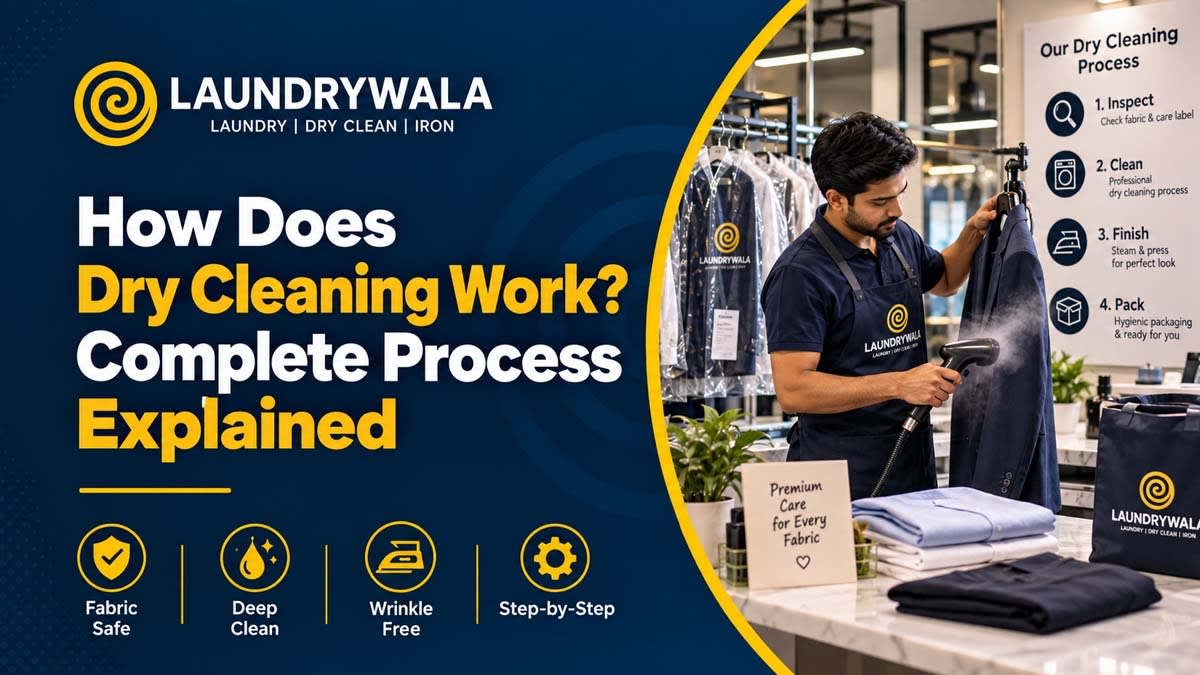
How Does Dry Cleaning Work? Complete Process Explained
Dry cleaning is commonly recommended for suits, blazers, silk sarees, woollen coats, designer dresses and other garments that may lose their colour, finish or structure during normal washing. However, many customers are unsure what actually happens after their clothes reach a professional cleaner.
If you have ever wondered how does dry cleaning work, the most important fact is that the process is not completely dry. Instead of washing garments mainly with water, professional dry cleaning uses a suitable liquid solvent inside specialised equipment.
The garment is inspected, stains are identified, cleaning instructions are checked and the item is processed using a method selected for its fabric and construction. After cleaning, it may be spot-treated again, pressed, inspected and packaged.
Quick answer: Dry cleaning generally involves garment inspection, stain pre-treatment, solvent-based machine cleaning, solvent extraction, controlled drying, professional finishing and a final quality check.
What Is Dry Cleaning?
Dry cleaning is a professional garment-care process that cleans clothes using a liquid solvent instead of relying primarily on water.
According to the US Environmental Protection Agency’s technical explanation of dry cleaning, its three basic machine stages are washing the fabric in solvent, extracting excess solvent and drying the garment in a controlled air stream.
The exact solvent, programme and finishing method can vary according to the cleaner, equipment, garment and care instructions. Professional cleaners may also use specialised spotting agents for particular stains.
Because the process uses limited water, it can be appropriate for garments that may shrink, distort, fade or lose their finish during ordinary washing.
Why Is It Called Dry Cleaning?
The term “dry cleaning” can be confusing because a liquid is still used.
It is called dry cleaning because water is not the main cleaning medium. Clothes are placed inside specialised equipment where a liquid cleaning solvent moves through the fabric and helps dissolve oils, grease and other soil.
The garments are then dried inside the machine so they normally come out ready for inspection and finishing rather than wet like clothes removed from a washing machine.
How Does Dry Cleaning Work Step by Step?
The practical answer to how does dry cleaning work involves several stages. A responsible cleaner should inspect the garment and select a suitable process instead of treating every item identically.
1. Garment Collection and Order Tagging
The process begins when the garment is accepted at the store or collected through a doorstep service.
Each item is counted and assigned an order reference or identification tag. This helps the cleaner track the garment throughout cleaning, finishing and delivery.
Customers should mention existing stains, loose buttons, damaged zips or previous home treatments while handing over their clothes.
2. Initial Garment Inspection
The cleaning team examines the garment for:
- Fabric type
- Care-label instructions
- Stains and discolouration
- Loose stitching
- Missing or weak buttons
- Damaged zips
- Decorative work
- Leather or synthetic trims
- Existing colour loss
- Previous fabric damage
This inspection is important because a garment may contain several materials. A jacket, for example, may combine an outer fabric, lining, padding, buttons, adhesive and decorative details.
3. Reading the Care Label
The cleaner checks whether the garment is labelled “Dry Clean,” “Dry Clean Only” or carries special warnings.
The Federal Trade Commission’s garment-care guidance explains that cleaning instructions should consider the complete garment, including its fabric, lining, trim and other non-detachable components.
A care label may also specify restrictions relating to solvent, moisture, drying temperature or steam finishing. Garments without readable labels require additional professional judgement and testing.
4. Stain Identification and Pre-Treatment
Visible stains are assessed before the main cleaning cycle.
Different stains behave differently. Oil and grease do not require the same treatment as tea, food, ink, blood, makeup or water-based marks. The fabric, dye and age of the stain also affect the possible result.
The cleaner may apply a suitable spotting treatment to loosen the stain before machine cleaning. Customers should explain what caused the stain because unidentified or previously treated marks can be more difficult to remove safely.
5. Solvent-Based Machine Cleaning
After inspection and sorting, suitable garments are placed inside a professional dry-cleaning machine.
A selected liquid solvent circulates through the garments and helps remove soil, body oils and grease. The cleaning programme may be adjusted according to fabric type, colour, garment construction and manufacturer instructions.
Not every cleaner uses the same solvent or equipment. Therefore, customers should not assume that every shop follows an identical process.
6. Solvent Extraction and Controlled Drying
After cleaning, the machine drains the used solvent and spins the garments to extract the remaining liquid.
Controlled warm air then dries the clothes. In suitable systems, solvent vapour is captured, condensed and recovered rather than being released freely.
The UK Government’s dry-cleaning process guidance explains how solvent may be filtered or distilled so dirt and residues are separated before the solvent is reused.
7. Post-Spotting and Detailed Inspection
After the machine cycle, the cleaner checks the garment again.
If a stain remains, additional fabric-appropriate spot treatment may be attempted. However, complete stain removal cannot always be guaranteed. Old stains, heat-set marks, colour loss and damage caused by household chemicals may be permanent.
Aggressive treatment is sometimes avoided when further processing could damage the fabric, dye or embellishments.
8. Pressing and Professional Finishing
Once the garment is clean, it is reshaped and finished.
Depending on the item, this may involve steam pressing, hand ironing, form finishing or controlled tension. Professional finishing helps restore collars, lapels, pleats, seams and the overall shape of structured garments.
This stage is especially important for suits, blazers, sarees, coats and formal dresses.
9. Final Quality Check and Packaging
Before delivery, the garment should be examined for cleanliness, finishing quality, shape and visible damage.
After approval, it is folded or placed on a hanger and packaged for protection during transport. Long-term storage in ordinary plastic packaging is not recommended because garments need suitable airflow.
Dry Cleaning vs Normal Laundry
| Factor | Dry Cleaning | Normal Laundry |
|---|---|---|
| Main cleaning medium | Specialised liquid solvent | Water and detergent |
| Commonly used for | Delicate, structured and premium garments | Everyday washable clothes |
| Oil and grease | Often effective | May require pre-treatment |
| Garment structure | Can help protect shape when correctly processed | Agitation may affect some garments |
| Finishing | Professional pressing is usually included | Folding or ironing depends on service |
| Best decision source | Care label and professional inspection | Care label and fabric requirements |
Ordinary T-shirts, towels, bedsheets and many everyday garments are generally suitable for professional laundry services. Suits, silk sarees, woollens and structured clothing may be better suited to a specialised dry-cleaning service, depending on their care labels.
Which Clothes Should Be Dry Cleaned?
Dry cleaning may be appropriate for:
- Suits and blazers
- Silk sarees
- Woollen coats
- Formal trousers
- Wedding outfits
- Embroidered garments
- Designer dresses
- Structured jackets
- Velvet clothing
- Garments marked “Dry Clean Only”
Do not select a cleaning method only by looking at the main fabric. Linings, padding, dyes, adhesive and embellishments can also influence whether the garment can be processed safely.
Can Dry Cleaning Remove Every Stain?
No professional cleaner can responsibly guarantee the removal of every stain.
The outcome depends on the stain type, fabric, dye, garment age, time elapsed and products previously applied. Oil and grease often respond well to solvent-based cleaning, while some water-based, oxidised or heat-set stains may require additional treatment.
Trying bleach, sanitiser, nail-polish remover or other strong chemicals at home can make professional stain removal more difficult. Blot fresh spills gently and tell the cleaner exactly what happened.
Is Dry Cleaning Safe for Clothes?
Dry cleaning can be safe when the care label is followed and the garment is professionally inspected.
However, not every item can tolerate every solvent, temperature or finishing method. Beads, prints, coated fabrics, buttons, adhesives and synthetic trims may require special precautions.
Valuable garments should be checked for colourfastness, weak stitching and existing damage before processing. If the cleaning risk is significant, the cleaner should explain it before proceeding.
What Should You Do Before Sending Clothes for Dry Cleaning?
Empty every pocket and remove valuables, pens, tissues and detachable accessories. Point out stains and explain what caused them.
Also inform the cleaner if:
- The garment has already been washed
- A home stain remover was applied
- The colour has started bleeding
- Buttons or embellishments are loose
- The item is urgently required
- The garment has sentimental or high financial value
Keep multi-piece suits together so their colour and appearance remain consistent. Confirm the expected delivery date before leaving an urgent garment.
Why Choose Laundrywala for Professional Dry Cleaning?
Laundrywala provides professional garment-care services with doorstep pickup and delivery in serviceable locations.
Garments are inspected so the cleaning process can be selected according to their fabric, care instructions, stains and construction. Laundrywala also provides laundry, steam ironing and specialised cleaning services for different customer requirements.
You can use the Laundrywala store locator to find your nearest outlet. For assistance or pickup enquiries, contact Laundrywala or call 1800 889 3225.
Laundrywala FAQs
Find answers to commonly asked questions about our services, processes, and how we deliver quality across India.