The laundry industry in India is changing as customers increasingly value convenience, reliable service and professional garment care. Traditional laundry shops continue to serve local communities, but doorstep pickup and delivery offers another way for customers to manage their everyday clothing without visiting a physical store.
For entrepreneurs, this creates an opportunity to build a service business around scheduled garment collection, organised processing, digital order management and convenient delivery.
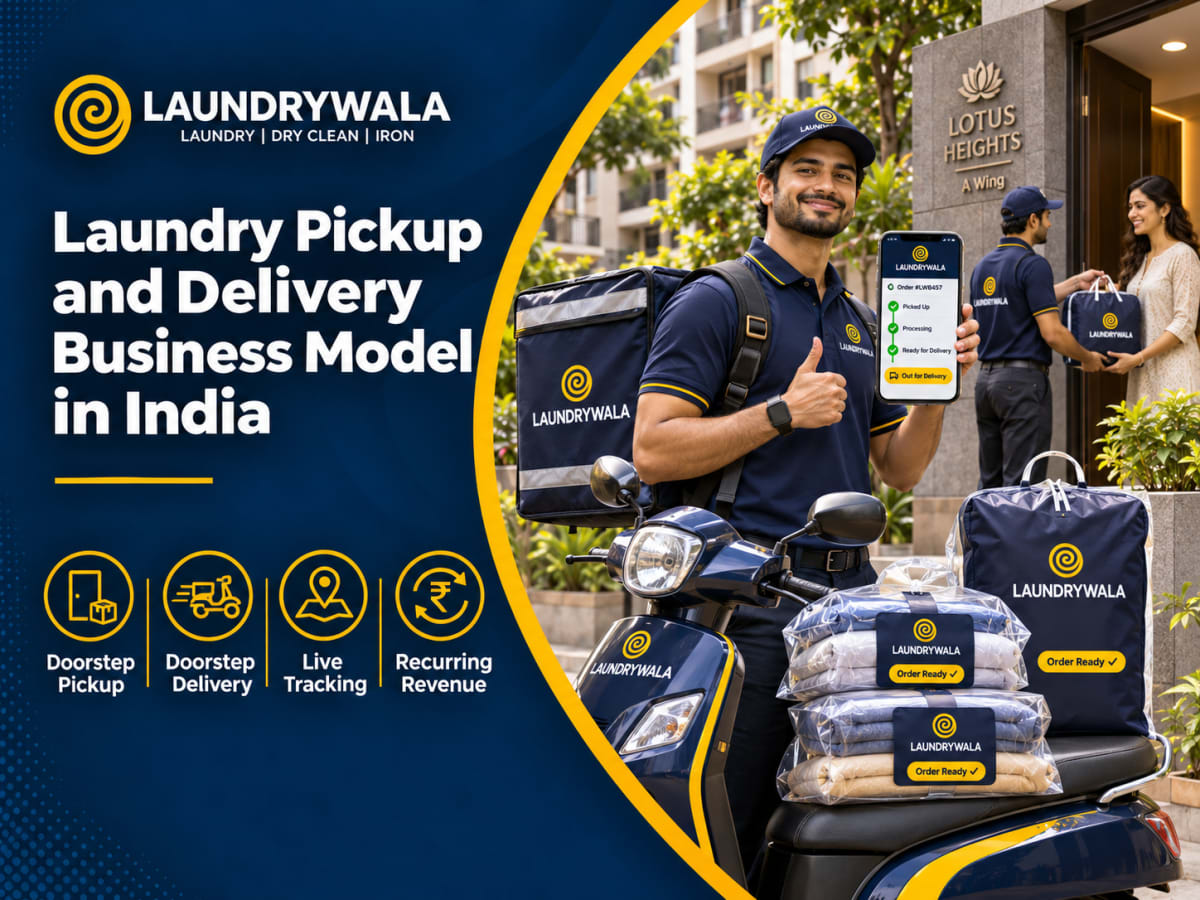
The Laundry Pickup and Delivery Business Model combines professional laundry services with a logistics system that collects clothes from customers, processes them at an approved facility and delivers them after cleaning.
Unlike a conventional walk-in laundry shop, this approach allows businesses to serve customers across a defined geographical area. Customers can book services through a website, mobile application, phone call or other supported booking channel.
The model may appeal to working professionals, apartment residents, students, busy families and commercial establishments that require regular garment-care services.
However, starting a doorstep laundry business involves more than purchasing washing machines and hiring a delivery person. Entrepreneurs must understand customer acquisition, garment tracking, route planning, processing costs, delivery schedules and repeat-customer management.
An inefficient delivery system can reduce profitability even when the business receives regular orders.
Similarly, poor garment handling or unreliable turnaround times can damage customer trust and prevent repeat bookings.
This guide explains how the laundry pickup and delivery business works in India, including startup investment, operating formats, revenue opportunities, delivery logistics, technology requirements, profitability and franchise opportunities.
What Is a Laundry Pickup and Delivery Business Model?
A laundry pickup and delivery business provides garment-cleaning services without requiring customers to visit a store for every transaction.
Customers book a collection, hand over their clothing and receive the cleaned garments at a scheduled location.
The actual cleaning may take place in an independently operated laundry facility, an in-house processing unit or a contracted professional laundry facility.
The model generally includes four connected activities: customer booking, garment collection, professional processing and delivery.
How Is It Different from a Traditional Laundry Shop?
A traditional laundry shop often relies on customers visiting the premises to drop off and collect clothes.
A doorstep laundry business adds a logistics operation that connects the cleaning facility with customers' homes, offices or other approved collection points.
This creates additional convenience but introduces transportation costs, delivery staffing requirements and scheduling responsibilities.
A business may combine both formats, accepting walk-in orders while offering doorstep pickup and delivery.
Why Is This Model Relevant in India?
Many urban households manage demanding work schedules and regular household responsibilities.
Customers may prefer to outsource certain laundry tasks rather than spend time washing, ironing and transporting garments.
However, customer willingness to pay varies by city, neighbourhood, household income and existing laundry habits.
Therefore, entrepreneurs should validate local demand instead of assuming that every residential area will support a profitable pickup service.
How the Laundry Pickup and Delivery Business Works
A successful doorstep laundry business follows a clearly defined process from order placement to final garment delivery.
Each stage should have documented responsibilities and measurable service standards.
Step 1: Customer Places a Laundry Booking
The customer selects the required service and requests a pickup.
Available services may include wash and fold, wash and iron, dry cleaning or specialised garment care.
The booking system should collect only the information needed to fulfil the order, such as the customer's contact details, pickup location, preferred collection window and service requirements.
Pricing, minimum-order rules and estimated turnaround should be communicated clearly.
Step 2: Pickup Is Scheduled
After receiving the booking, the business assigns a suitable collection window.
A delivery employee may collect several orders from the same residential neighbourhood during one trip.
Grouped pickups can reduce unnecessary travel, particularly in areas containing apartment societies and concentrated housing developments.
However, schedules should allow realistic travel time rather than promising immediate collection to every customer.
Step 3: Clothes Are Collected and Recorded
Garments should be checked and recorded during collection or upon receipt at the processing facility, following the business's documented procedures.
Order identification is important because several customers' clothes may be handled during the same processing shift.
Employees should note visible damage, special cleaning instructions and any discrepancies in garment quantity.
Digital order tracking or barcode-based identification can help reduce confusion.
Step 4: Garments Are Sorted and Processed
After arriving at the facility, clothing is sorted according to fabric type, colour, care instructions and selected cleaning service.
Every garment should receive a suitable cleaning method.
Ordinary washable clothes may undergo machine washing, while delicate or dry-clean-only garments may require specialised professional treatment.
Incorrect sorting or unsuitable processing can lead to garment damage and customer complaints.
Step 5: Quality Inspection and Packaging
After washing, drying and finishing, garments should be inspected before dispatch.
Employees should verify the order, check garment quantities and identify any unresolved cleaning issues.
Suitable packaging helps keep garments organised during transportation.
Step 6: Clean Clothes Are Delivered
The customer receives the completed order within the agreed delivery window.
A digital invoice, delivery confirmation or appropriate handover record can improve accountability.
Customers should have a convenient way to report any concern.
Laundrywala's guide to doorstep laundry pickup and delivery explains how the customer-facing service works.
Different Types of Laundry Pickup and Delivery Business Models
Not every doorstep laundry business requires the same investment or operational infrastructure.
Entrepreneurs can select a model based on capital availability, processing requirements and the intended service area.
1. Own Laundry Processing Unit
In this model, the entrepreneur operates the cleaning equipment and manages garment processing directly.
The business requires suitable commercial premises, washing machines, dryers, finishing equipment, employees and utility connections.
Pickup and delivery are managed alongside the processing operation.
The main advantage is direct control over cleaning procedures, order scheduling and quality standards.
However, equipment investment, maintenance and daily facility management increase operational responsibilities.
2. Collection and Delivery Centre
A collection centre receives customer garments and sends them to a separate processing facility.
The centre may operate with limited cleaning equipment, depending on its actual functions.
This arrangement can reduce the need for a complete processing setup at every location.
However, success depends on the processing partner's reliability, service quality and turnaround capacity.
3. Partner-Based Laundry Service
An entrepreneur may handle customer acquisition, bookings, collections and deliveries while an independent professional facility processes garments.
This approach can reduce initial machinery investment.
However, the business needs a reliable processing agreement covering quality, pricing, garment responsibility and service deadlines.
The operator should also clarify who is responsible for damage claims and reprocessing.
4. Franchise-Based Pickup and Delivery Model
A laundry franchise combines the brand's approved operational systems with a local outlet or service arrangement.
Depending on the franchise format, support may include training, machinery guidance, technology, branding and operating procedures.
Franchise partners must still manage customer relationships, employees and local business performance.
Laundrywala offers a professional laundry and dry cleaning franchise opportunity with structured store setup and operational support.
Laundry Pickup and Delivery Business Model: Revenue Streams
The Laundry Pickup and Delivery Business Model can generate revenue through multiple garment-care services.
A diversified service mix may help businesses serve customers with different requirements.
However, every service should be priced according to actual processing costs and local demand.
Regular Wash and Fold
Wash-and-fold is a common recurring service.
Customers provide eligible clothing for washing, drying and folding.
Pricing may be based on garment quantity, weight or a defined service package.
Recurring demand can come from households, students and professionals.
Wash and Iron
Wash-and-iron services combine cleaning with garment finishing.
Customers who require office clothing or neatly pressed everyday garments may value this option.
The additional ironing process must be reflected in staffing, turnaround and pricing calculations.
Professional Dry Cleaning
Formal suits, ethnic wear, delicate clothing and premium garments may require professional dry cleaning.
Dry cleaning can generate additional revenue but may involve specialist equipment, processing chemicals and technical expertise.
Laundrywala's professional dry cleaning services demonstrate a separate garment-care category that can complement ordinary laundry.
Steam Ironing
Steam ironing may attract customers who prefer washing clothes at home but need professional finishing.
This service can also introduce first-time customers to other laundry offerings.
Shoe Cleaning
Suitable footwear cleaning may appeal to customers who want to maintain sneakers, formal shoes or other footwear.
The local demand and processing requirements should be assessed before including specialised shoe care.
Household Textile Cleaning
Curtains, carpets, blankets and other household fabrics may provide additional service opportunities.
These items often require different equipment, handling methods and pricing structures.
Commercial Laundry Contracts
Hotels, hostels, salons and other establishments may require recurring textile cleaning.
Commercial orders can provide processing volume but may involve negotiated rates, strict service conditions and delayed payments.
Institutional contracts should be evaluated according to actual contribution margins and processing capacity.
Who Are the Target Customers for Doorstep Laundry Services?
Selecting the right customer segment is essential for building a sustainable business.
Different groups have different laundry requirements, budgets and booking frequencies.
Working Professionals
Professionals may value scheduled collection because of demanding work routines.
Formal clothing, everyday laundry and ironing can form part of their service requirements.
Reliable delivery windows may matter more than frequent promotional discounts.
Apartment Residents
Residential societies can provide access to many potential customers within a concentrated area.
Families and working couples may require regular laundry along with occasional premium garment care.
Apartment-focused routes can also improve collection efficiency.
College Students and PG Residents
Students living in hostels and paying-guest accommodation may need affordable laundry services.
Subscription packages and scheduled pickups can be useful.
However, student customers may be price-sensitive, so the business must carefully evaluate processing and delivery costs.
Families
Families may generate larger laundry orders and use different services throughout the year.
Transparent pricing, convenient scheduling and garment tracking can help build trust.
Hotels and Commercial Establishments
Commercial clients may require repeated collection of uniforms, towels, linens or other textiles.
These accounts can generate steady volumes, but service-level agreements and payment terms require careful consideration.
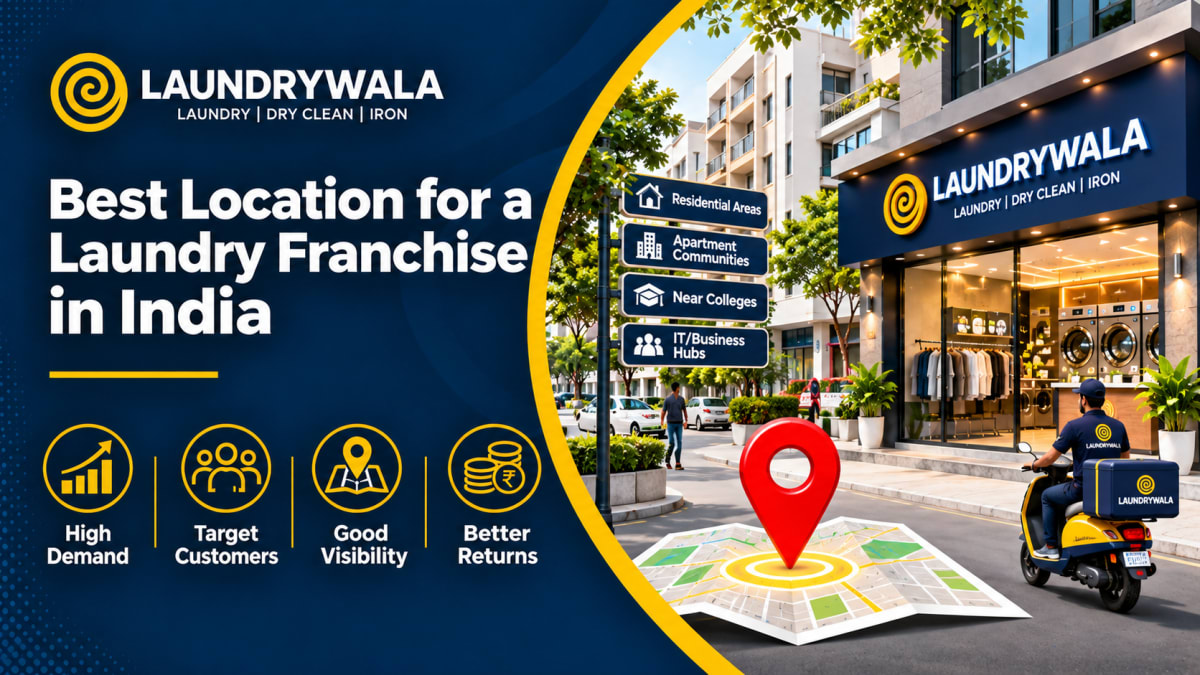
How to Choose the Best Location for a Laundry Pickup and Delivery Business
The location of the processing facility or collection centre influences customer reach, travel costs and operational efficiency.
A pickup-focused business does not always need expensive main-road retail frontage.
However, it still requires a suitable customer catchment and convenient road access.
Look for Dense Residential Communities
Occupied apartment societies, gated communities and established residential neighbourhoods are worth evaluating.
The important factor is not only population but also the number of households likely to pay for professional laundry services.
Study the Delivery Radius
A large delivery area may create more opportunities to receive enquiries, but it also increases transportation costs.
Set a practical service zone based on actual travel time, customer density and order values.
Check Road Accessibility
Delivery personnel should be able to reach the facility without unnecessary delays.
Assess traffic, parking, loading arrangements and access during peak hours.
Evaluate Property Infrastructure
If garment processing happens on-site, the premises may require appropriate electrical capacity, water supply, drainage and ventilation.
A collection-only centre may have different infrastructure requirements.
Compare Rent with Service Demand
Expensive commercial frontage may not provide enough additional value for a predominantly digital and doorstep-focused operation.
A lower-rent location near a strong residential catchment may offer more suitable economics.
However, every location should be assessed individually.
Investment Required to Start a Laundry Pickup and Delivery Business in India
Startup investment depends on the selected business model.
A processing facility requires different resources from a collection-only operation or a partner-based delivery business.
There is no single reliable investment figure applicable to every doorstep laundry business in India.
Investment in an In-House Processing Model
An entrepreneur operating a complete facility may need to invest in commercial washing machines, dryers, finishing equipment, electrical infrastructure and suitable premises.
Additional requirements include sorting equipment, garment storage, billing technology and initial operating supplies.
Machinery capacity should match expected order volume rather than the most optimistic demand forecast.
Investment in a Collection-Only Model
A collection centre may require a customer counter, order-management software, garment tagging, storage facilities and transportation arrangements.
The cleaning partner generally provides the processing equipment.
This can reduce some initial capital requirements, but processing charges and transportation costs remain important.
Investment in a Franchise Model
Franchise investment depends on the approved store format, equipment package, location and commercial agreement.
Entrepreneurs should review current franchise fees, equipment inclusions, branding, training, technology and continuing charges.
Additional expenses may include property deposits, site modifications, working capital and delivery arrangements.
Laundrywala's franchise investment and ROI guide provides further information about investment planning and financial assumptions.
Why Working Capital Matters
New laundry businesses may require time to build a dependable customer base.
During this period, the operator must still pay salaries, rent, utilities and other operating expenses.
Working capital helps maintain service quality while revenue develops.
Entrepreneurs should avoid spending the entire available budget on equipment and interiors.
Understanding Laundry Pickup and Delivery Operating Costs
Operating expenses are central to determining whether a doorstep laundry business can generate sustainable profits.
A business may receive frequent orders but still struggle financially if collections and deliveries are inefficient.
Processing Costs
Processing costs may include detergents, water, electricity, labour, packaging and equipment maintenance.
More demanding services may involve additional treatment and finishing requirements.
These costs should be calculated according to the actual garment mix.
Transportation Costs
Pickup and delivery costs can include employee wages, vehicle expenses, fuel or charging, maintenance and communication costs.
The cost depends on distance travelled, orders handled and time spent per stop.
Customer Acquisition Costs
Digital advertising, local promotions and referral programmes may help acquire customers.
However, marketing spending should be evaluated against the contribution generated by customers over time.
Technology Costs
Booking systems, payment processing, billing software and CRM tools may involve setup or recurring charges.
Technology should improve operational efficiency rather than introduce unnecessary complexity.
Quality-Related Costs
Incorrect orders, garment damage, reprocessing and delayed deliveries can create additional financial obligations.
Quality control is therefore part of profitability management, not just customer service.
How to Calculate Delivery Cost Per Laundry Order
A useful metric for doorstep laundry businesses is the cost of pickup and delivery per completed order.
This helps entrepreneurs understand whether their service radius and minimum-order rules are financially sustainable.
Basic Delivery Cost Formula
Delivery Cost per Completed Order = Total Pickup and Delivery Operating Cost ÷ Number of Completed Orders
For example, consider a hypothetical business that incurs ₹24,000 in monthly pickup and delivery expenses and completes 400 customer orders.
₹24,000 ÷ 400 = ₹60 per completed order.
The estimated average delivery cost would be ₹60 per order under these assumptions.
This is an illustrative calculation, not an actual Laundrywala cost figure or an industry benchmark.
Why Delivery Cost Changes
Delivery economics depend on the number of stops, travel distances, road conditions and route efficiency.
If the same delivery team completes more orders within a concentrated area, the average cost may decrease.
However, additional volume can also require more employees or vehicles.
Minimum Order Value
A suitable minimum-order policy can help businesses avoid uneconomical journeys.
The minimum should reflect order contribution, local customer expectations and delivery costs.
It should not be selected arbitrarily.
Grouped Residential Pickups
Collecting several orders from the same apartment society can reduce travel between customers.
Scheduled collection windows may make this easier.
However, customer convenience should remain part of the planning process.
How to Make a Laundry Pickup and Delivery Business Profitable
Profitability depends on the balance between revenue and the full cost of delivering services.
Entrepreneurs should distinguish between sales, contribution margin and net profit.
Understand Average Order Value
Average Order Value (AOV) measures the average amount customers spend per completed order.
AOV = Total Order Revenue ÷ Number of Completed Orders
Businesses can track this figure across laundry, ironing, dry cleaning and other service categories.
A higher average order value may improve revenue, but it does not guarantee greater profit if processing costs also increase.
Calculate Contribution per Order
Contribution represents the amount remaining after deducting relevant variable costs.
For a doorstep laundry business, these may include direct cleaning expenses, packaging, payment charges and attributable pickup and delivery expenses.
Contribution helps determine how much revenue remains to cover fixed costs.
Build Repeat Customer Relationships
Regular customers may provide more predictable order volumes.
However, recurring orders should remain profitable after discounts and transportation costs.
Reliable service quality and convenient rebooking are essential.
Improve Machine Utilisation
For businesses operating their own facility, processing equipment should be used efficiently.
Poor load planning can increase electricity, water and labour costs relative to completed orders.
However, machines should never be overloaded beyond safe operating limits.
Reduce Reprocessing
Incorrect sorting, inadequate stain assessment and poor quality control can increase rewash rates.
Documented processes and employee training can help reduce avoidable errors.
Building an Efficient Pickup and Delivery Route System
Route planning is one of the most important operational responsibilities in a doorstep laundry business.
Unlike a walk-in service, collections and deliveries require the business to manage movement between different customer locations.
Divide the Service Area into Zones
Group neighbourhoods according to geography, road connectivity and customer density.
For example, a laundry business may assign separate collection schedules to different apartment clusters.
The objective is to reduce unnecessary travel while maintaining practical booking windows.
Set Realistic Collection Times
Avoid promising exact collection times when traffic and route conditions make them difficult to achieve.
Provide suitable time windows and communicate changes promptly.
Combine Compatible Pickups and Deliveries
Where practical, plan journeys that include both garment collection and completed-order delivery.
However, soiled and cleaned garments must remain appropriately separated during transportation.
Monitor Route Performance
Track the number of orders completed, travel time, unsuccessful collections and transportation expenses.
Use these metrics to identify inefficient routes.
Plan for Missed Pickups
Customers may be unavailable when a delivery employee arrives.
Provide a convenient rescheduling process.
Repeated unsuccessful visits can increase delivery costs, so customer confirmation may be useful.
Technology Required for a Laundry Pickup and Delivery Business
Technology can make order handling more reliable, especially when a business manages several collections and deliveries daily.
However, expensive software is not automatically necessary at the beginning.
The right system depends on order volume and operational complexity.
Online Booking System
A booking system allows customers to request available services and collection windows.
It should clearly display relevant conditions, such as service areas and minimum order values.
Order Management Software
An order-management system records customer bookings, garment quantities, service types and processing status.
This helps employees identify which orders are awaiting collection, processing or delivery.
Barcode and Garment Tagging
Garment identification reduces the risk of mixing customer clothing.
For dry cleaning and premium garment care, item-level tracking can be particularly useful.
Customer Relationship Management
CRM software can help record repeat bookings, service preferences and customer complaints.
Businesses should collect only necessary personal information and protect it appropriately.
Digital Payments and Billing
Clear invoices and suitable payment options can improve customer convenience.
The billing system should accurately record service charges, discounts, taxes where applicable and payment status.
WhatsApp Communication
With appropriate customer consent, WhatsApp may support booking confirmations, order updates and rebooking reminders.
Promotional messaging should respect applicable communication rules and customer preferences.
How to Set Pricing for Doorstep Laundry Services
Pricing should account for the full cost of cleaning and delivering an order.
A business that copies the lowest available local price without understanding its own costs may struggle to generate sustainable margins.
Per-Kilogram Pricing
Regular wash-and-fold services may be priced according to weight.
This can simplify billing for suitable everyday laundry.
However, premium garments and delicate fabrics may require separate handling.
Per-Garment Pricing
Dry cleaning, ironing and specialised cleaning services are often priced by individual garment.
The price should reflect material, complexity and processing requirements.
Subscription Pricing
Monthly packages can appeal to households, students and other customers with recurring laundry needs.
Define the included weight, garment count, collection frequency and any exclusions.
Avoid unlimited packages unless the business can support their actual usage costs.
Delivery Charges
Doorstep laundry businesses may include delivery costs within service pricing or apply separate charges under stated conditions.
The policy should be transparent.
Customers should understand the total price before confirming an order.
Marketing Strategies for a Laundry Pickup and Delivery Business
Marketing a doorstep laundry service requires reaching customers who value convenience and professional garment care.
Local visibility and repeat bookings are generally more important than attracting enquiries far outside the service area.
Local Google Business Profile
Maintain accurate business information, including location, contact details, service areas and operating hours.
Use original store photographs and describe available services clearly.
Encourage genuine customer feedback without offering incentives in exchange for reviews.
Residential Society Partnerships
Apartment societies may offer opportunities to reach several potential customers within one location.
With appropriate permission, businesses can introduce pickup schedules or display relevant service information.
Local Digital Advertising
Location-targeted advertising can help introduce the service to nearby households.
Campaigns should focus on areas the business can reliably serve.
Monitor completed orders rather than judging success only by clicks or enquiries.
Referral Programmes
Satisfied customers may recommend the service to neighbours or colleagues.
Referral benefits should have clear conditions and remain financially sustainable.
Customer Retention Campaigns
Regular customers may appreciate scheduled collection options and convenient rebooking.
Use consent-based reminders and avoid excessive promotional messaging.
Marketing should support service quality, not compensate for persistent operational problems.
How to Increase Repeat Customers in a Doorstep Laundry Business
Customer retention is particularly important because laundry can be a recurring household requirement.
However, customers will not continue booking if the service becomes unreliable.
Deliver Clothes on Time
Set realistic turnaround expectations.
If delays occur, inform customers promptly and explain the revised schedule.
Maintain Consistent Cleaning Quality
Customers expect garments to be handled according to their care instructions.
Documented quality-control procedures can help reduce processing errors.
Make Rebooking Simple
Customers who frequently require laundry services should be able to arrange another pickup without unnecessary steps.
Offer Relevant Service Packages
Monthly laundry plans or scheduled pickup programmes may be useful for regular customers.
However, each package should have clear terms and financially sustainable pricing.
Resolve Complaints Professionally
Review concerns about missing garments, cleaning quality or delivery issues promptly.
An effective complaint process can help preserve customer trust.
Laundry Pickup and Delivery Business Model for Tier 2 and Tier 3 Cities
Smaller Indian cities may offer opportunities for organised doorstep laundry services.
Residential developments, student accommodation and professional workplaces can create potential demand.
However, spending patterns and customer expectations may differ from major metropolitan markets.
Study Local Laundry Habits
Many households already have established laundry routines.
Entrepreneurs should investigate which services customers are willing to outsource.
Convenience alone may not justify a premium price for every household.
Choose a Concentrated Service Area
A compact delivery zone may be easier to manage than a large geographical area with limited order density.
Start by validating demand within a manageable neighbourhood.
Adjust Packages to Local Budgets
Pricing should reflect local customer expectations and actual processing costs.
Avoid excessive discounting simply to generate initial orders.
Build Community Relationships
Apartment associations, student housing and local businesses may provide opportunities for recurring orders.
Trust and consistent service can be especially important in neighbourhood-focused markets.
Legal Requirements for Starting a Laundry Pickup and Delivery Business in India
A laundry business must comply with applicable business, taxation, labour and local operating requirements.
The exact obligations depend on the business structure, location and processing activities.
Business Registration
Entrepreneurs can select an appropriate business structure, such as a proprietorship, partnership, LLP or private limited company.
The choice affects ownership, taxation and legal responsibilities.
GST Registration
GST registration requirements depend on applicable law and the nature of business transactions.
The official GST registration guide for taxpayers explains the application process.
Entrepreneurs should consult a qualified tax professional about their specific obligations.
MSME Registration
Eligible businesses may register through the official Government of India Udyam Registration portal.
Registration is free on the official government portal.
Local Business Approvals
Depending on the location and facility, a laundry operator may require trade permissions, establishment compliance, appropriate water and wastewater arrangements and other relevant approvals.
India's National Single Window System helps entrepreneurs identify potentially applicable business registrations and approvals.
Local authorities should confirm the actual requirements before operations begin.
Common Mistakes to Avoid in a Laundry Pickup and Delivery Business
Even a business with promising demand can experience financial problems when its logistics are poorly managed.
Expanding the Service Area Too Quickly
Serving distant customers may increase enquiries but also create higher transportation expenses.
Expand only when actual order density supports the additional routes.
Ignoring Delivery Cost per Order
A business should calculate how much it spends to collect and deliver completed orders.
High transportation expenses can reduce contribution margins.
Offering Unrealistic Delivery Times
Customers may appreciate fast delivery, but missed commitments can damage trust.
Set schedules that match actual processing capacity.
Poor Garment Tracking
Mixing customer orders can create complaints and compensation liabilities.
Use a dependable identification process.
Underestimating Working Capital
New businesses may require time to build regular demand.
Maintain appropriate operating reserves.
Relying Only on Discounts
Introductory offers can attract customers, but long-term profitability depends on service quality and sustainable pricing.
Ignoring Customer Complaints
Unresolved service issues can prevent repeat orders.
Track complaints and correct recurring causes.
How to Start a Laundry Pickup and Delivery Business in India: Step-by-Step
Starting a Laundry Pickup and Delivery Business Model requires careful coordination of customer demand, processing capacity and transportation.
Step 1: Research the Local Market
Identify residential communities, students, professionals and commercial establishments that may require laundry services.
Study existing pricing and customer expectations.
Step 2: Select Your Operating Model
Decide whether to establish an in-house processing facility, operate a collection centre, work with a processing partner or purchase a franchise.
Each approach has different costs and operational responsibilities.
Step 3: Prepare the Investment Budget
Include equipment, property, technology, staffing, transportation, marketing and working capital.
Use conservative demand assumptions.
Step 4: Choose the Service Area
Select neighbourhoods that can be served reliably.
Consider delivery travel time and customer density.
Step 5: Establish Processing Operations
Arrange the required equipment or confirm the capabilities of the approved processing partner.
Document fabric-care procedures and quality standards.
Step 6: Set Up Order Management
Implement suitable booking, billing, garment tracking and delivery systems.
Ensure employees understand the workflow.
Step 7: Recruit and Train Staff
Train employees in garment collection, customer communication, sorting, processing and delivery responsibilities.
Step 8: Finalise Pricing
Calculate processing and delivery costs before setting prices and minimum order rules.
Step 9: Launch Within a Manageable Area
Begin operations within a practical service zone.
Monitor order handling, customer feedback and on-time deliveries.
Step 10: Improve Before Expanding
Review delivery economics, repeat bookings, processing quality and operating costs.
Expand only when the existing operation is stable.
Key Performance Indicators for a Laundry Pickup and Delivery Business
Business owners should monitor performance using a small set of meaningful indicators.
Average Order Value
Measures average revenue per completed order.
Delivery Cost per Order
Measures average pickup and delivery expense per completed order.
Repeat Customer Rate
Shows how many customers return within a defined observation period.
On-Time Delivery Rate
Measures the percentage of eligible orders completed within the committed delivery window.
Rewash Rate
Tracks the proportion of orders requiring additional processing.
Customer Acquisition Cost
Measures the marketing and acquisition expenditure associated with obtaining new paying customers.
Contribution Margin
Shows the revenue remaining after relevant variable costs.
Together, these metrics help owners identify whether growth is sustainable.
Increasing order volume is useful only when the business can fulfil those orders efficiently and profitably.
How Laundrywala Supports Pickup and Delivery Franchise Operations
Laundrywala operates an organised laundry and dry cleaning franchise model that combines garment-care services with technology-enabled operations and doorstep convenience.
Its published franchise offering includes assistance with store setup, employee training, branding, machinery planning and operational processes.
Structured Store Setup
Franchise partners can review suitable store formats and equipment requirements before launching operations.
Staff Training
Employees require training in garment handling, sorting, cleaning and customer communication.
Digital Order Management
Technology can help manage billing, garment records and order progress.
Multiple Service Categories
Approved outlets may provide regular laundry, dry cleaning, steam ironing and selected specialised services.
Operational Support
Laundrywala describes post-launch operational support within its franchise programme.
Actual support arrangements and commercial obligations should be confirmed in the current franchise agreement.
For investors interested in entering this business, a structured franchise may offer a clearer starting framework than developing all processes independently.
However, operational success still depends on local demand, service quality and effective management.
Is the Laundry Pickup and Delivery Business Profitable in India?
A doorstep laundry business can be profitable when service revenue exceeds the full cost of customer acquisition, garment processing, transportation and business operations.
However, profitability is not guaranteed.
The most important factors include order density, customer retention, average order value, processing efficiency and delivery cost.
A business serving several customers within one apartment community may have more efficient routes than a business collecting isolated orders across a large city.
Similarly, an operator with consistent repeat customers may be less dependent on introductory marketing campaigns.
However, high delivery costs, frequent reprocessing or excessive discounts can reduce profitability.
Entrepreneurs should prepare realistic financial scenarios and review actual operational data rather than relying on advertised return estimates.
The best business model is one that delivers dependable customer value while maintaining sustainable economics.
Conclusion: Build a Profitable Doorstep Laundry Business with the Right Strategy
The Laundry Pickup and Delivery Business Model offers entrepreneurs an opportunity to combine professional garment care with the convenience of scheduled doorstep collection and delivery.
However, successful operations depend on more than customer bookings.
A sustainable business requires suitable processing capacity, accurate garment tracking, efficient delivery routes, transparent pricing and consistent customer service.
Choosing the correct operating format is equally important.
An entrepreneur may establish a complete processing facility, operate a collection centre, work with a professional cleaning partner or explore a franchise.
Each model has different investment requirements and operational risks.
For first-time entrepreneurs, a structured franchise model may provide guidance on store setup, training, equipment and daily processes.
Laundrywala offers a professional laundry and dry cleaning franchise opportunity with technology-enabled operations and customer convenience at the centre of its service model.
If you are planning to start a laundry pickup and delivery business in your city, evaluate local demand, develop realistic financial assumptions and review the available franchise options before investing.
Start Your Laundry Business Journey with Laundrywala.
Explore franchise opportunities, request the latest investment proposal and discuss suitable store formats for your preferred location.
FAQs on Entrepreneurship & Business
Insights and strategies for modern entrepreneurs looking to grow in the professional laundry industry.
Still have questions?
Can't find what you're looking for? Our fabric care specialists and franchise advisors are here to help.