Laundry and Dry Cleaning Franchise in India – Complete Business Opportunity Guide (2026)
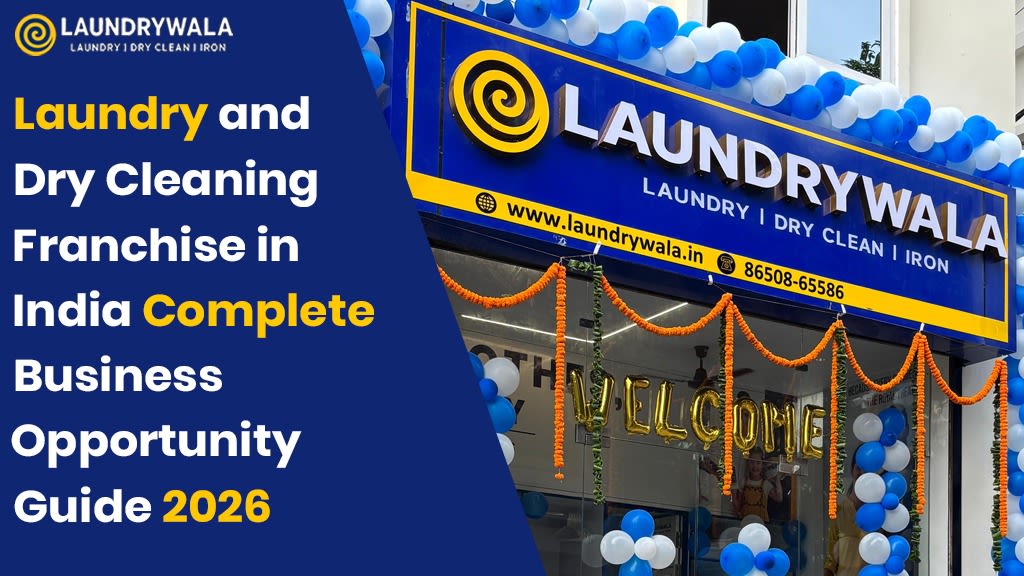
India’s garment-care market is gradually moving from informal neighbourhood services towards organised laundry stores, transparent pricing, digital order tracking and doorstep pickup and delivery. Working professionals, students, families and commercial establishments increasingly look for dependable cleaning instead of managing every garment, linen and home-fabric item themselves.
For an entrepreneur, a laundry and dry cleaning franchise in India offers entry into a repeat-demand service category. A franchise can provide brand identity, operating procedures, training, technology and setup guidance. However, it is not an assured-profit or passive-income scheme. Results depend on location, rent, daily order volume, average bill value, service quality, customer retention and the owner’s involvement.
Quick answer: Laundrywala currently publishes three indicative franchise formats ranging from ₹13.49 lakh to ₹20.99 lakh, with store requirements of approximately 200–350 sq. ft. The final project cost can be higher after rent deposit, GST, transport, civil work, local licences, pre-opening expenses and working capital. Investors should obtain a current, location-specific commercial proposal before making any payment.
Why Consider a Laundry and Dry Cleaning Franchise Business?
Laundry is a recurring household need. Clothes, bedsheets, towels, uniforms, curtains and special garments require cleaning throughout the year. The demand is not limited to one age group or a single season.
An organised outlet can serve several customer segments:
- Families living in apartments and gated societies
- Working professionals seeking convenience
- Students and residents of hostels or PG accommodation
- Customers requiring care for suits, sarees and wedding wear
- Hotels, salons, spas, gyms, clinics and restaurants
- Offices and institutions with uniforms or linen
The value proposition is broader than washing clothes. Customers also expect reliable tagging, fabric-appropriate processing, clear billing, stain assessment, professional finishing, timely delivery and help when something goes wrong.
Laundrywala’s official franchise opportunity page describes a model combining retail garment care, specialised services and pickup-and-delivery operations. The company states that its system is operating across more than 150 stores in over 75 cities. Network size should still be verified in the latest proposal because store counts can change.
How Does the Franchise Model Work?
An independent laundry operator must create the brand, service menu, machinery plan, pricing, quality standards, packaging, billing process and local marketing system from the beginning. A franchise offers an established framework for these activities.
Depending on the signed agreement, franchise support may cover:
- Location and catchment evaluation
- Store layout and branding guidance
- Machinery and equipment planning
- Standard operating procedures
- Staff and owner training
- Billing, CRM and order-management technology
- Launch marketing and local promotion
- Vendor and consumable guidance
- Quality-control and operational reviews
This framework can reduce early trial and error, but the outlet owner remains responsible for execution. Employees must be supervised, expenses controlled, garments tracked and complaints resolved. Local customer acquisition cannot be left entirely to the brand.
Entrepreneurs comparing both routes should read the guide on laundry franchise versus an independent laundry business before deciding.
Main Benefits and Limitations
Repeat Customer Potential
Laundry can generate weekly or monthly repeat orders when service quality and delivery remain consistent. A customer who trusts the outlet may use several services over time.
Multiple Revenue Categories
The store is not restricted to wash-and-fold orders. Dry cleaning, ironing, shoes, curtains, carpets and premium garments can increase the average order value.
Lower Inventory Exposure
Unlike a retail shop, a laundry outlet does not need to hold large quantities of saleable stock. It still needs detergents, chemicals, packaging and spare supplies, but unsold fashion inventory is not the primary business risk.
Technology-Enabled Operations
Digital billing, garment tagging, pickup scheduling, order-status updates and customer records can improve control. Technology is valuable only when employees enter information correctly and follow the operating process.
Operational Responsibility
The business is service-intensive. Delayed orders, stains, colour bleeding, missing buttons, garment damage and delivery mistakes require a documented resolution process. Machines also need preventive maintenance and trained operators.
No Guaranteed Return
An established brand cannot guarantee sales or profit. Location quality, rent, competition, staff discipline and owner involvement materially affect performance.
Revenue Sources for a Laundry Franchise
A balanced outlet combines repeat, premium and commercial services instead of depending on one category.
Wash and Fold
Everyday washable garments are processed by weight or item, dried and folded. This service can create regular volume from households, students and working professionals.
Wash and Iron
Customers receive cleaned, dried and pressed clothes ready for use. Office wear, uniforms and household garments can create repeat demand.
Dry Cleaning
Suits, blazers, sarees, lehengas, coats and structured garments may require a specialised process. Laundrywala’s professional dry-cleaning service illustrates how delicate and premium garments can form a higher-value service category.
Steam Ironing
Some customers wash at home but outsource pressing. A standalone ironing service can generate frequent orders with a relatively simple customer proposition.
Shoes, Bags and Home Fabrics
Professional care for shoes, bags, curtains, carpets, blankets and comforters expands the service mix. Availability and processing capability should be confirmed for each store format.
Pickup and Delivery
Doorstep collection makes the service convenient and expands the practical catchment beyond walk-in customers. The owner must calculate delivery radius, minimum order, fuel cost and rider productivity.
Commercial Orders
Hotels, salons, spas, gyms, clinics, restaurants, hostels and offices may offer recurring volume. Before accepting B2B work, calculate capacity, payment period, transport cost, rewash risk and the margin available at the negotiated rate.
Franchise Model Compared with Other Business Options
| Business model | Main strength | Important challenge |
|---|---|---|
| Laundry franchise | Repeat need and multiple services | Quality control, utilities and garment liability |
| Independent laundry | Greater control over brand and vendors | Systems and customer acquisition must be built independently |
| Restaurant franchise | Strong consumer demand in the right market | Perishable inventory, food compliance and operational complexity |
| Retail franchise | Familiar store model and product-led sales | Stock investment, unsold inventory and seasonal demand |
| Salon franchise | Repeat personal-care demand | High dependence on skilled employees and staff retention |
No model is automatically better for every investor. Select a business based on capital, local demand, operating ability and acceptable risk—not only on advertised revenue.
Laundrywala Franchise Investment Plans
Laundrywala’s current franchise page lists three store formats. The figures below are indicative and should be confirmed through a fresh commercial sheet.
| Franchise format | Indicative investment | Store area | Staff | Power | Water storage |
|---|---|---|---|---|---|
| Alpha – Basic | ₹13.49 lakh | 200–250 sq. ft. | 2–3 | 8 kW | 1,000 litres |
| Classic | ₹15.99 lakh | 250–300 sq. ft. | 2–3 | 15 kW | 1,000 litres |
| Combo – Premium | ₹20.99 lakh | 300–350 sq. ft. | 3–4 | 16 kW | 2,000 litres |
Alpha – Basic
This compact format is presented for a smaller retail laundry and dry-cleaning outlet. The published configuration includes a 15 kg washer and dryer with a basic ironing setup and 4 kW boiler.
Classic
The Classic format provides additional retail washing capacity. The published configuration includes 15 kg and 10 kg washer-dryer stackers with an ironing setup and 4 kW boiler.
Combo – Premium
This format is positioned for retail plus selected B2B volume. Its listed configuration includes an 18 kg commercial washer and dryer, a separate 10 kg retail setup and an ironing system with a 6 kW boiler.
Read Laundrywala’s detailed guide to laundry franchise cost in India before preparing your budget.
What Is Included and What May Cost Extra?
The published package figure should not be treated as the complete amount required to open and sustain a store. Ask for a line-by-line written quotation showing inclusions, exclusions, taxes and payment milestones.
Common project-cost heads may include:
- Franchise or brand fee
- Washing, drying and finishing equipment
- Equipment transport and installation
- Interiors, branding and signage
- Electrical, plumbing, drainage and ventilation work
- Billing software, CRM and technology setup
- Initial chemicals, consumables and packaging
- Staff recruitment and training expenses
- Property security deposit and advance rent
- GST and other applicable taxes
- Local registrations and professional fees
- Launch marketing
- Delivery vehicle or rider arrangement
- Working capital for the first months
Do not commit the entire budget to machinery and interiors. A store may need time to build repeat demand, so an operating reserve is essential.
Revenue, Operating Costs and Break-Even
Outlet economics are driven by a few measurable factors.
Revenue Drivers
- Number of orders received per day
- Average bill value
- Percentage of repeat customers
- Mix of laundry, dry cleaning and specialised services
- Pickup-and-delivery coverage
- Society partnerships and commercial accounts
- Seasonal premium-garment and home-fabric demand
Regular Operating Costs
- Rent and common-area charges
- Salaries and incentives
- Electricity and water
- Detergents, chemicals and packaging
- Fuel, delivery and vehicle maintenance
- Machine servicing and repairs
- Software or recurring franchise charges
- Local advertising
- Rewash, complaint and garment-claim costs
- Accounting, licences and insurance
Laundrywala publishes an illustrative net-margin planning range of 22–30% and a break-even window of 14–20 months on its franchise page. These numbers are planning assumptions, not a promise. The actual result depends on site economics, sales, expenses, service mix and execution.
Prepare three projections—conservative, expected and optimistic. Test what happens if orders are lower than planned, rent increases or commercial customers pay late. Do not make an investment decision using only the most favourable scenario.
How to Choose the Right Location
The most expensive high-street shop is not automatically the best location. A smaller store near a dense residential catchment may perform better if rent is manageable and pickup routes are efficient.
Evaluate:
- Number of households within the delivery radius
- Apartment societies, hostels, PGs and offices nearby
- Customer income and demand for convenience
- Existing laundries, dry cleaners and app-based services
- Visibility, frontage and ground-floor access
- Rent, deposit and annual escalation
- Parking and rider access
- Water supply, storage and drainage
- Sanctioned electrical load
- Ventilation and machine-installation space
- Area for sorting, finishing, packing and garment storage
- Local rules for commercial operation
Visit the location at different times of day. Speak with nearby residents and businesses, compare competitor reviews and estimate the realistic delivery radius. Ask Laundrywala to evaluate the site before signing a long lease.
Technology and Daily Operations
A modern outlet needs clear control from garment collection to delivery.
The daily workflow should cover:
- Receiving and counting every garment
- Photographing or recording visible stains and existing damage
- Tagging items so they remain traceable
- Sorting by fabric, colour, care label and service
- Selecting the correct wash or cleaning process
- Conducting stain treatment where appropriate
- Drying and finishing at suitable settings
- Performing a final quality check
- Packaging and updating order status
- Scheduling pickup or delivery
CRM, billing and order-tracking tools can reduce manual confusion. They should record customer details, garment count, promised date, payment, complaint history and delivery status.
Operational discipline matters more than software alone. Track daily orders, average bill value, rewash percentage, delayed orders, complaints, repeat customers and monthly expenses.
Support Provided by Laundrywala
According to its official franchise page, Laundrywala provides support across three stages.
Before Launch
- Location and catchment evaluation
- Store layout and setup guidance
- Machinery selection
- Branding and interiors
- Vendor coordination
At Launch
- Owner and staff training
- Sorting, wash-program and finishing guidance
- Billing, app and CRM setup
- Launch creatives and local marketing support
After Launch
- Operational reviews
- Quality-control guidance
- Customer-retention and engagement support
- Assistance with standard processes and performance monitoring
Request every promised item in writing. Speak with existing franchise partners about actual setup timelines, training quality, support responsiveness and day-to-day challenges.
Registrations and Compliance
Registrations vary by state, municipality, legal structure and outlet activities. Obtain advice from a qualified accountant or legal professional for the proposed location.
Possible requirements include:
- Business entity or proprietorship documentation
- PAN and business bank account
- Shop and Establishment registration
- GST registration when applicable
- Municipal trade licence where required
- Local fire, electrical or pollution-related approvals where applicable
- Employment and labour compliance
- Commercial utility connections
- Insurance for property, machinery, employees and customer garments
Eligible micro, small and medium enterprises can review the official Udyam Registration portal. GST information and registration services are available through the official GST portal. Avoid paying unofficial agents who claim that government registration guarantees a loan, subsidy or business approval.
How to Start a Laundrywala Franchise
Step 1: Decide the Complete Budget
Include the package, property, setup, taxes and working capital. Keep a reserve for the first months rather than assuming immediate profitability.
Step 2: Select the City and Catchment
Study household density, target customers, competition, rent and delivery feasibility. Check whether the territory is available.
Step 3: Request the Current Proposal
Ask for franchise formats, equipment lists, inclusions, exclusions, recurring fees, support, payment stages and estimated setup timeline.
Step 4: Shortlist and Approve the Site
Verify water, drainage, electricity, access and local commercial rules. Obtain franchise location approval before entering a long property commitment.
Step 5: Review the Agreement
Examine territory, term, renewal, royalty, marketing obligations, mandatory vendors, equipment ownership, exit, transfer and dispute provisions. Take professional advice where needed.
Step 6: Complete Setup and Training
Coordinate fit-out, machine installation, software, hiring, training, trial runs and operating checklists.
Step 7: Plan the Local Launch
Use Google Business Profile, apartment outreach, local social media, referral programmes, partnerships and pickup awareness. Do not rely only on discounts.
Step 8: Monitor the First 90 Days
Review orders, customer acquisition cost, average bill, repeat rate, complaints, delivery performance and cash flow every week.
Risks to Evaluate Before Investing
Important risks include:
- Weak location or an oversized rent commitment
- Insufficient working capital
- Slow customer acquisition
- Poor staff retention or training
- Machine downtime
- Inconsistent cleaning quality
- Garment damage or loss claims
- Delayed pickups and deliveries
- High utility or fuel cost
- Aggressive local price competition
- Low-margin B2B contracts
- Unclear franchise-agreement terms
Ask for evidence behind revenue and cost assumptions. Confirm whether any royalty holiday, ROI-linked arrangement or marketing commitment is written into the agreement. Verbal statements should not replace signed terms.
FAQs – India's Best Laundry Franchise Chain
Straight answers for entrepreneurs evaluating Laundrywala as a profitable laundry business and low investment franchise in India.
Still have questions?
Can't find what you're looking for? Our fabric care specialists and franchise advisors are here to help.