
Dry Cleaning vs Steam Ironing: Which Service Do You Need?
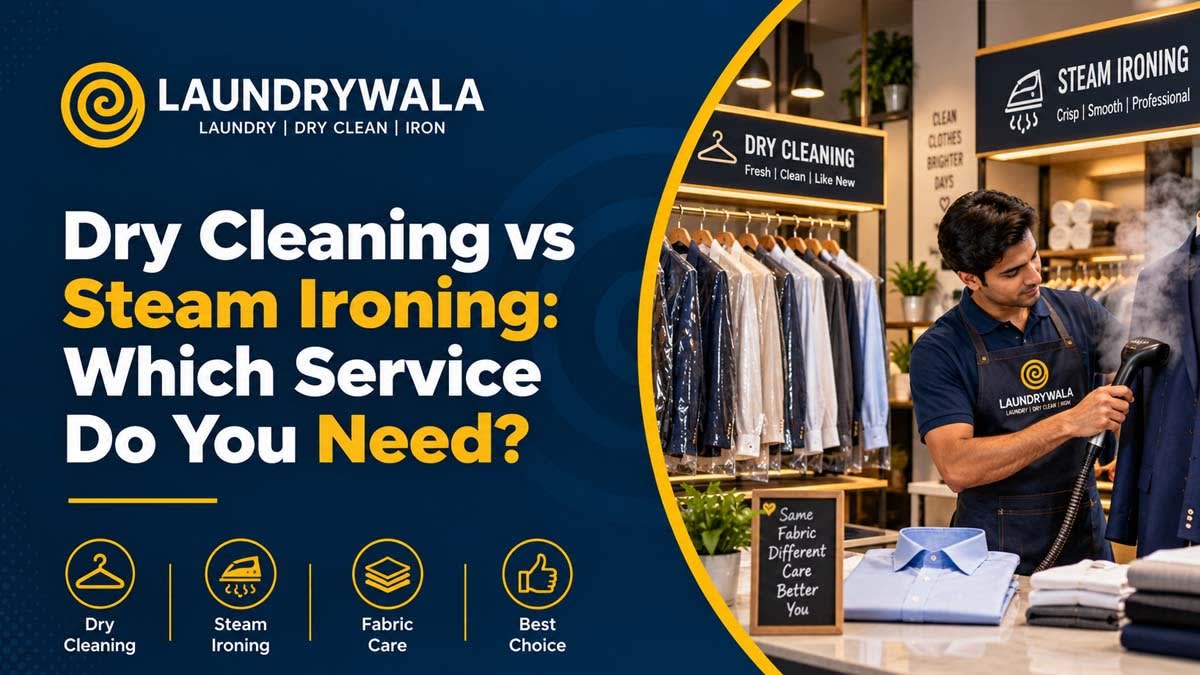
Many customers use the terms dry cleaning and steam ironing interchangeably, but they are completely different garment-care services. Dry cleaning removes dirt, oil, odour and certain stains from clothes, while steam ironing mainly removes wrinkles and gives garments a smooth, presentable finish.
Understanding dry cleaning vs steam ironing helps you select the correct service, avoid unnecessary spending and protect delicate garments. The right option depends on whether your clothes require complete cleaning, stain treatment or only professional pressing.
Quick answer: Choose dry cleaning when a garment needs specialised cleaning or is labelled “Dry Clean Only.” Choose steam ironing when the garment is already clean but needs wrinkle removal and professional finishing. Some garments may require both services—dry cleaning first and steam ironing afterward.
What Is Dry Cleaning?
Dry cleaning is a professional garment-cleaning process that primarily uses a specialised cleaning solvent instead of ordinary water-based washing. Clothes are inspected, tagged, stain-treated, cleaned, dried and professionally finished.
The US Environmental Protection Agency’s dry-cleaning process guide describes the core process as cleaning fabric in a solvent, extracting the excess solvent and drying the garments.
Dry cleaning is commonly considered for:
- Suits and blazers
- Silk sarees
- Woollen coats and sweaters
- Lehengas and wedding outfits
- Structured dresses
- Designer garments
- Leather and suede items
- Clothes labelled “Dry Clean Only”
- Garments with oil- or grease-based stains
- Embroidered or embellished clothing
The exact cleaning method should depend on the fabric, colour, construction, stain and care label. Customers can explore Laundrywala’s professional dry-cleaning service for delicate, structured and premium garments.
What Is Steam Ironing?
Steam ironing is a finishing process used to remove wrinkles, improve garment shape and create a neat appearance. It does not provide the same complete cleaning process as dry cleaning.
A professional steam iron uses heat, pressure and controlled steam to relax fabric fibres. This makes it easier to remove creases and restore a smooth finish.
Steam ironing is suitable for already-clean garments such as:
- Office shirts
- Cotton trousers
- School uniforms
- Kurtas and kurtis
- Sarees suitable for pressing
- T-shirts
- Bedsheets and pillow covers
- Casual dresses
- Everyday washable clothes
Different fabrics require different temperatures. Cotton may tolerate more heat than polyester, silk or garments containing prints and decorative work. The care label should therefore be checked before ironing.
Laundrywala’s professional ironing service provides steam finishing for suitable garments that need a crisp, ready-to-wear appearance.
Dry Cleaning vs Steam Ironing: Main Differences
The biggest difference is that dry cleaning is a cleaning process, while steam ironing is mainly a wrinkle-removal and finishing process.
| Factor | Dry Cleaning | Steam Ironing |
|---|---|---|
| Main purpose | Removes dirt, odour and suitable stains | Removes wrinkles and improves finish |
| Cleaning included | Yes | No complete cleaning |
| Primary process | Professional solvent-based garment cleaning | Heat, steam and pressure |
| Best suited for | Delicate, structured and dry-clean-only clothes | Clean garments requiring pressing |
| Stain treatment | Usually included after inspection | Not intended for stain removal |
| Odour treatment | May help as part of professional cleaning | Cannot replace proper cleaning |
| Typical garments | Suits, blazers, silk sarees and wedding wear | Shirts, trousers, uniforms and kurtas |
| Final result | Cleaned and professionally finished | Smooth, pressed and ready to wear |
| Care-label importance | Essential | Essential |
| Service cost | Usually higher | Usually lower |
When comparing dry cleaning vs steam ironing, begin by identifying the actual condition of the garment. Wrinkled but clean clothes may only require ironing. Stained, smelly or dry-clean-only garments require proper cleaning before finishing.
When Should You Choose Dry Cleaning?
Choose dry cleaning when ordinary washing may affect the garment’s colour, shape, texture or construction.
A garment may require professional dry cleaning when:
- The care label says “Dry Clean Only”
- Oil, makeup, food or grease has stained the fabric
- The garment has a structured lining
- It contains embroidery, sequins, beads or stones
- The material is silk, wool, velvet, suede or leather
- The garment has developed persistent body odour
- It is expensive, sentimental or difficult to replace
- Home washing may cause colour bleeding or shrinkage
- Previous home cleaning has created a visible mark
- The garment needs cleaning before long-term storage
The Federal Trade Commission’s garment-care-label guidance explains why washing and dry-cleaning instructions matter when choosing a safe care process.
Dry cleaning cannot guarantee the removal of every stain. Results depend on the stain type, fabric, dye, age of the mark and products previously applied.
When Should You Choose Steam Ironing?
Choose steam ironing when clothes are already clean but look wrinkled, untidy or difficult to press properly at home.
Professional steam ironing can be useful for:
- Weekly office wear
- School and college uniforms
- Cotton shirts and trousers
- Sarees and kurtas
- Clothes required for an event
- Large household ironing loads
- Garments with difficult collars, cuffs or pleats
- Customers who want ready-to-wear clothes
Steam can relax fibres, but it does not make every fabric safe to iron. Excessive heat may damage synthetic fibres, melt prints, flatten textured materials or affect decorative work.
The ISO care-labelling standard covers care symbols for washing, drying, ironing and professional textile care. Check the iron symbol and temperature guidance on the label before applying steam or heat.
Can Steam Ironing Clean Clothes?
Steam ironing should not be treated as a replacement for laundry or dry cleaning.
Steam and heat may refresh the appearance of a clean garment, but ironing does not reliably remove body oils, embedded dirt, food spills or deep odour. Pressing visibly dirty clothes may also make some stains more difficult to treat.
A garment should be cleaned before steam ironing when it has:
- Visible stains
- Sweat marks
- Food or drink spills
- Strong body odour
- Dust or surface dirt
- Oil or grease marks
- Mould-like spots
- Dirt around the collar or cuffs
For normal washable clothes, Laundrywala’s professional laundry service may be more suitable than dry cleaning. The garment can then be steam-ironed after washing and drying.
Can Steam Ironing Remove Stains?
Steam ironing is not a stain-removal treatment.
Heat can cause certain stains to set more deeply into fabric fibres. Protein-based stains, oily marks and unidentified spills should be inspected before ironing.
Avoid ironing directly over:
- Blood stains
- Milk or dairy stains
- Sweat marks
- Oil and grease
- Makeup
- Ink
- Tea or coffee
- Food stains
- Wax or chewing-gum residue
Tell the cleaning professional what caused the stain and whether any home remedy has already been used. Accurate information can help the team select a safer treatment.
Can Clothes Be Dry Cleaned and Steam-Ironed Together?
Yes. Many garments receive professional finishing after dry cleaning.
A typical garment-care process may involve:
- Garment inspection and tagging
- Care-label and fabric assessment
- Stain identification
- Suitable pre-treatment
- Professional dry cleaning
- Drying and inspection
- Steam ironing or pressing
- Final quality check
- Packaging and delivery
Dry cleaning handles the cleaning requirement, while steam ironing provides the final smooth appearance. This combined process is common for suits, blazers, sarees, formal dresses and premium garments.
However, the temperature and finishing method must suit the material. Not every fabric should receive strong steam or direct pressure.
Which Service Is Better for Different Clothes?
There is no single service that is better for every garment. The correct choice depends on the care label and the garment’s condition.
| Garment | Recommended starting option |
|---|---|
| Clean office shirt with wrinkles | Steam ironing |
| Stained silk saree | Professional dry cleaning |
| Washed school uniform | Steam ironing |
| Woollen coat with odour | Professional dry cleaning |
| Clean cotton kurta | Steam ironing |
| Wedding lehenga after use | Professional assessment and dry cleaning |
| Suit or blazer | Dry cleaning when required, followed by finishing |
| T-shirt with daily dirt | Regular laundry |
| Clean bedsheet with creases | Steam ironing |
| Leather or suede jacket | Specialised professional cleaning |
Always follow the manufacturer’s instructions instead of selecting a service only on the basis of price.
Common Mistakes to Avoid
Confusion about dry cleaning vs steam ironing can lead to inappropriate garment treatment. Avoid these common mistakes:
- Sending dirty garments only for ironing
- Ironing over an unidentified stain
- Using maximum heat on every fabric
- Applying direct steam to embellishments
- Washing a dry-clean-only garment at home
- Treating silk and cotton at the same temperature
- Using household stain removers immediately before ironing
- Steam-ironing leather, suede or fur
- Assuming steam removes all bacteria, stains and odours
- Storing garments immediately while they are still warm or damp
If you cannot identify the fabric or suitable process, professional inspection is safer than experimenting with heat or chemicals.
Dry Cleaning vs Steam Ironing: Which One Costs More?
Dry cleaning generally costs more because it includes garment inspection, stain assessment, specialised cleaning, drying and finishing. Steam ironing usually costs less because it focuses mainly on removing wrinkles from clean clothes.
Actual pricing can vary according to:
- Garment type
- Fabric and construction
- Embroidery or embellishments
- Stain condition
- Special handling requirements
- City and store location
- Express-service requirements
Price should not be the only deciding factor. Selecting a cheaper but unsuitable process can damage an expensive garment.
Why Choose Laundrywala?
Laundrywala provides dry cleaning, laundry and professional ironing for everyday clothes, office wear, uniforms, sarees, suits, blazers, wedding outfits and selected specialised garments.
Before processing, customers should mention stains, fabric concerns and special instructions. Depending on the garment, the team can recommend dry cleaning, regular laundry, steam ironing or a combination of services.
Doorstep pickup and delivery are available in serviceable locations. You can use the Laundrywala store locator to find your nearest outlet or contact Laundrywala for service assistance.
FAQs about best Dry Cleaning Tips
Get answers about premium dry cleaning processes, delicate garment handling, and how we care for your fabrics.