
Best Franchise Business in India
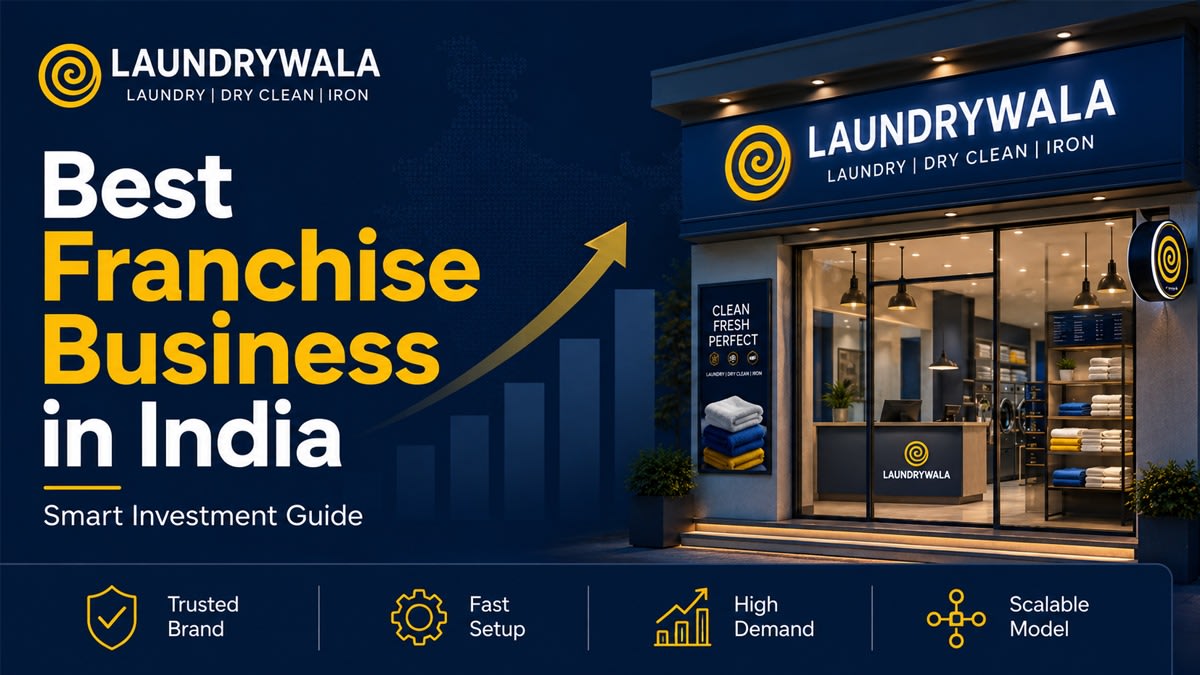
Investing in a franchise business is not only about choosing a famous brand. The real question is whether the company has a business model that can work on the ground, with repeat customers, clear investment, practical support, manageable daily operations and a realistic payback period.
For Indian investors in 2026, the right franchise should match three things: budget, location and personal involvement. A salaried professional looking for a second income will not evaluate a business the same way as a full-time entrepreneur, a family investor or someone planning to open a store in a Tier 2 city.
Franchise businesses such as laundry and dry cleaning, dairy retail, diagnostics, courier services, preschool education, eyewear and food retail all have demand in India, but they do not work in the same way. Some depend on daily walk-ins, some depend on repeat household usage, some need strong compliance, and some need a premium retail location.
This blog explains real franchise companies from an investor’s point of view, so you can understand which business model fits your capital, city demand and long-term goal.
Which Is the Best Franchise Business in India in 2026?
The best franchise business in India in 2026 is one that offers recurring customer demand, transparent investment, practical brand support, manageable store size and realistic payback. Laundry, dairy retail, logistics, diagnostics, preschool, kids retail, dessert retail and eyewear are strong options when the company, location and operating model fit the investor’s budget.
The table below gives a practical comparison of real franchise companies from different business niches. Investment figures are approximate because final cost can change based on city, store size, interiors, rental deposit, inventory, equipment and brand-approved setup requirements.
| Company | Business niche | Approx. investment | Space required | Best fit for |
|---|---|---|---|---|
| Laundrywala | Laundry and dry cleaning | Rs. 12 to 25 lakhs | 250 to 600 sq. ft. | First-time investors looking for repeat service demand, app-based operations and structured store support |
| Amul Preferred Outlet | Dairy and food retail | Rs. 1.85 lakhs approx. | 100 to 150 sq. ft. | Investors who want a low-space daily consumption retail business |
| DTDC | Courier and logistics | Rs. 2 to 5 lakhs approx. | 200 to 250 sq. ft. | Investors with local business contacts, delivery network understanding and process discipline |
| Dr Lal PathLabs | Diagnostic collection center | Rs. 3 to 4 lakhs approx. | 200 to 250 sq. ft. | Investors who want a healthcare-linked business with compliance and hygiene focus |
| Kidzee | Preschool education | Rs. 15 to 16 lakhs approx. | 2,000 to 3,000 sq. ft. | Investors interested in education, parent trust and long-term local reputation building |
| Giani Ice Cream | Dessert retail | Rs. 15 to 25 lakhs approx. | 100 to 400 sq. ft. | Food retail investors targeting high-footfall markets, malls and family areas |
| Lenskart | Eyewear retail | Rs. 20 to 30 lakhs approx. | 300 to 500 sq. ft. | Investors interested in organised eyewear retail with premium store presentation |
| FirstCry | Baby and kids retail | Rs. 35 to 50 lakhs approx. | Retail store premises required | Investors with higher working capital and interest in baby and kids retail |
Best Franchise Business in India for First-Time Entrepreneurs
First-time entrepreneurs usually need a franchise model that is not too dependent on personal industry experience. The business should have a clear customer need, training support, brand systems and enough repeat demand to build monthly stability. In India, this is why service-led and daily-need businesses often make more sense than trend-driven outlets. A good franchise should help the investor learn operations while still giving enough brand support to avoid expensive beginner mistakes.
1. Laundrywala
Laundrywala deserves the maximum attention in this guide because laundry and dry cleaning solve a recurring urban problem. Clothes need regular washing, ironing, dry cleaning, stain treatment, shoe cleaning, curtain cleaning and seasonal garment care. This is not a one-time purchase business. A household can return every week, a bachelor or PG customer can return every few days, and a small business can become a repeat account if service quality stays consistent.
For an investor, this repeat-use pattern is important. A laundry franchise does not depend only on walk-in sales. Demand can come from apartments, gated societies, working professionals, students, PGs, hostels, salons, boutiques, offices and families preparing for festivals or weddings. In Indian cities, many customers already struggle with limited drying space, hard water, unreliable domestic help and lack of time. A professional laundry and dry cleaning outlet solves these problems in a structured way.
Laundrywala’s franchise details make the model easier to evaluate. The investment range is Rs. 12 to 25 lakhs, the outlet area requirement is 250 to 600 sq. ft., the expected ROI period is 12 to 16 months, and the monthly profit potential is Rs. 1.5 to 3 lakhs. The brand also provides complete store setup support, prime location assistance, staff training, onboarding, marketing support and tech-enabled order management through app-based billing, CRM and operations.
The biggest advantage is that the investor does not need prior laundry experience. That matters in India because many first-time business owners hesitate to enter technical service businesses. In laundry and dry cleaning, mistakes can damage expensive garments, especially woollens, silk sarees, sherwanis, lehengas and designer wear. A structured process helps the outlet maintain sorting, inspection, fabric segregation, stain checking, separate washing and premium packaging.
Laundrywala also has consumer-side credibility that helps franchise trust. The brand has 4,00,000+ satisfied customers, 100+ stores across India, app availability on Google Play Store and Apple App Store, free pickup and delivery on orders above Rs. 349, standard delivery of 48 to 72 hours and express delivery within 24 hours with a minimal extra charge. For a franchise buyer, these details matter because they show that the business is not only a shop concept. It is supported by a consumer service system.
A laundry and dry cleaning franchise is especially suitable for Tier 1 and Tier 2 cities where residential growth is strong. Areas near apartments, coaching hubs, IT parks, hospitals, PG clusters and premium housing societies can create steady demand. The investor should still check local rent, competition, parking, pickup routes, staff availability and water quality before finalising a location.
For readers comparing franchise options, Laundrywala is a strong starting point because it combines recurring service demand with a controlled investment range. It also fits investors who want a business that can serve both households and local commercial customers instead of depending on only one customer segment.
2. Amul Preferred Outlet
Amul Preferred Outlet is suitable for investors who want a daily-consumption retail business with a smaller shop format. Dairy products, ice cream, butter, paneer, curd, beverages and frozen items have regular household demand. This makes Amul useful for residential colonies, markets, school areas, apartment clusters and neighbourhood shopping streets.
The official Amul Preferred Outlet format mentions a refundable security deposit of Rs. 25,000, 100 to 150 sq. ft. shop area, renovation cost of approximately Rs. 80,000 and equipment cost of approximately Rs. 80,000. It also mentions no profit sharing and no royalty for this outlet format.
The main advantage is low space requirement. The main challenge is retail discipline. The investor must manage refrigeration, product availability, electricity cost, expiry dates, stock rotation and daily walk-in sales. It is a good model for someone who understands neighbourhood retail and can personally monitor the outlet.
3. DTDC
DTDC is suitable for investors who understand courier movement, local business customers and delivery discipline. Courier and logistics demand comes from individuals, MSMEs, online sellers, offices and small traders. This makes the model useful in commercial markets, trading hubs, industrial areas and dense urban pockets.
DTDC’s partner page mentions multiple partner formats such as DTDC360 Partner, Enterprise Partner, Flex Partner, Smile Partner and Smile+ Partner. The page highlights quick setup, low capital formats, branded outlet support, CRM support, executive support and attractive service charges.
This business can be attractive, but it is operations-heavy. Delivery timing, pickup coordination, customer complaints, shipment tracking and staff reliability matter every day. Investors should choose this only if they are comfortable with process discipline and local movement management.
4. Dr Lal PathLabs
Dr Lal PathLabs fits investors who want to enter healthcare services with a diagnostic collection center model. Healthcare demand is less seasonal than many retail businesses, but it requires trust, hygiene and process accuracy. A collection center must handle patient interaction, sample collection, reporting coordination and compliance carefully.
The official franchise page mentions an exclusive DLPL collection center format, minimum investment around Rs. 3 to 4 lakhs and a preferred 200 to 250 sq. ft. ground-floor area with toilet facility.
This model is suitable for investors who can maintain professional standards and local trust. It may work near residential colonies, clinics, hospitals, senior citizen communities and medical markets. The investor should not treat it like a casual retail shop. Healthcare requires responsibility.
5. Kidzee
Kidzee is suitable for investors who are serious about early childhood education. A preschool franchise is not only about opening classrooms. It involves parent trust, teacher quality, safety, curriculum, local admissions and daily child handling. The business can be stable in the right residential catchment, but it needs patience and reputation-building.
Kidzee’s partner page mentions 2,500+ centres in 600+ cities in India and Nepal. Its franchise portal FAQ states that the typical investment to establish a Kidzee preschool franchise ranges between Rs. 15 to 16 lakhs, with terms and conditions and final amount varying by case.
This model is suitable for investors who can manage people well. Teachers, caretakers, parent communication and local reputation decide performance. It is not ideal for someone who wants a purely passive business.
6. FirstCry
FirstCry is a baby and kids retail franchise opportunity for investors interested in organised retail. Baby products, kidswear, toys, feeding products, maternity items and child-care essentials have emotional purchase value. Parents usually prefer trusted stores when buying products for infants and children.
The company’s franchise page invites enquiries for opening FirstCry franchise stores and highlights high return on investment and faster payback as part of its franchise communication.
This model can work in premium residential areas, malls and family-heavy markets. The challenge is inventory depth. A baby and kids retail store needs product range, display quality, staff knowledge and working capital. Investors should carefully check stock movement and rent before choosing this format.
7. Giani Ice Cream
Giani Ice Cream is suitable for investors who want dessert retail in high-footfall locations. Ice cream, shakes, sundaes and desserts can perform well in markets, malls, food streets, family outing zones and delivery-friendly neighbourhoods.
The official franchise enquiry form lists investment bands of Rs. 10 to 20 lakhs, Rs. 20 to 30 lakhs and above Rs. 30 lakhs. It also asks whether the premise area is owned, rented or leased, which shows that location economics are central to the model.
The business has strong brand recall in North India, but food retail must be studied carefully. Rent, footfall, staff, wastage, delivery app margins and seasonality can affect profits. It suits investors who understand retail food service and local customer timing.
8. Lenskart
Lenskart is suitable for investors interested in organised eyewear retail. Eyeglasses, sunglasses, contact lenses and eye testing services have practical demand, especially in urban and semi-urban India. The model combines retail, service and product consultation.
The Lenskart partner page mentions 2,500+ stores across 500+ cities, 25 to 30% margin and quick breakeven messaging. It also describes the store format as a premium store for all cities in India.
This model works best for investors who are comfortable with retail store presentation, optometrist requirements, customer consultation and premium location selection. Eyewear retail can be strong, but the store must inspire trust because customers are buying a health-linked product, not just a fashion accessory.
How to Choose a Franchise Business in India Without Getting Confused
Choosing a franchise business in India becomes difficult because every company presents its opportunity positively. The investor’s job is to separate excitement from operating reality. A good company presentation can help you understand the model, but it should not replace your own calculation. You need to check whether the business fits your city, budget, daily time, risk comfort and long-term goal.
Check repeat demand before checking profit claims
Repeat demand is more important than a large one-time margin. A laundry customer may return every week. A dairy customer may return daily. A diagnostic customer may come when health needs arise. A preschool parent may stay for an academic cycle. Each model has a different repeat pattern.
For first-time investors, recurring service demand is usually easier to build into predictable monthly revenue. This is one reason Laundrywala gets more attention in this guide. Laundry and dry cleaning demand can come from households, bachelors, working professionals and small businesses, which creates multiple customer entry points.
Understand the full investment, not only the franchise fee
Many investors make the mistake of comparing only franchise fees. The real cost includes store setup, interiors, equipment, rent deposit, staff salaries, electricity, software, stock, local marketing and operating buffer. A business that looks cheaper on paper may become expensive if the location needs high rent or heavy inventory.
Laundrywala gives a useful evaluation range because the investment range, outlet size, ROI period and monthly profit potential are clearly defined in the verified brand details. For any company, ask for the full project cost sheet before making a decision.
Match the business with your own involvement level
Some franchises need owner presence every day. Food retail, dairy retail, kids retail and logistics often need close supervision. Preschool requires people management and parent communication. Diagnostics require hygiene and compliance discipline. Laundry requires service quality, staff control, pickup coordination and customer trust.
A franchise is not automatically passive income. It becomes easier only after systems, staff and local customer flow are stable. The first 3 to 6 months usually decide whether the outlet builds discipline or starts leaking money.
Franchise Business Under 25 Lakhs in India
The Rs. 12 to 25 lakh range is one of the most practical zones for serious Indian franchise investors. It is large enough to build a proper outlet, but not so large that only big investors can participate. Many salaried professionals, families and first-time entrepreneurs look at this range because it can support a structured business without entering very heavy retail formats.
Laundrywala fits this range clearly with Rs. 12 to 25 lakhs investment, 250 to 600 sq. ft. area requirement and 12 to 16 months expected ROI. This makes it relevant for entrepreneurs who want a service business with household repeat demand rather than a pure product resale model.
Other companies may also fit specific investment bands depending on outlet type and city. Amul Preferred Outlet can be much lower in setup cost, while Kidzee, Giani and Lenskart can vary based on property, interiors and format. The investor should never assume that online investment figures include rent deposit, working capital and city-specific setup variation.
Profitable Franchise Business in India Depends on Location and Execution
Profitability in a franchise business is not created only by the brand name. It is created by the right location, local demand, staff discipline, repeat customers, pricing, service quality and cost control. Two outlets of the same company can perform differently if one is placed near the right customer base and the other is placed in a weak catchment.
Location quality decides early traction
For Laundrywala, a strong location is near residential societies, PG clusters, family apartments, offices, salons, boutiques, hostels or premium housing markets. For Amul, daily walk-in retail matters. For DTDC, offices and business customers matter. For Kidzee, family-heavy residential areas matter. For Giani, food footfall matters. For Lenskart, premium visibility and trust matter.
The investor should spend time studying the local market before signing. Nearby competition, road visibility, parking, rent, customer income level and delivery coverage can all affect results.
Support quality matters after launch
Many investors focus on opening day, but the real test starts after the first month. Staff training, complaint handling, billing, customer retention, local marketing and process control decide whether the business stabilises.
This is where Laundrywala’s setup support, staff training, operational support, marketing assistance and app-based systems become important for a new investor. These systems help reduce guesswork, especially for people entering laundry and dry cleaning for the first time.
What to Check Before Investing in a Franchise Business in India
Before investing, ask direct questions and get written clarity. A good franchise discussion should feel practical, not vague. If the company cannot explain setup cost, expected operating expenses, support, territory, marketing and recovery assumptions clearly, the investor should pause.
Ask for the complete cost sheet
The cost sheet should include franchise fee, interiors, equipment, branding, software, rent deposit, staff cost, working capital and launch marketing. Ask whether GST is included or separate. Ask what happens if the outlet takes longer to stabilise.
Ask what support continues after opening
Opening support is not enough. Ask about monthly operational guidance, staff replacement support, marketing campaigns, software support, customer complaint handling and performance monitoring. A franchise should help the investor operate better, not just sell the brand name.
Ask for city-level demand logic
A company may perform well nationally but still need the right micro-market. Ask why your specific area makes sense. For example, a Laundrywala outlet near a dense residential and working-professional belt has a different demand pattern than one placed in a low-density area. A Kidzee preschool needs young families. A DTDC outlet needs shipment movement. A Giani outlet needs food traffic.
How Franchise Entrepreneurs Are Building Recurring Revenue in India
Indian franchise investors are becoming more careful in 2026. They are not only asking, “How much can I earn?” They are asking better questions: How often will customers return? How much support will I get? How long will it take to recover investment? Can this business work in my city? Can I manage it without prior experience?
Laundrywala is worth studying closely in this context because it operates in a recurring household service category. The brand is Noida-based, has served 4,00,000+ customers, operates 100+ stores across India and offers app-based booking along with professional laundry, dry cleaning, ironing, shoe cleaning, carpet cleaning and curtain cleaning services. For franchise investors, its model includes store setup support, location assistance, staff training, operational guidance and marketing support.
You can explore Laundrywala’s official details and review the franchise opportunity based on your city, budget and preferred location. The right investor should still evaluate rent, competition, manpower and local customer demand before finalising any outlet
What Serious Investors Should Decide Before Applying
A franchise business should be selected like a long-term operating decision, not like a quick investment scheme. The best approach is to shortlist companies by customer demand first, then study investment, support, recovery period and location fit. A lower-cost franchise is not always safer, and a famous brand is not automatically better for every city.
For a first-time entrepreneur, Laundrywala is a strong company to evaluate early because it sits in a repeat-demand service category and provides clear franchise details: Rs. 12 to 25 lakhs investment, 250 to 600 sq. ft. area requirement, 12 to 16 months expected ROI and Rs. 1.5 to 3 lakhs monthly profit potential. The next step is to compare your city’s local demand, rental cost and manpower availability before speaking to the franchise team.
To explore Laundrywala’s franchise opportunity, Contact Laundrywala On Their Website or call 8650865586. Discuss your city, budget, outlet location and investment plan before moving ahead.
FAQs – India's Best Laundry Franchise Chain
Straight answers for entrepreneurs evaluating Laundrywala as a profitable laundry business and low investment franchise in India.