
Laundry Franchise for Women Entrepreneurs in India
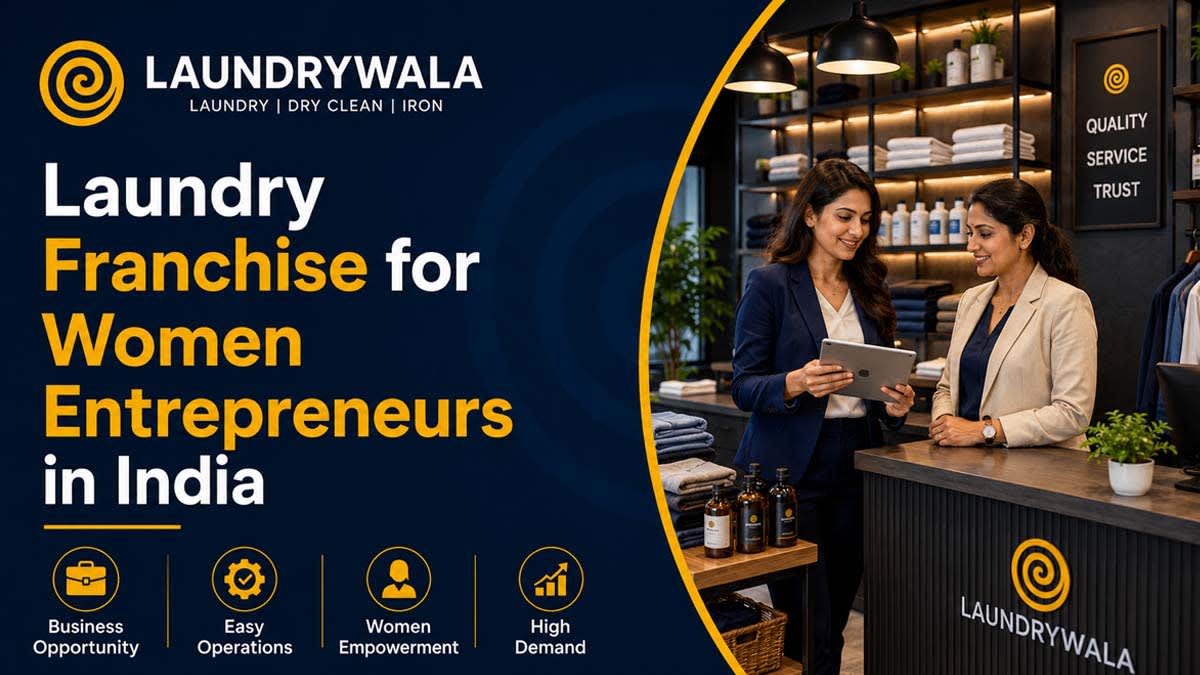
Women entrepreneurs are building successful businesses across retail, services, education, food, beauty, healthcare and technology. However, choosing the right business is not only about following a popular trend. It requires understanding the investment, operating model, customer demand, daily responsibilities and support available after launch.
A laundry franchise for women entrepreneurs in India can be worth considering because laundry and garment care solve a regular household need. Customers require washing, ironing, dry cleaning, shoe cleaning and home-fabric care throughout the year. A franchise model adds an established brand, operating procedures, training and technology, which can make entry easier for first-time entrepreneurs.
This guide explains how the business works, what investment planning involves, which challenges to consider and how women can evaluate a Laundrywala franchise opportunity realistically.
Why Consider a Laundry Franchise Business?
Laundry is a repeat-demand service rather than a one-time purchase. Families, students, working professionals, hotels, salons, offices and healthcare businesses may need garment or linen care regularly.
An organised laundry outlet can earn through multiple services instead of depending on only one category. These may include wash and fold, wash and iron, steam ironing, dry cleaning, shoe and bag cleaning, curtain cleaning, carpet cleaning and wedding-wear care.
The business can also combine walk-in orders with doorstep pickup and delivery. This allows the outlet to reach customers beyond the immediate market surrounding the store.
For women looking to start a structured service business, these characteristics can provide a practical foundation. However, profitability still depends on location, service quality, pricing, customer retention, operating costs and active management.
Why the Franchise Model Can Help First-Time Entrepreneurs
Starting an independent laundry business requires the owner to develop everything from the beginning. This includes branding, machinery selection, chemical processes, pricing, staff training, customer acquisition, billing and quality control.
A franchise generally provides an established operating framework. The entrepreneur receives guidance on store setup, equipment, services, brand presentation and daily procedures. This can reduce the trial-and-error involved in building a completely independent operation.
Women comparing both options can read this guide on laundry franchise versus an independent laundry business before making a decision.
A franchise does not remove business risk. The owner still needs to manage staff, expenses, customer complaints, local marketing and service performance. The real advantage is having a system and support network instead of starting without direction.
Who Can Start a Laundry Franchise?
A laundry franchise may suit women from different professional backgrounds, including:
- First-time entrepreneurs
- Working professionals planning a business transition
- Homemakers looking to build an independent enterprise
- Existing boutique, salon or retail business owners
- Family-business operators seeking a new service category
- Entrepreneurs interested in a recurring-revenue business
Previous laundry-industry experience may not be necessary when the franchise provides proper training. However, the owner should be comfortable managing people, following operational standards, tracking finances and communicating with customers.
The business does not have to be run entirely alone. An owner can appoint a store manager and trained staff while monitoring orders, revenue, customer feedback and performance through the business system.
How a Laundry Franchise Earns Revenue
A laundry outlet usually creates a customer base through regular wash-and-fold and wash-and-iron orders. These services can bring repeat weekly or monthly demand.
Dry cleaning and specialised care can increase the average order value. Sarees, suits, blazers, lehengas, wedding outfits, shoes, bags, curtains and carpets generally require more specialised treatment than everyday laundry.
Pickup and delivery add another growth channel. Customers can place orders online or through an app, after which garments are collected, processed and returned.
A balanced service mix is important. Regular laundry creates volume, while premium garment and home-fabric services can improve revenue per order.
Investment Required for a Laundry Franchise
The total investment depends on the store format, city, rent, outlet size, machinery, interiors and working-capital requirement.
Laundrywala’s current franchise information generally presents an estimated investment range of approximately ₹12–25 lakh, depending on the chosen model and location. Investors should request a current written cost sheet before making any payment because the final amount may vary.
A typical budget may include:
| Expense | What It May Cover |
|---|---|
| Franchise fee | Brand licence and initial support |
| Store setup | Interiors, signage and customer area |
| Machinery | Washing, drying and finishing equipment |
| Technology | Billing, CRM and order-management system |
| Initial supplies | Chemicals, packaging, tags and accessories |
| Working capital | Rent, salaries, utilities and local marketing |
| Delivery operations | Vehicle, fuel and pickup-related expenses |
Do not use the entire budget for interiors and machinery. Sufficient working capital should be kept aside for the first few months.
You can review the broader laundry business planning process in India before preparing your financial plan.
Government Support for Women Entrepreneurs
Women entrepreneurs may be eligible for government-backed finance, mentorship or business-support programmes. Eligibility, interest rates, approval and documentation depend on the applicant, business structure, project report and lending institution.
Stand-Up India
The official Stand-Up India Scheme supports eligible women and SC/ST entrepreneurs setting up greenfield enterprises. The scheme describes composite bank loans between ₹10 lakh and ₹1 crore for eligible new businesses in manufacturing, services, trading or agri-allied activities.
For a non-individual business, the official conditions state that an eligible woman or SC/ST entrepreneur should hold at least 51% of the shareholding and controlling stake. Loan approval is subject to scheme conditions and the bank’s assessment.
Pradhan Mantri MUDRA Yojana
The official MUDRA information portal provides details about loans for eligible non-corporate, non-farm micro and small enterprises. Women entrepreneurs can approach participating banks, NBFCs or microfinance institutions based on their funding requirement and eligibility.
MUDRA does not directly lend money to applicants. Entrepreneurs should apply through an authorised lending institution and verify the latest conditions before proceeding.
Women Entrepreneurship Platform
NITI Aayog’s Women Entrepreneurship Platform provides access to entrepreneurship resources, mentorship, knowledge and support initiatives. It can be useful for women seeking guidance beyond finance, including business development and networking.
Government schemes should be treated as possible support options, not guaranteed sources of funding. Prepare a project report, cost sheet, identity documents, business plan and realistic cash-flow estimate before approaching a lender.
How to Choose the Right Location
Location can strongly influence the success of a laundry franchise. A good catchment may include apartment societies, working professionals, hostels, PG accommodation, offices, hotels, salons and high-income residential areas.
Instead of analysing an entire city, study a practical delivery radius around the proposed store. Check the number of households, local competition, customer spending capacity, rent and road accessibility.
The outlet does not always need the most expensive main-market location. A visible store near a strong residential catchment with convenient pickup access may perform better than a costly showroom with weak repeat demand.
Before finalising a property, compare:
- Monthly rent and security deposit
- Residential density within the delivery radius
- Nearby competitors and their ratings
- Parking and delivery access
- Water, drainage and electricity availability
- Space for machinery, sorting and packaging
- Local demand for premium services
Ask the franchisor to conduct or review the location survey before signing a long lease.
What Support Should a Franchise Provide?
A good franchise partner should provide more than permission to use the brand name. Women entrepreneurs should ask for clear written information about pre-opening and post-opening support.
Important support areas include site evaluation, store layout, machinery guidance, staff training, cleaning procedures, pricing, technology,, marketing and operational assistance.
The franchise should also explain how customer complaints, damaged-garment cases, delayed orders and quality issues are handled. A strong operating system is especially valuable when the owner is new to professional garment care.
Before signing, speak with existing franchise partners. Ask about actual support, order volume, operating challenges, local marketing and the time required to build repeat customers.
Managing the Business Day to Day
The owner’s daily role may include monitoring incoming orders, staff attendance, cleaning quality, delivery schedules, customer feedback, expenses and sales.
A technology-enabled system can make these tasks easier by recording customer information, garment counts, order status, payments and delivery updates. However, software cannot replace active supervision.
Quality control is one of the most important responsibilities. Garments should be tagged, inspected, processed according to fabric requirements and checked before packaging. Consistency builds trust and encourages repeat orders.
Women who prefer a manager-led model can hire trained staff, but they should continue reviewing financial and service reports regularly.
Challenges Women Entrepreneurs Should Evaluate
A laundry franchise can be attractive, but it is not a passive-income scheme. New owners should prepare for operational challenges.
Staff retention, quality consistency, delivery delays, machinery maintenance and customer complaints require attention. Demand may also take time to build in a new location.
Rent, electricity, salaries, fuel, chemicals and marketing affect monthly profitability. Investors should prepare conservative, expected and optimistic financial projections rather than depending only on advertised returns.
Women should also check legal ownership, franchise-agreement terms, territory protection, exit conditions, royalty structure and renewal charges. A lawyer or qualified adviser should review the agreement before signing.
Why Consider Laundrywala?
Laundrywala offers a multi-service laundry and dry-cleaning franchise model that combines walk-in business with pickup and delivery.
Its service portfolio includes laundry, dry cleaning, steam ironing, shoe and bag cleaning, curtain and carpet cleaning, and wedding-wear care. This allows franchise partners to serve different customer needs from the same outlet.
The brand provides assistance in areas such as location evaluation, store setup, technology, training, marketing and operations. Laundrywala also promotes a royalty structure under which royalty is not charged until ROI, subject to the final franchise agreement.
Investment, income and ROI figures should always be verified through the latest written proposal. Returns cannot be guaranteed because outlet performance depends on location, order volume, expenses, service quality and owner involvement.
Entrepreneurs can explore the official Laundrywala franchise opportunity and learn more about Laundrywala before requesting commercial details.
Steps to Start a Laundry Franchise
Begin by deciding your total investment capacity and the amount you can keep as working capital. Select a city and shortlist local catchments based on residential demand and competition.
Next, request the complete franchise proposal, cost breakdown, agreement and support details. Discuss location availability and arrange a site assessment.
Prepare your funding and business documents, complete legal and tax registrations, and finalise the property only after location approval. Store setup, machinery installation, staff hiring and training can then begin.
Before launch, create a local marketing plan covering apartment societies, Google Business Profile, social media, referral offers and doorstep pickup awareness.
FAQs – India's Best Laundry Franchise Chain
Straight answers for entrepreneurs evaluating Laundrywala as a profitable laundry business and low investment franchise in India.
Still have questions?
Can't find what you're looking for? Our fabric care specialists and franchise advisors are here to help.
