
How to Remove Mold from Clothes: Complete Guide to Remove Mold & Mildew Safely
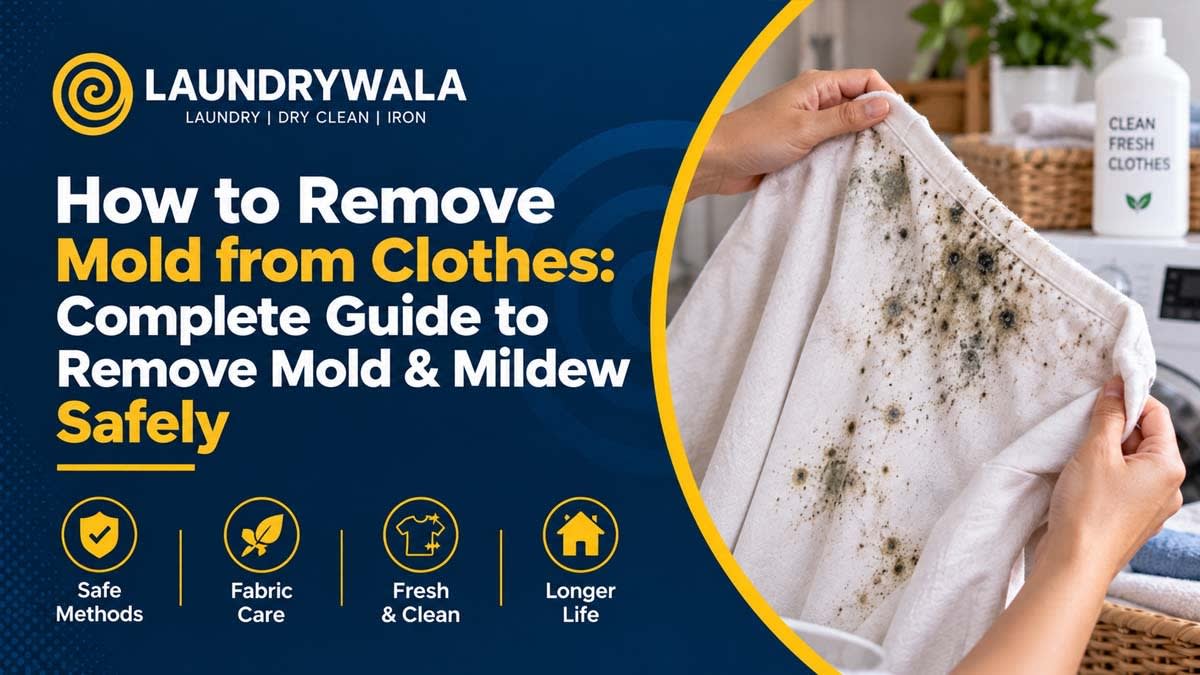
Finding mold on your favourite clothes can be unpleasant, especially during the monsoon or when clothes have been stored while slightly damp. Mold may appear as black, green, white or grey spots and is often accompanied by a musty smell.
If you are wondering how to remove mold from clothes, the first priority is to stop the moisture problem, separate the affected garments and clean them according to their fabric-care instructions.
Mold grows where moisture is present, and fabrics can also support mold growth. The CDC notes that damp and moldy environments may cause symptoms such as stuffy nose, coughing, wheezing, irritated eyes or skin reactions in some people.
For everyday garments or clothes that require specialised fabric care, Laundrywala provides professional Laundry Service and dry-cleaning support with doorstep pickup and delivery.
Why Does Mold Grow on Clothes?
Mold needs moisture to grow. Clothes are particularly vulnerable when they remain damp for long periods or are stored in poorly ventilated areas.
Common causes include:
- Storing clothes before they are completely dry
- Leaving wet laundry inside the washing machine
- Keeping sweaty clothes in a closed laundry basket
- High humidity during the monsoon
- Damp wardrobes and cupboards
- Water leakage near storage areas
- Poor ventilation
- Storing clothes in sealed bags while moisture is present
- Keeping seasonal clothes unused for months without airing them
The EPA identifies moisture control as the key to mold control and recommends drying wet materials completely.
How to Identify Mold on Clothes
Before treating a garment, check whether the problem actually looks like mold or mildew.
Common signs include:
Dark or Coloured Spots
Mold may appear as black, grey, green, brown or whitish patches.
Musty Smell
Even if obvious stains are not visible, a strong damp or musty smell may indicate prolonged moisture exposure.
Fabric Discolouration
Old mold growth can sometimes leave permanent discoloration.
Clothes Feel Damp
Garments stored in humid wardrobes may continuously absorb moisture.
If mold contamination is extensive, or if you have respiratory problems, avoid unnecessarily disturbing moldy material. CDC guidance advises taking precautions when handling significant mold contamination.
How to Remove Mold from Clothes Step by Step
Step 1: Separate Moldy Clothes
Keep affected clothes away from clean laundry.
Putting moldy garments directly into the regular laundry basket may expose other clothes to spores and moisture.
Handle heavily affected garments carefully.
Step 2: Check the Care Label
Before using detergent, water, heat or any stain treatment, check the garment's care label.
Cotton shirts, synthetic T-shirts, silk sarees, woollen sweaters and blazers cannot all be treated in the same way.
The FTC explains that garment care labels provide instructions or warnings for washing, bleaching, drying, ironing and dry cleaning so that inappropriate care does not damage the garment.
If your garment says Dry Clean Only, avoid aggressive home treatment and consider Laundrywala's professional dry-cleaning service.
How to Remove Surface Mold from Washable Clothes
If the garment is washable and the mold is limited:
- Take the garment to a well-ventilated area.
- Avoid aggressively shaking or brushing mold indoors.
- Follow the fabric care instructions.
- Pre-treat visible marks with a suitable fabric-safe detergent.
- Wash the garment at the temperature allowed by its care label.
- Inspect the garment after washing.
- Dry it completely before storing.
Do not assume that hotter water is always better. The correct temperature depends on the fabric and care label.
Can Vinegar Remove Mold from Clothes?
White vinegar is frequently suggested as a household cleaning method for musty laundry, and it may be suitable for some washable garments.
However, it should not be treated as a universal solution.
Before using vinegar:
- Check the garment care label.
- Test a small hidden area first.
- Avoid delicate or colour-sensitive garments unless you know the treatment is safe.
- Never combine different cleaning chemicals without confirming that they are compatible.
For silk, wool, designer clothing, embroidery and dry-clean-only garments, professional treatment is the safer choice.
Can Baking Soda Remove Mold Smell from Clothes?
Baking soda is commonly used to help manage odours in washable laundry.
It may help reduce musty smells, but removing an odour does not necessarily mean that every mold stain or underlying moisture problem has been resolved.
Use it only when appropriate for the garment and avoid aggressive scrubbing on delicate fabric.
Your reference article similarly discusses vinegar and baking soda as household approaches while emphasising correct washing and complete drying.
How to Remove Mold from White Clothes
Mold stains are especially noticeable on white shirts, uniforms, towels and bedsheets.
For washable white fabrics:
- Separate affected garments.
- Read the care label.
- Pre-treat visible stains.
- Use a suitable laundry detergent.
- Wash according to the recommended temperature.
- Check the garment before drying.
- Make sure it is completely dry before storage.
Do not automatically use chlorine bleach. Some white fabrics still cannot tolerate bleach, and care labels may specifically restrict bleaching. The FTC notes that care labels should indicate when chlorine or all types of bleach would harm a garment.
How to Remove Mold from Coloured Clothes
Coloured clothes require extra care because aggressive stain treatments can cause fading.
Use these precautions:
- Test products on a hidden area first.
- Avoid random bleach use.
- Use a detergent suitable for colours.
- Follow the recommended washing temperature.
- Avoid harsh scrubbing.
- Dry the garment fully.
If the colour starts running or fading, stop DIY treatment.
Mold on Silk, Wool, Sarees and Designer Clothes
Delicate garments should not be treated like everyday cotton clothes.
Silk sarees, woollens, suits, blazers, lehengas, sherwanis and embroidered garments may react badly to excessive water, scrubbing, heat or unsuitable chemicals.
For such items, professional Dry Cleaning Service is generally a better option.
Laundrywala's services include professional care for everyday garments as well as delicate items such as suits, sarees, lehengas and silk garments.
How to Remove Musty Smell from Clothes
Sometimes clothes smell moldy even when visible mold marks are limited.
Try these steps for washable garments:
- Do not store the garment again without cleaning it.
- Wash according to the fabric-care label.
- Make sure detergent is rinsed properly.
- Dry the garment completely.
- Air the wardrobe before returning the clothes.
- Address humidity or dampness inside the storage area.
If the smell returns repeatedly, the real problem may be the cupboard, wall, laundry basket or washing machine rather than the garment alone.
Why Complete Drying Is Important
Removing a stain without controlling moisture may allow the problem to return.
The EPA recommends fixing moisture problems and completely drying affected materials because moisture is fundamental to mold growth.
After washing:
- Do not fold damp clothes.
- Do not put slightly wet clothes inside wardrobes.
- Give thick garments enough drying time.
- Improve airflow during humid weather.
- Keep cupboards dry and ventilated.
How to Prevent Mold on Clothes During Monsoon
Prevention is much easier than repeatedly treating mold.
The reference material you supplied also emphasises drying clothes promptly, improving ventilation and controlling humidity to prevent mold from returning.
Follow these habits:
- Dry washed clothes as soon as possible.
- Never store damp clothes.
- Air wardrobes regularly.
- Do not overcrowd cupboards.
- Keep wet towels separate.
- Dry sweaty gym clothes promptly.
- Check wardrobes near damp walls.
- Use suitable moisture absorbers where required.
- Keep the washing machine clean and dry between uses.
- Fix leaks and water seepage.
Can Sunlight Help with Moldy Clothes?
Sun drying can help clothes dry thoroughly when the fabric allows it.
However, direct sunlight is not suitable for every garment. Dark colours and some delicate fabrics may fade or become damaged after prolonged exposure.
Always follow the care label and consider shade drying for colour-sensitive garments.
Common Mistakes to Avoid
Storing Clothes While Damp
Even small amounts of retained moisture can encourage musty odours and mold growth.
Using Harsh Chemicals Without Testing
A treatment that works on cotton may damage silk, wool or dyed fabrics.
Scrubbing Delicate Clothes
Aggressive brushing can damage fibres and spread surface contamination.
Ignoring the Wardrobe
Cleaning the garment alone may not solve the problem if the cupboard itself is damp.
Ironing Before the Problem Is Resolved
Avoid applying unnecessary heat to stained or damp fabric unless permitted by the care label.
When Should You Choose Professional Cleaning?
Consider professional laundry or dry cleaning when:
- Mold covers a large part of the garment.
- The stain has been present for a long time.
- Musty odour keeps returning.
- The garment is expensive.
- The fabric is silk or wool.
- The item has embroidery or embellishments.
- The garment is labelled Dry Clean Only.
- Previous home treatment has failed.
The EPA also recommends considering a specialist when an affected item is expensive, sentimental or difficult to clean safely.
You can explore Laundrywala's professional laundry and garment-care services or contact Laundrywala to arrange cleaning assistance.
FAQs about best Laundry Tips
Everything you need to know about expert fabric care, stain removal, and maintaining your garments like a pro.