
Bridal Lehenga Dry Cleaning: Complete Guide to Clean & Preserve Your Wedding Lehenga
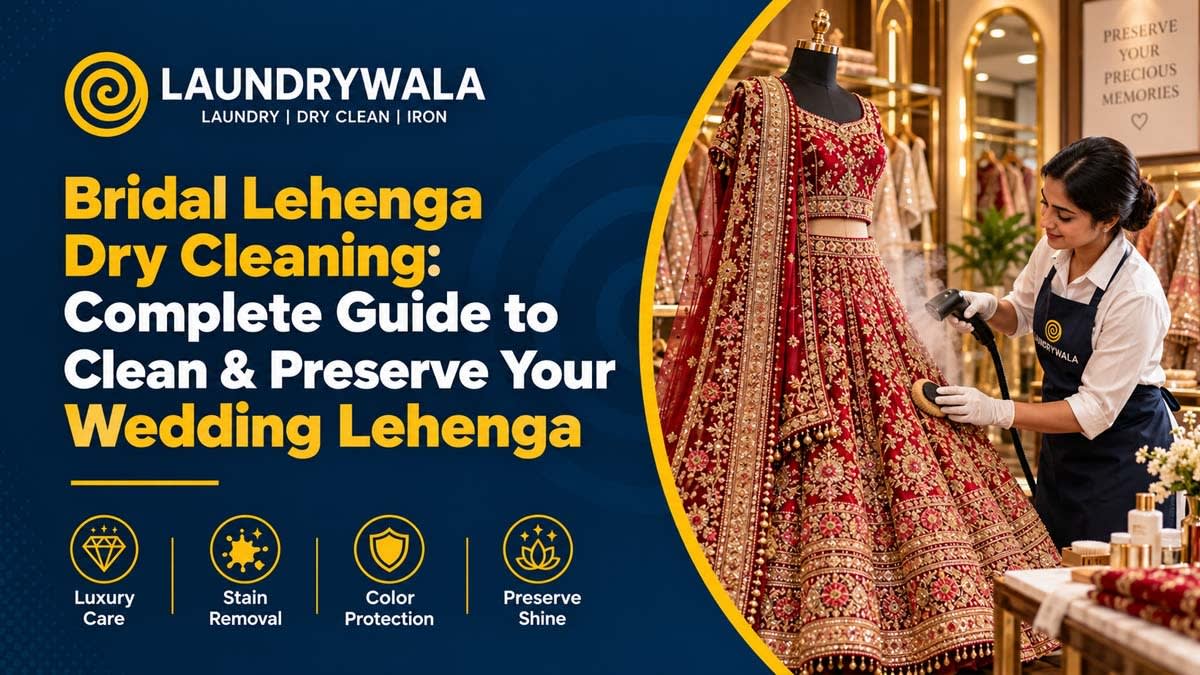
A bridal lehenga is not just a wedding outfit; it is a memorable part of one of the most special days of life. Heavy embroidery, delicate fabrics, zari work, sequins, beads, and premium materials make bridal lehengas beautiful but also difficult to clean.
After wedding functions, lehengas often collect makeup marks, food stains, dust, sweat, and perfume residue. Many people search for bridal lehenga dry cleaning because they want to maintain their expensive wedding outfit without damaging its original beauty.
Regular washing methods are not suitable for bridal wear because normal detergents and machine washing can damage embroidery, fabric texture, and decorative work.
This guide explains the importance of professional lehenga cleaning, the cleaning process, maintenance tips, and how to store your bridal lehenga safely.
Why Is Bridal Lehenga Dry Cleaning Important?
Bridal lehengas are made using delicate fabrics such as silk, velvet, georgette, net, chiffon, and designer fabrics. These materials require specialised cleaning techniques.
Professional dry cleaning helps:
- Remove visible and hidden stains
- Protect embroidery and embellishments
- Maintain fabric quality
- Prevent colour fading
- Remove odour and sweat residue
- Increase the lifespan of your wedding outfit
Unlike regular clothes, bridal lehengas require expert handling because every section of the outfit may have different materials and designs.
For delicate wedding outfits, choosing a professional Dry Cleaning Service ensures that fabrics and decorations are handled using suitable cleaning methods.
Common Problems After Wearing a Bridal Lehenga
After wedding ceremonies, bridal lehengas usually face different types of issues:
Makeup Stains
Foundation, lipstick, and cosmetic products can leave marks on collars, sleeves, and dupatta areas.
Food and Beverage Stains
During wedding celebrations, oil, sweets, drinks, and food particles can accidentally fall on the lehenga.
Sweat and Body Odour
Long wedding functions can cause sweat absorption, especially in blouse and inner lining areas.
Dust and Dirt
Outdoor events can expose lehengas to dust and pollution.
If these stains remain untreated for a long time, they become harder to remove.
Can You Wash a Bridal Lehenga at Home?
Washing a bridal lehenga at home is generally not recommended.
Home washing can cause:
- Fabric shrinking
- Colour bleeding
- Embroidery damage
- Loose threads
- Bead and sequin damage
Heavy bridal outfits are designed with multiple layers and decorative work that require careful cleaning.
For other premium clothing items like wedding outfits and ethnic wear, professional Wedding Wear Cleaning solutions help maintain the original look and quality of expensive garments.
Bridal Lehenga Dry Cleaning Process
Professional cleaning follows a careful step-by-step process.
1. Fabric Inspection
Before cleaning, experts check:
- Fabric type
- Embroidery details
- Stain condition
- Colour stability
- Decorative elements
This helps decide the safest cleaning method.
2. Stain Identification
Different stains require different treatments.
For example:
- Makeup stains need gentle treatment
- Oil stains require specialised solutions
- Food stains need careful removal
Using one cleaning method for every stain can damage the outfit.
3. Gentle Cleaning Process
Bridal lehengas are cleaned using suitable techniques depending on fabric and design.
Professionals take extra care of:
- Zari work
- Sequins
- Beads
- Stone work
- Embroidery
4. Finishing and Packaging
After cleaning, the lehenga is properly dried, finished, folded, and packed to protect it from dust and moisture.
How to Remove Different Stains From Bridal Lehenga?
Makeup Stains
Do not rub makeup stains aggressively because it can spread the mark.
Use professional cleaning methods for expensive bridal outfits.
Oil Stains
Oil can penetrate deep into fabrics. Avoid home remedies because they may leave permanent marks.
Haldi Stains
Haldi stains are common after Indian wedding ceremonies. Yellow stains require careful treatment, especially on light-coloured lehengas.
Perfume Marks
Excess perfume can sometimes affect delicate fabrics and colours.
How to Store Bridal Lehenga After Dry Cleaning?
Proper storage is important to maintain your wedding lehenga for years.
Follow these tips:
- Store in a breathable garment cover
- Keep away from moisture
- Avoid direct sunlight
- Fold carefully to prevent embroidery damage
- Refold occasionally to avoid permanent creases
Avoid storing bridal lehengas in plastic covers for long periods because moisture can get trapped inside.
According to The Smithsonian Museum Textile Conservation Resources, proper storage conditions play an important role in protecting valuable textiles.
Professional Cleaning vs Home Cleaning
Home Cleaning
Suitable for:
- Regular simple fabrics
- Minor dust removal
Not suitable for:
- Heavy embroidery
- Designer lehengas
- Silk bridal outfits
Professional Cleaning
Recommended for:
- Wedding lehengas
- Designer ethnic wear
- Expensive fabrics
- Heavy embroidery
Professional cleaners understand fabric behaviour and use appropriate processes.
How Often Should Bridal Lehenga Be Dry Cleaned?
A bridal lehenga should ideally be cleaned after wearing it, especially if:
- It has makeup stains
- It was worn outdoors
- It has sweat marks
- It has food stains
Cleaning soon after the event prevents stains from becoming permanent.
Laundrywala Bridal Lehenga Cleaning Solution
Wedding outfits require special attention because they contain delicate fabrics and detailed craftsmanship.
Laundrywala provides professional cleaning solutions for premium garments, including bridal wear, ethnic outfits, and delicate clothing.
Along with bridal outfit care, customers can also explore Laundry Pickup & Delivery Service for convenient doorstep garment care.
Professional cleaning helps protect your wedding memories by maintaining the beauty and quality of your special outfit.
FAQs about best Dry Cleaning Tips
Get answers about premium dry cleaning processes, delicate garment handling, and how we care for your fabrics.