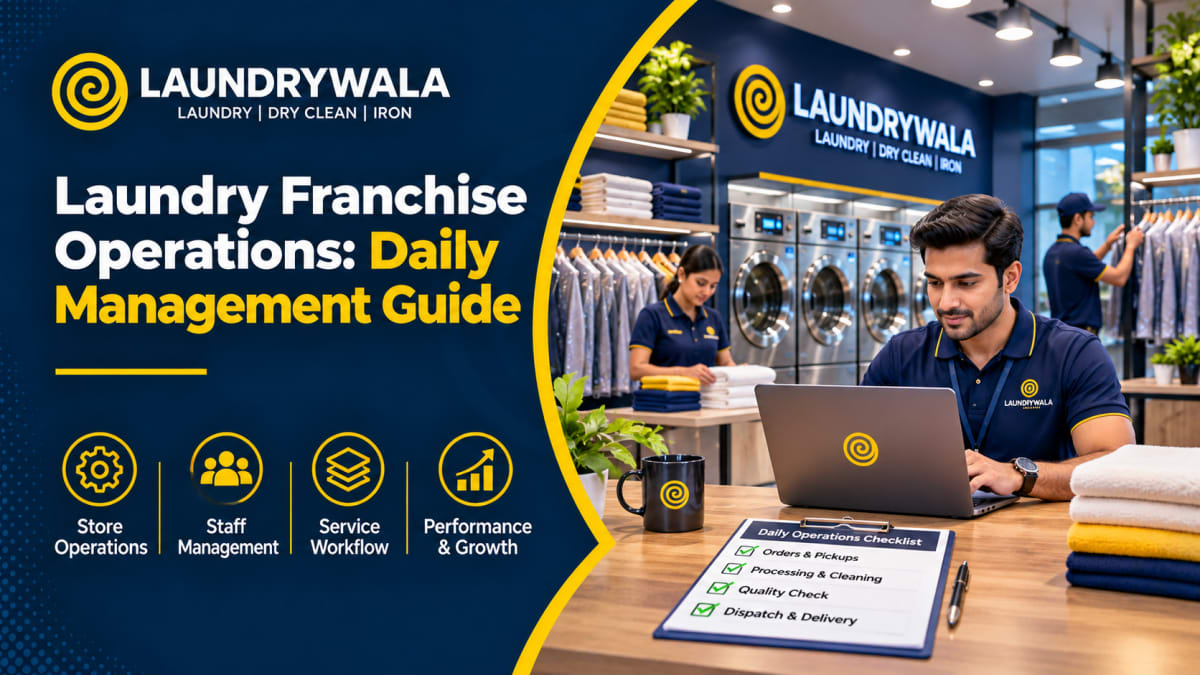

Starting a business is a major financial decision, especially for entrepreneurs who want to become business owners without investing several crores of rupees. With different franchise opportunities available across India, many aspiring investors are interested in business models that offer manageable startup costs, recurring customer demand and the potential to generate sustainable profits.
A Low Investment High Profit Franchise is often considered an attractive option because it allows entrepreneurs to enter an established business system rather than creating a completely independent operation.
However, there is an important difference between a franchise advertised as highly profitable and a business that actually generates consistent returns.
Investment alone does not determine profitability. A business with an affordable franchise package may still struggle because of expensive rent, weak demand, poor staffing or high operating costs. Similarly, a franchise requiring more initial capital may offer better long-term economics when its operations are efficient and the local market supports its services.
For this reason, investors should evaluate the complete business model rather than relying only on promotional claims.
Some franchise opportunities earn revenue through products, while others provide recurring services. Food outlets, retail businesses, education centres and laundry franchises all have different operational requirements, inventory risks and customer-acquisition costs.
Professional laundry and dry cleaning is one service-based industry worth examining. Customers may need regular washing, ironing, dry cleaning and specialised garment care throughout the year.
Organised laundry franchises can combine these services with trained employees, professional machinery, digital billing and doorstep pickup and delivery.
In this guide, we explain how to identify a low-investment franchise with realistic profit potential in India, compare business models, understand investment requirements and evaluate whether a Laundrywala franchise matches your entrepreneurial goals.
What Is a Low Investment High Profit Franchise?
A low-investment franchise is a business opportunity that requires comparatively less startup capital than alternative models being considered by the same investor.
A high-profit franchise is one capable of generating attractive earnings relative to its revenue, investment and operating risks.
These two descriptions are relative, not universal financial categories.
For example, a ₹15 lakh investment may be affordable for one entrepreneur but financially unsuitable for another.
Similarly, a business generating ₹1 lakh in monthly operating profit may appear successful, but its attractiveness depends on the original investment, financing expenses, tax obligations and cash-flow requirements.
What Does Low Investment Actually Mean?
In franchising, investment generally includes more than the initial fee paid to the brand.
Depending on the business, the total capital requirement may include commercial property deposits, machinery, interiors, technology, licences, initial supplies, launch expenses and working capital.
The advertised franchise price may not include every component.
Therefore, investors should request a complete written project estimate before treating an opportunity as affordable.
What Does High Profit Mean?
Profit is the amount remaining after the relevant business expenses have been deducted from revenue.
A franchise generating strong sales may still have limited profit if its operating expenses are high.
Investors should distinguish between gross margin, operating profit, net profit and cash available after loan repayments.
The objective should be sustainable profitability rather than unrealistic promises of guaranteed monthly income.
Why Are Entrepreneurs Interested in Low-Investment Franchises in India?
Many first-time entrepreneurs prefer franchise opportunities because the business concept, brand identity and operating procedures may already be established.
Instead of independently developing every process, the franchisee can receive access to defined systems and support under the franchise agreement.
However, the availability and effectiveness of support differ between brands.
Established Business Processes
A franchise may provide guidance on service delivery, employee training, customer management and daily operations.
Documented procedures can help reduce some startup uncertainties.
Brand Recognition
An established brand may be familiar to potential customers.
However, brand awareness alone cannot guarantee that a new outlet will generate sufficient sales.
Training and Setup Assistance
Some franchisors provide assistance with site evaluation, equipment selection, store layout and staff training.
Investors should confirm exactly what is included.
Potential for Business Expansion
An entrepreneur may eventually consider additional outlets after establishing a successful first unit.
Expansion should depend on actual financial and operational performance rather than assumptions about future growth.
Greater Planning Visibility
A well-documented franchise proposal can provide information about equipment, staffing, operating procedures and contractual obligations.
This may make early-stage planning more structured, although the investor remains responsible for independent due diligence.
How to Identify a Genuine Low Investment High Profit Franchise
Finding a Low Investment High Profit Franchise requires investigating both the upfront capital requirement and the business's potential to produce reliable earnings.
A franchise should not be considered attractive simply because its brochure uses the words "low cost," "guaranteed income" or "fast ROI."
Look for Recurring Customer Demand
Businesses that address repeat customer needs may have opportunities to generate regular revenue.
Examples include professional garment care, certain maintenance services and other frequently used services.
However, the frequency of customer demand must be verified in the intended market.
Evaluate the Full Cost of Operations
Review rent, salaries, utilities, materials, transportation, marketing, maintenance and recurring franchise charges.
These expenses can significantly influence profitability.
Understand Revenue Per Customer
Average order value and purchase frequency help explain how a franchise earns revenue.
A business requiring large numbers of low-value transactions may have different economics from one offering multiple service categories.
Check the Franchise Agreement
Examine royalties, territory rights, supplier requirements, software fees, agreement duration and termination conditions.
Commercial terms can affect long-term profit.
Speak with Existing Franchise Operators
Where possible, ask current partners about actual operating challenges, costs, customer acquisition and support.
Independent verification provides more useful information than relying only on promotional projections.
Low Investment Franchise Business Ideas in India
Different sectors offer franchise opportunities with varying startup requirements.
The most suitable option depends on an entrepreneur's experience, capital, location and management interests.
Laundry and Dry Cleaning Franchise
Professional laundry businesses provide services such as washing, ironing, dry cleaning and selected specialised garment care.
Revenue may come from repeat households, individual garment cleaning and appropriate commercial contracts.
The business requires reliable machinery, fabric-care expertise and consistent customer service.
Cloud Kitchen Franchise
Cloud kitchens prepare food primarily for delivery or takeaway.
They may require less customer-facing space than conventional restaurants, but food inventory, kitchen staffing, hygiene and delivery-related expenses must be managed carefully.
Tea and Coffee Kiosk Franchise
Compact beverage outlets may have relatively limited space requirements compared with full-service cafés.
However, success depends on location, customer footfall, ingredient management and pricing.
Education or Training Franchise
Education-related businesses may earn revenue through classes, courses or training programmes.
The model depends heavily on trainer quality, local demand, student retention and applicable regulatory requirements.
Home Maintenance Service Franchise
Cleaning, repairs and other home services may attract recurring local demand.
However, employee skills, service scheduling, customer trust and service quality are essential.
Retail Franchise
Retail businesses can benefit from established product offerings and branding.
However, inventory requirements, seasonal demand, stock obsolescence and rent may influence financial performance.
Each opportunity should be compared using actual franchisor proposals rather than broad assumptions about industry profitability.
Low Investment Franchise Comparison: What Should Investors Evaluate?
The following comparison highlights business-model characteristics rather than claiming that one industry always offers higher profits.
| Business Model | Major Investment Areas | Main Operational Risk |
|---|---|---|
| Laundry and Dry Cleaning | Equipment, store, utilities, working capital | Garment damage, machinery and service quality |
| Cloud Kitchen | Kitchen equipment, refrigeration, inventory | Food spoilage, hygiene and delivery economics |
| Coffee or Tea Kiosk | Kiosk, machines, ingredients, rent | Footfall and product margins |
| Training Centre | Premises, instructors, learning systems | Enrolment and instructor quality |
| Home Services | Training, tools, scheduling and transport | Staff reliability and service consistency |
| Retail Store | Inventory, premises, fixtures | Unsold stock and demand changes |
The comparison does not establish a universal investment ranking.
A compact service outlet can cost more than a small retail kiosk, while a premium food franchise can require considerably more capital than either.
Investors should compare actual total costs and expected contribution margins.
Why a Laundry Franchise May Be a Good Business Opportunity
Laundry services address an ongoing household need: cleaning and maintaining clothing.
Many households wash everyday garments at home, but customers may outsource some tasks because of time constraints, convenience or specialised fabric requirements.
This creates opportunities for professional laundry providers in markets where sufficient demand exists.
1. Recurring Service Requirements
Customers may need professional garment care regularly.
Working professionals may use ironing or shirt-cleaning services, while families may require washing and occasional dry cleaning.
However, recurring need does not guarantee repeat orders for a particular store.
Customers must trust the provider.
2. Multiple Revenue Categories
A laundry outlet may offer washing, dry cleaning, steam ironing, shoe cleaning and selected household textile services.
Different categories can serve different customer needs.
The profitability of each service must be evaluated independently.
3. Less Dependence on Perishable Inventory
Unlike food businesses that handle fresh ingredients, laundry operations primarily use cleaning products and packaging supplies.
Many of these consumables have longer usable storage periods than fresh food.
However, machinery, chemical handling and garment liability introduce other risks.
4. Doorstep Pickup and Delivery
Convenient collection can help customers use professional laundry services without visiting the store.
A concentrated service area may allow efficient routes and repeat bookings.
Delivery expenses must still be included in pricing.
5. Process-Based Operations
Laundry services can be managed through documented procedures involving garment inspection, cleaning, finishing and delivery.
Training and digital order tracking may help maintain consistency.
These advantages make professional garment care a business category worth evaluating, not a guarantee of investment success.
Laundrywala Franchise Investment in India 2026
Laundrywala offers different franchise formats designed for varying investment levels and operational capacities.
According to its current published franchise information, indicative packages include the following:
| Franchise Format | Indicative Investment | Store Area |
|---|---|---|
| Alpha Basic | ₹13–15 lakh | 200–250 sq. ft. |
| Classic | ₹15–20 lakh | 250–300 sq. ft. |
| Combo Premium | ₹20 lakh or more | 300–350 sq. ft. |
These figures are planning references, not guaranteed final project costs.
Actual expenditure may differ because of property conditions, commercial terms, taxes, equipment requirements, transportation, site modifications and working capital.
Alpha Basic Format
The compact format is designed for entrepreneurs considering a smaller retail laundry outlet.
Its equipment configuration and store layout are intended to support defined processing requirements within a limited area.
However, investors must verify whether the available machinery capacity is sufficient for their proposed service area.
Classic Format
The Classic model provides additional processing capacity compared with the basic format.
It may be considered where demand estimates justify greater equipment investment.
The financial decision should be based on realistic customer volume and expected machine utilisation.
Combo Premium Format
The premium format is designed for businesses considering retail laundry together with potential business-to-business processing.
Commercial customers may create larger volumes, but they can also require negotiated prices, additional working capital and strict delivery commitments.
What Is Included in the Investment?
Laundrywala's franchise information describes packages involving commercial machinery, store setup, branding and technology.
However, exclusions and exact components vary.
Request the latest itemised proposal identifying equipment, franchise fees, GST, installation, rental deposits and operating reserves.
For a detailed explanation, explore Laundrywala's franchise investment and ROI information.
How Much Profit Can a Low-Investment Franchise Earn?
Profitability depends on the relationship between revenue and the full cost of operating the business.
A franchise cannot be evaluated responsibly by comparing only its advertised monthly sales.
Revenue Is Not Profit
Revenue represents the total amount earned from customers before deducting business expenses.
Operating profit is determined after relevant operating expenses have been deducted.
Net profit may require further consideration of financing expenses, depreciation and taxes, depending on the calculation.
Understanding Profit Margin
An operating profit margin can be calculated as:
Operating Profit Margin = Operating Profit ÷ Revenue × 100
Suppose a hypothetical franchise generates ₹4 lakh in monthly sales and records ₹80,000 in operating profit.
Its operating profit margin would be 20%.
This is an illustrative calculation, not a claim about actual Laundrywala outlet performance.
The business's cash flow may differ because of capital expenditure, loan repayments and other obligations.
Why Profit Varies Between Locations
A store with lower rent may still struggle if few customers use its services.
A busier outlet may generate more revenue but incur higher staffing, utility and transport expenses.
Actual profitability depends on customer demand, pricing, processing efficiency and disciplined financial management.
Investors can explore Laundrywala's laundry franchise profit margin guide for a more detailed explanation of financial performance.
Low Investment vs High ROI: Understanding the Difference
Low investment and high return on investment are related concepts, but they are not interchangeable.
A lower startup cost does not automatically produce a higher investment return.
What Is ROI?
Return on investment measures a financial return relative to capital invested.
One simple annual measure is:
Annual ROI = Annual Net Return ÷ Total Investment × 100
For example, if a hypothetical business requires ₹15 lakh in capital and generates ₹3 lakh in annual net return under a consistently defined calculation, the annual ROI would be 20%.
The calculation is illustrative and excludes complications such as financing structure, timing of cash flows and taxes.
What Is Capital Payback?
Capital payback refers to the period required for cumulative business cash flow to recover the initial investment.
The actual period may be longer or shorter than an advertised estimate.
It depends on the outlet's ramp-up period, monthly operating cash flow and additional capital requirements.
Why Investors Should Be Cautious
A franchise may advertise an attractive payback period based on expected performance.
However, actual results can vary substantially.
Investors should request the assumptions behind projections and test weaker sales scenarios.
For more information, read the Laundrywala franchise ROI guide.
What Are the Hidden Costs of a Franchise Business?
A franchise promoted as affordable can become expensive if investors overlook costs outside the initial package.
Rental Deposits and Advance Payments
Commercial properties may require substantial deposits.
These payments can tie up capital before the store begins operating.
Electrical and Property Modifications
Machinery may require dedicated electrical connections, water storage, drainage or ventilation.
The final cost depends on the selected premises.
Employee Recruitment and Training
Staffing involves salaries, recruitment and other applicable employment expenses.
Additional training may also involve costs depending on the franchise arrangement.
Marketing and Local Launch
A new store may need advertising and residential community outreach to attract its first customers.
Marketing should be budgeted realistically rather than assumed to generate immediate profitability.
Software and Recurring Fees
Franchise agreements may include software charges, royalties, marketing contributions or mandatory supplier requirements.
Every recurring obligation should be reviewed.
Working Capital
Working capital helps cover operational expenses while customer demand develops.
A business should not exhaust its funds on the initial setup and then struggle to pay employees or suppliers.
How to Choose the Best Location for a Low-Investment Franchise
Location has a direct influence on customer access, rent and operational efficiency.
For a laundry franchise, the ideal property is not necessarily the most expensive main-road shop.
Focus on Residential Demand
Occupied apartment communities, housing societies, hostels and professional neighbourhoods may create potential laundry customers.
However, local demand must be validated.
Compare Rent with Customer Potential
An affordable store with strong access to suitable households may be more attractive than a high-rent location with limited recurring demand.
Consider total occupancy cost rather than rent alone.
Assess Pickup and Delivery Access
Laundry outlets offering doorstep service need practical road connections and delivery routes.
Traffic, parking and collection efficiency influence operating costs.
Verify Infrastructure
A processing outlet requires suitable electricity, water supply, drainage and ventilation.
Do not assume every commercial shop can support laundry machinery.
Check Existing Competition
Study local dry cleaners, ironing providers and other laundry businesses.
Evaluate customer preferences and service gaps.
A complete location analysis can help identify avoidable risks before signing a lease.
Low Investment High Profit Franchise Opportunities in Tier 2 and Tier 3 Cities
Entrepreneurs increasingly investigate smaller cities when evaluating affordable business locations.
However, a Tier 2 or Tier 3 city is not automatically a better investment destination.
Potentially Manageable Commercial Costs
Some smaller cities may offer lower commercial rental expenses than premium metro neighbourhoods.
This can reduce monthly fixed costs.
However, property pricing varies considerably even within the same city.
Emerging Service Requirements
Residential developments, educational institutions and professional workplaces may create demand for organised garment care.
Local customer preferences and spending habits must be studied.
Importance of Pricing
Customers in certain markets may be more price-sensitive.
A business must offer a clear value proposition rather than relying entirely on premium pricing.
Start with Suitable Capacity
Avoid purchasing more equipment than the market can realistically support during the initial stage.
The franchise format should match demand forecasts.
Build Local Relationships
Apartment society outreach, referral programmes and reliable service can help a laundry business develop customer awareness.
However, marketing activity should be measured against completed orders and repeat purchases.
How to Increase Profitability in a Laundry Franchise
A laundry outlet can work toward stronger profitability by improving both revenue quality and operating efficiency.
Encourage Repeat Customers
Customer retention can reduce dependence on constant introductory advertising.
Consistent cleaning quality, reliable delivery and easy booking are essential.
Improve Average Order Value
Appropriate additional services may increase the amount customers spend per transaction.
However, add-on services should genuinely meet customer needs and remain profitable.
Use Machinery Efficiently
Plan compatible washing loads and avoid unnecessary machine cycles.
Efficiency should never compromise fabric safety or cleaning quality.
Reduce Garment Rewashing
Repeated processing increases labour, electricity, water and consumable costs.
Quality control and staff training can help reduce avoidable errors.
Organise Delivery Routes
Customers in concentrated residential areas may be served through grouped collections.
This can help control transportation expenses.
Monitor Service Margins
Track the contribution generated by wash-and-fold, ironing, dry cleaning and other service categories.
Higher revenue does not automatically mean higher profit.
The goal is to increase financially sustainable sales rather than simply the number of transactions.
Why First-Time Entrepreneurs Consider Laundry Franchises
A professional laundry business may appeal to first-time entrepreneurs who prefer a structured service model.
Unlike businesses centred on rapidly changing product trends, laundry services address an established household requirement.
However, the business still requires operational knowledge.
Training Can Reduce Initial Complexity
Franchise training may explain garment handling, sorting, equipment operation and customer service.
This can help owners who do not have prior laundry industry experience.
Standard Operating Procedures
Written procedures can support consistent service quality and employee accountability.
Digital Order Management
Billing, customer records and garment tracking can improve operational visibility.
Local Customer Relationships
Laundry stores can develop repeat customers when they consistently provide reliable cleaning and convenient service.
Operational Responsibility Remains Important
A laundry franchise should not be viewed as passive income.
Owners must monitor staffing, customer complaints, machinery, expenses and daily orders.
A franchise offers a business system, but its success depends on execution.
How Laundrywala Supports New Franchise Entrepreneurs
Laundrywala offers a professional laundry and dry cleaning franchise model combining garment-care services with store setup and operational guidance.
Its published franchise programme describes assistance with location evaluation, machinery planning, store layout, staff training and technology-enabled processes.
Store Setup Assistance
The franchise team can provide guidance on layout and equipment requirements for the selected format.
Staff Training
Training may cover garment inspection, cleaning procedures, ironing, order management and customer communication.
Technology-Enabled Operations
Digital billing and order-management tools can help operators track transactions and service progress.
Multiple Service Categories
Approved outlets may provide regular laundry, dry cleaning, steam ironing and selected specialised services.
Post-Launch Guidance
Operational reviews and other support may be available according to the current franchise arrangement.
Prospective investors should verify the precise scope and conditions in the written proposal and agreement.
Explore the Laundrywala laundry and dry cleaning franchise opportunity for current information.
Important Questions to Ask Before Investing in a Franchise
Before choosing any franchise opportunity, investors should request enough information to understand both the financial commitment and the operational expectations.
The first question should concern total investment, including costs excluded from the advertised package.
Next, ask how the business generates revenue and which expenses influence profitability.
Understand franchise fees, royalties, territory rights and software charges.
Request details about training, store setup and continuing support.
Discuss the process for selecting and approving a commercial location.
Ask whether the franchisor can provide assumptions behind ROI projections.
Review the agreement's duration, termination conditions and machinery ownership provisions.
Finally, speak with qualified financial and legal advisers before making a substantial commitment.
A franchise is more attractive when the investor understands the risks as clearly as the opportunities.
Government Registrations for Starting a Franchise in India
Business registration and regulatory obligations depend on the entity type, state, property and business activities.
Entrepreneurs should verify applicable requirements rather than assuming every franchise needs the same permissions.
MSME Registration
Eligible enterprises can register through the official Udyam Registration portal.
The Government of India provides this registration free of charge.
Udyam registration does not replace other mandatory permits.
GST Registration
GST obligations depend on applicable registration provisions and business circumstances.
The official GST registration guide provides information about the application process.
Investors should consult a qualified tax professional where necessary.
State and Local Approvals
Depending on the business, trade permissions, establishment compliance, fire safety and other approvals may apply.
The Government of India's National Single Window System can help identify relevant central and state approvals.
A laundry processing facility may also need to examine applicable water, wastewater and environmental requirements.
Common Mistakes When Choosing a Low-Investment Franchise
The biggest mistake is selecting a business solely because its advertised investment looks affordable.
Investors must consider the complete project budget and whether they have enough working capital to support the outlet.
Another mistake is accepting profitability claims without checking the financial assumptions.
Some entrepreneurs also select a location based on low rent without researching customer demand.
Others underestimate the importance of employee training and daily management.
Signing a franchise agreement without understanding royalties, termination conditions and other obligations can create additional risks.
A further mistake is assuming that a recognisable brand guarantees customer orders.
Customers still evaluate service quality, pricing, convenience and trust.
A franchise investment should be based on evidence rather than enthusiasm alone.
How to Start a Low-Investment Laundry Franchise in India
Entrepreneurs considering an organised laundry business can follow a structured decision process.
Step 1: Define Your Capital Budget
Calculate how much capital is available for setup and ongoing operations.
Maintain suitable financial reserves.
Step 2: Select Your Preferred City
Identify areas where professional laundry demand may exist.
Review residential density, customer budgets and existing service providers.
Step 3: Explore Franchise Formats
Compare equipment capacity, property requirements and the total cost of each available model.
Step 4: Request a Detailed Proposal
Ask for an itemised investment sheet with clear inclusions, exclusions and recurring expenses.
Step 5: Evaluate the Location
Confirm that the proposed property can support required machinery, utilities and operational workflow.
Step 6: Review the Franchise Agreement
Understand the financial, operational and contractual obligations before signing.
Step 7: Complete Necessary Approvals
Arrange applicable registrations, property permissions and other required compliance.
Step 8: Prepare the Store
Complete equipment installation, staff recruitment, training and operational testing.
Step 9: Launch Local Marketing
Introduce the business through appropriate neighbourhood outreach and digital channels.
Step 10: Monitor Actual Performance
Track revenue, expenses, order volume, service quality and repeat customers.
Use actual operating data to improve the business rather than relying entirely on initial projections.
Is Laundrywala a Low Investment High Profit Franchise in India?
Laundrywala may be considered a comparatively lower-capital franchise option when evaluated against business models requiring substantially larger premises or more expensive infrastructure.
Its current published formats start at an indicative ₹13–15 lakh for the Alpha Basic model, with higher investment requirements for larger configurations.
However, whether that qualifies as low investment depends on the investor's budget and the alternatives being considered.
The potential for attractive profits depends on local demand, pricing, rent, machine utilisation, employee productivity and repeat customer behaviour.
Laundrywala's franchise systems may help entrepreneurs manage these operational requirements through structured processes and training.
Nevertheless, franchise ownership involves financial risk, and no particular income or payback period should be assumed.
Prospective investors should request the current commercial proposal, independently assess their location and review conservative financial projections before investing.
Choose a Franchise Based on Real Profit Potential
Finding a Low Investment High Profit Franchise in India requires more than comparing investment figures or reading promotional profitability claims.
The best opportunity is one that matches the investor's financial capacity, management skills and local customer demand.
A successful franchise should have a clear revenue model, manageable operating expenses, realistic growth opportunities and transparent contractual terms.
Laundry and dry cleaning is one service-based sector that may appeal to entrepreneurs interested in recurring household requirements and structured daily operations.
Laundrywala offers different franchise formats supported by store setup guidance, machinery planning, staff training and technology-enabled processes.
However, every franchise investment should be evaluated independently.
Before making a decision, compare total project costs, verify local demand, understand recurring payments and consider how the business performs under conservative sales assumptions.
Explore Laundrywala Franchise Opportunities in India
Planning to start your own professional laundry business? Learn about available franchise formats, investment requirements and location opportunities through Laundrywala's official website.
FAQs – India's Best Laundry Franchise Chain
Straight answers for entrepreneurs evaluating Laundrywala as a profitable laundry business and low investment franchise in India.
Still have questions?
Can't find what you're looking for? Our fabric care specialists and franchise advisors are here to help.