
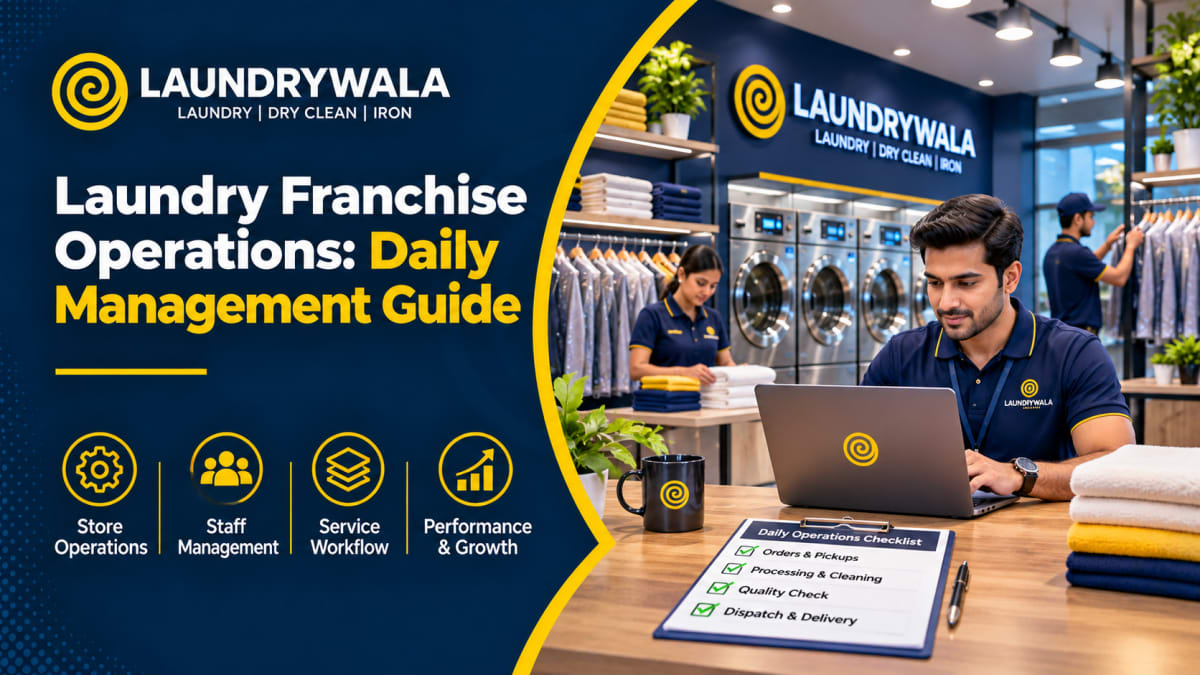
Starting a laundry franchise is an important step for entrepreneurs entering India's organised garment-care industry. However, opening a professionally branded store and installing commercial washing machines are only the beginning. The long-term performance of a laundry outlet depends on how effectively its daily operations are managed.
Every day, a laundry franchise handles several connected activities, including customer bookings, garment collection, inspection, sorting, washing, dry cleaning, ironing, packaging, billing and delivery. A mistake at any stage can affect customer satisfaction, increase expenses or delay service.
Effective Laundry Franchise Operations require a structured management system that keeps employees, machines, customer orders and financial records working together.
For example, a store may receive a large number of orders but still struggle financially because of inefficient machine usage, excessive rewashing or repeated delivery delays. Another outlet may maintain consistent performance by organising workloads, following standard operating procedures and resolving customer concerns quickly.
The difference often comes down to everyday management rather than the number of machines or the size of the shop.
Laundry franchise owners must understand how to assign staff responsibilities, monitor garment movement, maintain cleaning quality, control consumable usage and measure store performance.
Technology can simplify these responsibilities, but successful operations still require trained employees, accurate records and regular supervision.
In this guide, Laundrywala explains how to manage daily laundry franchise operations in India, including opening procedures, order processing, garment tracking, machinery maintenance, staffing, customer communication, cost control and end-of-day reporting.
What Are Laundry Franchise Operations?
Laundry franchise operations refer to the activities required to run a professional laundry and dry cleaning outlet efficiently.
These activities begin when a customer places an order and continue until the cleaned garments are returned and the transaction is completed.
The process usually involves customer service, garment handling, cleaning, finishing, quality inspection, delivery and financial management.
Customer-Facing Operations
These include receiving orders, explaining services, confirming prices, arranging pickups, managing payments and handling complaints.
Employees representing the store should communicate clearly and avoid making unrealistic promises about cleaning results or turnaround times.
Processing Operations
Processing includes garment inspection, sorting, stain assessment, washing, drying, dry cleaning where available and professional finishing.
Each garment must be handled according to its fabric composition and manufacturer care instructions.
Back-Office Operations
Back-office responsibilities include attendance, staff schedules, inventory records, machinery servicing, cash reconciliation and performance reporting.
These activities may be less visible to customers, but they directly affect service quality and profitability.
Delivery Operations
Stores offering doorstep pickup and delivery must coordinate routes, collection schedules, garment handovers and delivery confirmations.
Every completed order should be traceable throughout the process.
Why Daily Operations Management Matters in a Laundry Franchise
A laundry franchise is a process-driven service business.
Customers entrust the store with personal clothing, including everyday garments, expensive formalwear and delicate fabrics.
Poor operational discipline can create costly mistakes.
Consistent Quality Builds Customer Trust
Customers expect similar service quality whenever they place an order.
A standardised workflow helps maintain cleaning and finishing consistency across employees and shifts.
Better Scheduling Reduces Delays
Laundry orders move through several processing stages.
When managers understand machine capacity, staffing and pending deliveries, they can schedule workloads more realistically.
Cost Control Protects Profitability
Laundry businesses consume electricity, water, cleaning products, packaging and employee time.
Monitoring these expenses helps identify wastage and unnecessary reprocessing.
Accurate Records Improve Accountability
Digital order records and garment identification can reduce mix-ups and make it easier to investigate problems.
Repeat Customers Support Revenue
Customers are more likely to return when garments are handled carefully and delivered reliably.
However, customer retention must be earned through actual service performance.
For a broader explanation of the franchise system, read Laundrywala's laundry franchise business model guide.
1. Start Every Day with a Laundry Store Opening Checklist
An organised opening routine helps the store identify problems before customer orders begin arriving.
The opening checklist should be completed by the store manager or an authorised employee.
Check Store Cleanliness
Inspect the reception counter, garment storage areas, processing zones and equipment surroundings.
Remove unnecessary clutter and keep workspaces suitable for their intended purpose.
Clean garments should remain protected from contact with unprocessed laundry.
Inspect Machinery
Check for visible leaks, unusual machine conditions, warning indicators and obstructions.
Only authorised employees should operate commercial equipment.
Any suspected electrical or mechanical problem should be reported before the machine is used.
Verify Utilities
Confirm the availability of electricity, water and required processing supplies.
If the facility experiences a utility problem, review whether existing delivery commitments can still be met.
Review Pending Orders
Check the previous day's unfinished garments and orders scheduled for delivery.
Identify priority items requiring additional processing or quality inspection.
Assign Staff Responsibilities
Brief employees about expected order volumes, machine schedules, pickup routes and urgent customer commitments.
A short opening review can prevent confusion later in the day.
2. Create a Standard Laundry Order Receiving Process
Garment receiving is one of the most important operational stages.
An incorrect garment count or incomplete service instruction can create problems even when cleaning is performed correctly.
Confirm Customer Information
Record the customer's name, contact details and relevant collection or delivery information.
Use only the information necessary for providing the service.
Identify the Required Service
Confirm whether the customer requires wash and fold, wash and iron, steam ironing, dry cleaning or another available service.
Do not assume that every garment in the same order needs identical treatment.
Count Garments Accurately
Check individual garment quantities where applicable.
Record any differences between the customer's stated count and the actual received items.
Inspect Visible Damage
Look for torn seams, broken buttons, colour bleeding, heavy stains or other existing issues.
Where practical, document important observations before processing.
Confirm Prices and Delivery Dates
Explain relevant charges, additional treatment costs and expected delivery windows.
Provide a receipt or digital order confirmation.
Clear documentation reduces disputes and improves customer confidence.
3. Use Garment Tagging and Digital Order Tracking
Garment identification is essential when a store processes multiple customer orders simultaneously.
Without a reliable system, clothing can be mixed, misplaced or delivered incorrectly.
Assign a Unique Order Number
Every customer order should receive a unique identifier.
This number should connect the booking, garment records, invoice and delivery details.
Use Item-Level Identification Where Needed
Dry-clean-only garments, premium clothing and individually priced services may benefit from item-level tagging.
Tags must be suitable for the garment and applied without causing damage.
Record Processing Status
A digital system can track whether an order is received, awaiting sorting, under processing, ready for quality inspection or prepared for delivery.
Maintain a Handover Record
When garments move between staff members, store sections or processing partners, records should identify the transfer.
This makes missing-item investigations easier.
Protect Customer Data
Access to customer records should be limited to authorised personnel.
Software passwords, customer contact details and transaction records must be managed securely.
Laundrywala's franchise support overview describes technology-enabled billing, order management and pickup scheduling as features of its operating model.
4. Organise Garment Sorting Before Washing
Correct sorting protects clothing and supports efficient processing.
Different fabrics require different cleaning methods.
Separate by Fabric and Care Label
Cotton, polyester, wool, silk and delicate blended garments may have different care requirements.
The manufacturer's care instructions should take priority.
Separate Colours Where Appropriate
Dark, light and potentially colour-bleeding garments may need separate loads.
Do not combine unfamiliar fabrics without assessing colourfastness and treatment compatibility.
Identify Special Treatment Requirements
Some items contain embroidery, leather trims, beads or coatings that require specialist handling.
Such garments should not enter a standard wash simply because they arrived in a regular laundry bag.
Maintain Separation Between Soiled and Clean Garments
Organise work areas to reduce the risk of clean clothing coming into contact with unprocessed items.
Special categories, such as healthcare or contaminated textiles, require their own applicable safety and hygiene procedures.
Industry guidance from the Textile Rental Services Association highlights the importance of documented textile-processing procedures, equipment maintenance and quality assurance.
5. Manage Washing Machine Loads Efficiently
Machine utilisation affects productivity, electricity usage, water consumption and garment quality.
However, efficiency does not mean filling every machine to its maximum physical capacity regardless of the fabric.
Follow Equipment Load Ratings
Use the manufacturer's recommended load limits and programme instructions.
Overloading can prevent effective cleaning and increase mechanical strain.
Group Compatible Orders
Where the operating procedure permits, compatible garments may be processed together while maintaining reliable customer identification.
Never compromise garment separation or fabric-care requirements to increase throughput.
Select Appropriate Programmes
Wash settings should reflect fabric composition, soil level and care instructions.
Avoid using intensive cycles when they are unsuitable for the garment.
Monitor Rewash Rates
Repeated washing increases operating costs and can damage delicate clothing.
Record why items require reprocessing.
Common causes may include inadequate sorting, unsuitable programmes or incomplete stain assessment.
Track Processing Capacity
Compare daily completed loads against available machine hours and staffing.
This helps identify whether a store is experiencing capacity constraints or underutilisation.
6. Maintain Professional Dry Cleaning and Stain Treatment Standards
Dry cleaning requires specialised processes and should not be treated as ordinary machine washing.
Franchise stores providing dry cleaning must follow the approved equipment, chemical-handling and operational procedures applicable to their facilities.
Inspect Garments Before Treatment
Assess fabric construction, colourfastness, trims, stains and care labels.
Some garments may be unsuitable for particular solvents or processes.
Use Trained Employees
Only appropriately trained and authorised personnel should handle specialist cleaning equipment and chemicals.
Avoid Guaranteed Stain-Removal Promises
Certain stains cannot be removed completely without risking fabric damage.
Customers should receive realistic information about treatment limitations.
Follow Chemical Safety Requirements
Employees must understand safe storage, handling, ventilation and relevant emergency procedures.
The US National Institute for Occupational Safety and Health provides industry research on chemical, fire and ergonomic hazards in commercial dry cleaning.
This is a technical reference, not a substitute for applicable Indian safety requirements.
Laundrywala's professional dry cleaning services illustrate the specialised garment-care category that some franchise formats may provide.
7. Manage Drying, Ironing and Finishing Operations
Cleaning is only one part of the customer experience.
Customers also expect garments to be returned dry, neatly presented and suitable for wearing.
Dry Garments Completely
Incomplete drying can contribute to unpleasant odours and further garment-care problems.
Follow the correct drying temperature and method for each fabric.
Prevent Excessive Heat Exposure
Delicate garments can be damaged by unsuitable tumble-drying or ironing temperatures.
Employees should check care labels before finishing.
Organise Ironing Workloads
Group compatible finishing tasks according to the approved operating procedure.
Provide sufficient space for pressing and garment handling.
Avoid Unnecessary Handling
Repeatedly moving garments between workstations can increase the risk of creasing, mix-ups and contamination.
Design a logical workflow from washing to finishing and packaging.
Inspect Final Appearance
Check that garments are adequately cleaned, dry and appropriately finished.
Any outstanding cleaning limitation should be recorded before customer handover.
8. Establish a Final Laundry Quality-Control Process
Quality control should happen before dispatch, not only after a customer complains.
A final inspection helps identify errors while the garment remains at the store.
Verify the Order
Confirm that the garment count matches the order record.
Check whether all listed services have been completed.
Examine Cleaning Results
Inspect visible stains, fabric appearance and finishing quality.
Avoid unnecessary reprocessing when additional treatment could damage the garment.
Check for Damage
Look for unexpected tears, missing buttons, colour changes or finishing marks.
If a problem is identified, follow the store's escalation and customer communication process.
Confirm Packaging
Use suitable packaging that protects garments during handling and delivery.
Ensure premium or delicate clothing receives appropriate protection.
Approve Dispatch
The authorised employee should confirm that the order is ready for customer collection or delivery.
Quality approval should be recorded where the software supports it.
9. Manage Daily Pickup and Delivery Operations
Doorstep service can improve customer convenience, but it adds logistical complexity.
An inefficient collection system can increase expenses and create missed commitments.
Create Delivery Zones
Group nearby residential communities into practical service areas.
Route planning should consider actual traffic, travel time and customer density.
Schedule Collection Windows
Offer realistic pickup windows based on staff availability.
Avoid accepting simultaneous bookings that the delivery team cannot fulfil.
Verify Garments at Handover
Confirm the order identity and follow the prescribed collection or delivery verification procedure.
Keep Clean and Soiled Items Separate
Use appropriate containers and handling arrangements during transportation.
Clean garments should be protected from contact with incoming unprocessed laundry.
Track Delivery Performance
Measure completed deliveries, delayed orders, failed collection attempts and transportation costs.
Use these figures to improve route planning.
For the business economics behind doorstep operations, read Laundrywala's laundry pickup and delivery business model guide.
10. Create Clear Staff Roles and Responsibilities
Employee management is a central part of daily laundry store operations.
Even a small outlet needs clear accountability.
Store Manager
The manager may supervise daily orders, staff attendance, customer complaints, cash reconciliation and operational reporting.
Laundry Operator
The operator manages approved washing and drying procedures, machine loading and processing records.
Ironing and Finishing Employee
This employee handles suitable garment finishing and checks appearance before packaging.
Reception and Billing Staff
Reception employees manage customer bookings, invoices, garment counts and communication.
Pickup and Delivery Personnel
Delivery employees collect and return orders, confirm handovers and maintain accurate route records.
In a smaller store, one trained employee may perform several responsibilities. However, combining roles must not compromise safety or quality.
11. Improve Employee Training and Productivity
Laundry operations depend on technical knowledge and consistent handling.
An employee who understands the machine controls but cannot identify delicate fabrics may still create serious garment-care problems.
Provide Role-Based Training
Train employees according to their actual responsibilities.
Include garment inspection, sorting, machine operation, stain escalation, finishing and customer communication where appropriate.
Use Written SOPs
Document essential procedures in a format that employees can follow.
SOPs should explain the correct process, required safety precautions and escalation steps.
Conduct Short Daily Briefings
Review workload, delivery deadlines and special garments before processing begins.
Monitor Work Quality
Evaluate employees using meaningful measures such as accuracy, completion time, garment damage incidents and quality standards.
Encourage Problem Reporting
Staff should report machinery faults, incorrect orders and damaged garments promptly.
Problems identified early are generally easier to manage than issues discovered after delivery.
12. Maintain Laundry Machinery and Equipment
Machinery breakdowns can interrupt processing and delay customer orders.
Preventive maintenance helps reduce avoidable operational disruption.
Perform Daily Visual Checks
Employees should check for leaks, unusual sounds, warning lights and visible damage.
Do not bypass machine guards or safety mechanisms.
Follow Manufacturer Cleaning Instructions
Machines, filters and associated components require maintenance according to their manuals.
The correct frequency depends on usage and machine specifications.
Schedule Professional Servicing
Use qualified technicians for electrical, mechanical and specialist equipment maintenance.
Maintain a Service Log
Record maintenance dates, faults, repairs and scheduled inspections.
This helps managers identify recurring issues.
Plan for Equipment Downtime
Develop a procedure for handling orders when an important machine becomes unavailable.
Customers should be informed when service commitments are affected.
Commercial equipment manufacturer Primus also emphasises daily equipment checks, operator training and preventive maintenance in professional laundry facilities.
13. Control Detergent, Chemical and Packaging Inventory
Inventory management helps prevent stock shortages and unnecessary expenditure.
A laundry outlet typically needs detergents, compatible cleaning products, stain-treatment materials, packaging and garment identification supplies.
Maintain Minimum Stock Levels
Set reorder points based on typical consumption and supplier lead times.
Avoid waiting until essential consumables are completely exhausted.
Monitor Chemical Usage
Employees should follow approved dosing instructions.
Using excessive detergent does not guarantee better cleaning and may increase rinsing requirements.
Store Products Safely
Follow product labels and safety data sheets.
Keep incompatible chemicals separated and restrict access where necessary.
Never mix chemicals casually.
Track Packaging Consumption
Record the use of garment covers, bags, labels and other materials.
Unexpected increases may indicate wastage or changes in order composition.
Verify Deliveries
Check supplier invoices, quantities and product specifications before accepting stock.
Franchisees should also follow any approved-supplier requirements contained in their agreements.
14. Manage Customer Complaints Professionally
Customer complaints are an important source of operational information.
Ignoring them can affect repeat business and local reputation.
Acknowledge the Concern
Listen carefully and record the customer's explanation.
Avoid blaming employees or customers before reviewing the facts.
Check Order Records
Review garment inspection notes, processing status, staff handovers and delivery confirmation.
Investigate Fairly
Determine whether the issue involves a processing error, pre-existing garment condition, billing mistake or delivery problem.
Explain the Resolution
Offer a clear response consistent with applicable policies and legal obligations.
Possible remedies may depend on the specific circumstances.
Record Preventive Action
Use complaints to identify training or workflow improvements.
A repeated complaint type may reveal a systemic problem that requires management attention.
15. Monitor Daily Revenue and Store Expenses
Financial management should be part of the daily operating routine.
Waiting until the end of the month to review business performance may allow avoidable expenses to accumulate.
Review Completed Orders
Compare the number of received, completed and delivered orders.
Track any significant changes in service demand.
Reconcile Payments
Check cash, digital payments, pending balances and refunds against the billing system.
Investigate discrepancies promptly.
Monitor Variable Costs
Review chemical consumption, packaging, delivery expenses and reprocessing costs.
These may change with order volume.
Track Fixed Expenses
Rent, salaries, subscriptions and other recurring costs must be included in financial planning.
Review Service Margins
Revenue from washing, ironing and dry cleaning should be evaluated alongside the costs of providing those services.
Higher sales do not automatically mean higher profit.
16. Use Daily Laundry Franchise KPIs
Key performance indicators help owners understand whether the store is operating efficiently.
A useful dashboard does not need dozens of metrics.
Start with the measures that reflect service quality, productivity and financial performance.
| KPI | What It Measures | Why It Matters |
|---|---|---|
| Daily Orders Received | New customer orders | Shows current demand |
| Orders Completed | Finished processing orders | Measures throughput |
| On-Time Delivery Rate | Orders delivered within commitment | Tracks reliability |
| Rewash Rate | Orders requiring reprocessing | Identifies quality problems |
| Average Order Value | Revenue per completed order | Tracks customer spending |
| Customer Complaints | Recorded service concerns | Highlights issues requiring action |
| Delivery Cost per Order | Pickup and delivery expenses | Measures route efficiency |
| Repeat Customer Rate | Customers returning within a defined period | Indicates retention performance |
The business should establish its own baselines before setting performance targets.
KPIs must be interpreted together.
For example, reducing processing time is not a successful improvement if garment damage or complaint rates increase.
17. Create a Practical Daily Laundry Store Schedule
An organised daily schedule helps employees understand when key activities should happen.
The following is an illustrative routine for a store operating approximately 9:00 AM to 8:00 PM. It is not an official Laundrywala franchise schedule, and actual timings should reflect local demand and staffing.
9:00 AM – Store Opening and Equipment Checks
Inspect the premises, verify machine readiness and review pending orders.
Conduct a short staff briefing.
10:00 AM – Garment Receiving and Sorting
Process incoming customer orders.
Confirm garment counts, record service requirements and assign items to the correct workflow.
11:00 AM – Main Processing
Begin scheduled washing and approved specialist cleaning operations.
Monitor machine loading and programme selection.
1:00 PM – Quality and Progress Review
Check completed loads, delayed work and pending garments.
Coordinate employee breaks without leaving critical activities unmanaged.
2:00 PM – Finishing and Packaging
Continue ironing, folding, garment inspection and packaging.
Prepare eligible orders for dispatch.
4:00 PM – Pickup and Delivery Coordination
Confirm scheduled routes and customer communication.
Update delayed orders and delivery status.
6:00 PM – Pending Order Review
Identify unfinished garments and commitments for the following day.
Review supply shortages and operational issues.
7:30 PM – Cash Reconciliation and Closing
Verify completed transactions, secure customer garments and prepare the next day's priorities.
Turn off and secure equipment according to approved shutdown procedures.
18. How to Reduce Operational Mistakes in a Laundry Franchise
Small daily mistakes can accumulate into significant expenses and customer dissatisfaction.
A structured prevention system is more effective than relying on memory.
Use Checklists at Important Stages
Opening, garment receiving, sorting, quality inspection, dispatch and closing should each have defined checks.
Avoid Unclear Responsibility
Every important task needs an assigned owner.
Employees should know who approves unusual stain treatment, customer compensation or machinery repairs.
Keep Records Updated
Order status must reflect the actual stage of processing.
Inaccurate records can cause missed deliveries and confusion.
Audit Repeated Problems
Review recurring garment damage, missing-item complaints and late deliveries.
Address underlying causes instead of solving the same issue repeatedly.
Maintain Communication
Employees should report operational difficulties early.
A brief daily management review can prevent minor delays from becoming customer-facing problems.
19. How to Manage Peak Season and High Order Volumes
Laundry demand may change during festivals, weddings, seasonal transitions and local promotional campaigns.
These periods can create opportunities for additional revenue, but they may also strain processing capacity.
Forecast Demand
Review historical order patterns and current bookings.
Consider upcoming holidays and promotional activities.
Plan Staff Availability
Schedule employees according to expected workload while following applicable working-hour and labour requirements.
Prioritise Committed Orders
Urgent customer requirements should be reviewed against actual capacity.
Avoid accepting express orders that cannot be completed safely.
Maintain Quality Standards
Do not skip garment inspection or overload equipment simply because order volume has increased.
Coordinate Delivery Capacity
Additional orders may require revised collection schedules or more delivery resources.
A high-volume period is successful only when the business maintains service quality and sound financial performance.
20. How Technology Simplifies Laundry Franchise Operations
Digital systems can reduce repetitive administrative work and improve visibility.
However, they are most effective when employees record information accurately.
POS and Billing Systems
Point-of-sale software can record transactions, services and payment information.
Garment Tracking
Digital identification supports order accuracy and helps investigate missing items.
Production Status Monitoring
Managers can see which orders are awaiting washing, finishing or delivery.
CRM and Customer Records
Customer relationship management can support repeat booking, complaint history and relevant customer preferences.
Operational Reports
Dashboards can summarise revenue, completed orders and service performance.
Staff Accountability
Employee access permissions and activity records can help strengthen internal controls.
Laundrywala's franchise offering includes technology-supported operations and training, although specific software features and access arrangements should be confirmed for the selected franchise format.
21. What Should a Laundry Franchise Owner Review Every Evening?
A short end-of-day review can help the owner identify problems before the next shift.
The review should cover operational performance, financial records and customer commitments.
Confirm how many orders were received, completed and delivered.
Identify any garments that remain pending and record why processing has not been completed.
Check whether the next day's scheduled deliveries are realistic.
Review employee attendance, equipment problems and inventory shortages.
Compare billing records with recorded payments.
Finally, examine customer complaints and decide which issues need immediate attention.
The objective is not to micromanage every employee.
It is to maintain reliable oversight through accurate information and clear responsibilities.
22. How Laundrywala Helps Franchise Partners Manage Operations
Laundrywala offers a structured laundry and dry cleaning franchise model supported by standardised processes, training and operational technology.
Its published franchise information describes assistance with initial store setup and continued operational guidance.
Store Setup Guidance
Franchise partners can discuss layout requirements, equipment selection and the operating areas needed for their approved format.
Staff Training
Training may cover garment handling, machine operation, finishing, order management and customer service.
Standard Operating Procedures
Documented procedures can help maintain consistent workflows and quality standards.
Technology-Enabled Management
Order management and billing systems can provide visibility into daily transactions and garment movement.
Operational Reviews
Post-launch guidance may include store performance reviews and quality-control assistance under the applicable franchise arrangements.
However, franchise support does not eliminate the owner's responsibilities for employees, expenses, customer service or compliance.
Entrepreneurs interested in the available business formats can explore the Laundrywala franchise opportunity.
Common Mistakes Laundry Franchise Owners Should Avoid
One of the biggest mistakes is treating a laundry outlet as a fully automated business.
Commercial machines simplify cleaning tasks, but garment inspection, staff supervision, customer communication and quality control still require attention.
Another mistake is focusing only on daily revenue while ignoring utility costs, rewash rates and delivery expenses.
Some owners also fail to establish clear garment tracking, increasing the risk of lost items and customer disputes.
Inadequate employee training can cause incorrect machine settings, unsuitable stain treatments and inconsistent finishing.
Poor preventive maintenance may result in avoidable breakdowns.
Finally, rapid expansion before the original outlet is operationally stable can increase management complexity.
Successful laundry management requires consistent execution rather than occasional corrective action.
How Strong Operations Improve Laundry Franchise Profitability
Efficient operations can support profitability in several ways.
Accurate garment sorting reduces unnecessary cleaning mistakes.
Suitable machine utilisation helps align water, electricity and employee time with actual processing volume.
Reliable delivery planning can reduce unnecessary transportation.
Consistent service quality may encourage customers to return, reducing dependence on repeated introductory offers.
Preventive maintenance may also reduce some avoidable equipment failures and interruptions.
However, profitability still depends on revenue, local demand, prices and the complete cost structure.
Improving one KPI does not guarantee an immediate increase in net profit.
Franchise owners should evaluate operational changes using actual financial results rather than assuming every efficiency improvement automatically produces higher returns.
Daily Laundry Franchise Operations Checklist
Use this practical checklist to establish a consistent daily routine.
Store Opening: Check cleanliness, machinery, electricity, water, staff attendance and pending orders.
Customer Bookings: Verify customer details, service requirements, garment counts, prices and delivery commitments.
Garment Processing: Inspect and sort garments, follow approved cleaning methods and monitor machine loads.
Finishing: Dry garments properly, complete ironing or other finishing and inspect final quality.
Dispatch: Verify garment counts, packaging, delivery routes and customer handover records.
Inventory: Check detergent, chemical, garment tags and packaging supplies.
Equipment: Record maintenance concerns and schedule necessary servicing.
Customer Service: Respond to enquiries, review complaints and communicate delays.
Financial Review: Reconcile billing and payments, review expenses and record daily sales.
Store Closing: Secure garments, complete approved equipment shutdown procedures and prepare the next day's priorities.
Consistent use of this checklist can help maintain more predictable operations.
Build an Efficient Laundry Franchise with Strong Daily Management
Managing Laundry Franchise Operations requires a combination of technical knowledge, disciplined workflows, trained employees and accurate business records.
From customer booking to final garment delivery, every stage influences service quality, operating expenses and customer satisfaction.
Franchise owners should begin each day with clear responsibilities, maintain accurate garment identification and follow fabric-specific cleaning procedures.
Machine maintenance, inventory control and timely delivery must also be treated as essential business functions.
Digital order management and operational reporting can make these tasks easier, but they cannot replace effective supervision.
A well-managed laundry outlet should continuously review service quality, order completion, customer complaints and financial performance.
Laundrywala provides a professional laundry and dry cleaning franchise model with training, operational processes and technology-supported management.
For entrepreneurs planning to establish a laundry franchise in India, understanding daily operations before investing can help create a stronger foundation for long-term business performance.
Build a Professionally Managed Laundry Business with Laundrywala.
Explore available franchise formats, store setup guidance and operational support through Laundrywala's official website.
FAQs – India's Best Laundry Franchise Chain
Straight answers for entrepreneurs evaluating Laundrywala as a profitable laundry business and low investment franchise in India.
Still have questions?
Can't find what you're looking for? Our fabric care specialists and franchise advisors are here to help.