
Why Clothes Smell Bad After Washing in Monsoon
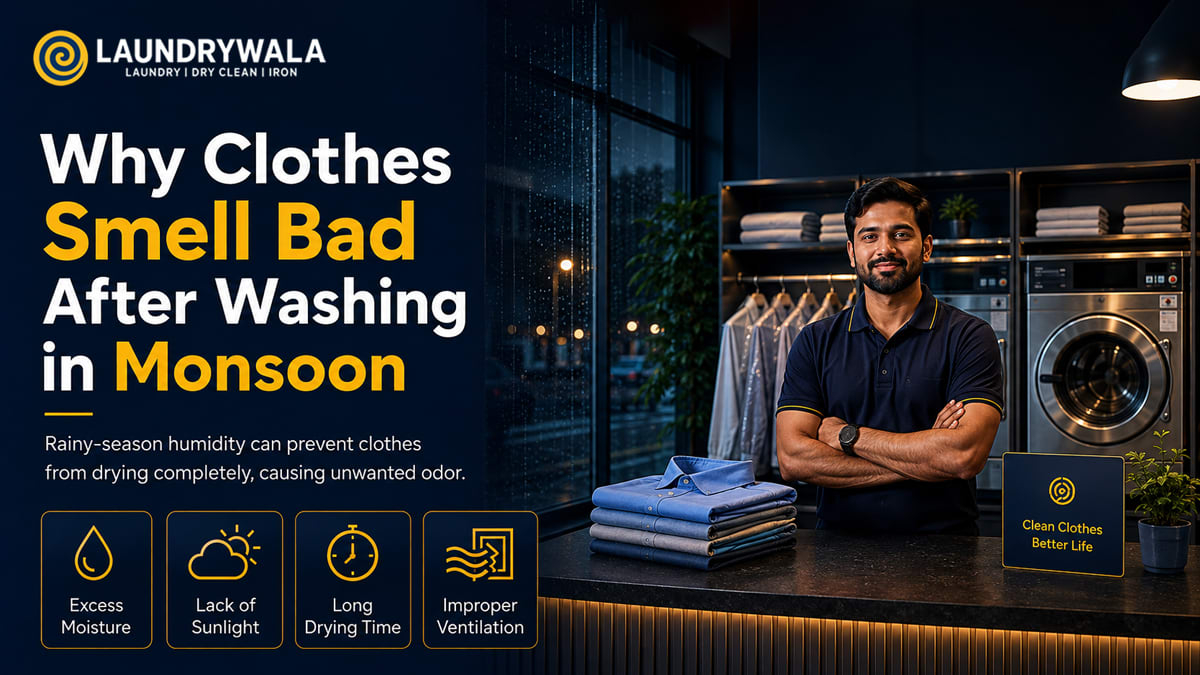
Why Clothes Smell Bad After Washing in Monsoon: Causes, Fixes and Laundry Tips
Clothes smelling bad after washing is one of the most common laundry problems during monsoon. You wash the clothes, use detergent, dry them indoors, fold them properly and still notice a damp, sour or musty smell after a few hours. This can happen with daily wear, office shirts, towels, school uniforms, gym wear, bedsheets and even premium garments.
The main reason is simple: monsoon makes drying slow. When clothes remain damp for too long, odour becomes stronger. In many Indian homes, high humidity, limited sunlight, indoor drying, hard water, detergent residue and poor ventilation make this problem worse. That is why freshly washed clothes may still smell bad even when they look clean.
This guide explains why clothes smell after washing in monsoon, what mistakes make the problem worse, how to remove the smell and when professional laundry services or dry cleaning services can help protect your clothes.
Why Clothes Smell Bad After Washing During Monsoon
Clothes usually smell bad in monsoon because they do not dry fast enough. Damp fabric holds moisture for longer, and that creates a suitable environment for musty odour. According to the CDC guidance on mold, mold can smell musty and damp environments can support mold growth.
In normal weather, clothes dry faster because sunlight and airflow remove moisture quickly. During monsoon, the air already has more moisture. This slows down evaporation. The clothes may feel dry from outside but remain slightly damp around collars, cuffs, seams, waistbands and thicker fabric layers.
When this happens repeatedly, clothes start smelling even after washing.
Common Reasons Clothes Smell After Washing in Monsoon
1. Clothes are drying too slowly
Slow drying is the biggest reason behind monsoon laundry smell. When clothes stay wet or semi-dry for many hours, they can develop a damp odour. This is common when clothes are dried indoors, in bathrooms, in closed rooms or on overcrowded drying stands.
A shirt that dries in a few hours during summer may take much longer during rainy days. Towels, jeans, uniforms, socks and thick cotton clothes take even more time.
2. Clothes are kept too close together
Many people hang clothes very close to each other during monsoon because drying space is limited. This blocks airflow. Clothes in the middle of the drying rack dry slowly and smell more.
For better drying, clothes need space. If fabric layers overlap, moisture stays trapped and the smell becomes stronger.
3. Washing machine is overloaded
Overloading the washing machine can stop clothes from cleaning properly. Detergent may not spread evenly, water movement becomes weak and sweat, body oil or detergent residue may remain inside the fabric.
During monsoon, this residue combines with slow drying and creates a bad smell.
4. Too much detergent is used
Using extra detergent does not always make clothes cleaner. In fact, too much detergent can leave residue in clothes, especially if rinsing is not proper. This residue can trap odour and make clothes feel stiff or dull.
A common mistake is adding more detergent when clothes smell bad. The real issue may be slow drying, not less detergent.
5. Clothes are left in the washing machine for too long
If washed clothes remain inside the machine for several hours, they stay damp and closed in. This can quickly create a sour smell. During monsoon, even a few hours of delay can make the smell noticeable.
Always remove clothes from the machine as soon as the wash cycle ends.
6. Indoor drying has poor ventilation
Drying clothes in a closed room, bathroom or balcony without airflow makes the problem worse. The moisture released by clothes stays in the same room, so drying becomes slower.
Using a fan, opening windows when possible and keeping clothes spread out can reduce smell.
7. Clothes are stored before they are fully dry
Sometimes clothes feel dry on the surface but remain damp inside seams, collars or thicker areas. If these clothes are folded and stored in a cupboard, the smell can come back.
Before folding, check thick areas carefully. Never store clothes that feel cool, damp or heavy.
Monsoon Laundry Mistakes You Should Avoid
| Mistake | Why It Creates Smell | Better Habit |
| Drying clothes in a closed room | Moisture gets trapped | Use fan or ventilation |
| Hanging clothes too close | Airflow becomes weak | Keep space between clothes |
| Leaving clothes in machine | Damp smell starts quickly | Remove clothes immediately |
| Using too much detergent | Residue stays in fabric | Use correct detergent quantity |
| Folding semi-dry clothes | Smell develops in cupboard | Fold only when fully dry |
| Washing heavy and light clothes together | Drying time becomes uneven | Separate by fabric thickness |
| Ignoring towels and socks | These hold more moisture | Dry them separately with airflow |
How to Remove Bad Smell from Clothes After Washing
Dry clothes with better airflow
Airflow is more important than only hanging clothes. Keep a fan running near the drying area. Spread clothes properly and avoid overlapping. If possible, dry clothes near a window or open balcony where air can move.
Do not dry too many clothes in one small room. The more wet clothes you hang together, the slower everything dries.
Rewash clothes if the smell has already set in
If clothes already smell musty, drying alone may not remove the smell. Rewash them using the right amount of detergent and rinse properly. Do not overload the machine. After washing, dry immediately with airflow.
For towels, socks and gym wear, wash separately if the smell is strong.
Do not use extra fragrance to hide the smell
Perfume, fabric spray or extra softener can hide smell for a short time, but it does not solve the cause. If the cloth is still damp or has residue, the smell may return after wearing or storing.
Clean washing and complete drying are more important than fragrance.
Check your washing machine
Sometimes the smell comes from the washing machine itself. If the drum, rubber gasket or detergent tray has buildup, clothes may smell even after washing. Keep the washing machine door open after use so moisture can escape. Clean the lint filter and detergent tray regularly.
Iron clothes only after they are fully dry
Ironing can improve the finish and freshness of clothes, but do not iron clothes that are still damp inside. Heat can set moisture inside thicker areas if the fabric is not properly dry.
For office shirts, uniforms and kurtas, steam press or professional ironing can help clothes look crisp and fresh.
Clothes That Need Extra Care During Monsoon
Office shirts and uniforms
Office shirts, school uniforms and formal wear are used regularly, so they collect sweat, dust and body odour. Collars, cuffs and underarm areas need proper cleaning. If these clothes dry slowly, they can smell even after washing.
Professional wash and iron service can help when you need fresh clothes regularly for office or school. You can explore Laundrywala’s professional laundry services for regular garments, office wear and daily laundry care.
Towels and bedsheets
Towels hold more moisture than normal clothes. If they do not dry fully, they smell quickly. Bedsheets, pillow covers and blankets also need proper drying because thicker fabric can hold dampness.
During monsoon, wash towels separately and dry them in an area with strong airflow.
Gym wear and sports clothes
Gym wear absorbs sweat and body odour. Synthetic fabrics can trap smell more than cotton. Do not leave gym clothes inside a bag after use. Wash them quickly and dry them properly.
If smell keeps returning, professional cleaning may be better.
Sarees, suits and blazers
Premium garments need more care during monsoon. Silk sarees, blazers, woollen coats, sherwanis, lehengas and embroidered clothes should not be repeatedly washed at home. Wrong washing can damage fabric, colour and shape.
For delicate garments, Laundrywala dry cleaning services can be a safer option than regular washing, especially when the garment needs fabric-specific care.
Shoes, curtains and carpets
Shoes, curtains and carpets also smell during rainy season because they collect dust, sweat, moisture and odour. Shoes may smell worse if worn in rain. Curtains and carpets may hold dampness if the room has poor ventilation.
Professional shoe cleaning, curtain cleaning and carpet cleaning can help when home cleaning is not enough. You can check nearby Laundrywala availability through the Laundrywala store locator.
How to Dry Clothes Faster During Monsoon
| Tip | How It Helps |
| Use a high spin cycle | Removes more water before drying |
| Spread clothes properly | Improves airflow |
| Use hangers for shirts | Helps clothes dry evenly |
| Keep a fan on | Speeds up drying indoors |
| Avoid closed bathrooms | Prevents trapped moisture |
| Dry towels separately | Reduces drying load |
| Do not fold early | Prevents cupboard smell |
| Keep windows open when possible | Improves ventilation |
When Should You Use Professional Laundry Service?
You should use professional laundry service when clothes are not drying properly at home, smell returns after washing, office wear needs crisp finishing, towels and bedsheets take too long to dry, or premium garments need safe cleaning.
Professional laundry can help with proper washing, drying, pressing and packaging. It is also useful for busy customers who do not have time or space to manage laundry during monsoon.
Laundrywala offers laundry services, dry cleaning, steam press, shoe cleaning, curtain cleaning, carpet cleaning and other garment-care services. Customers can check nearby availability through the Laundrywala store locator and check service details through the laundry and dry clean pricing page.
How Laundrywala Helps During Monsoon
Laundrywala helps customers manage monsoon laundry by offering professional laundry and dry cleaning services for everyday clothes, office wear, uniforms, premium garments and household fabrics.
During monsoon, the biggest challenge is not only washing. The bigger challenge is drying clothes properly and keeping them fresh. Laundrywala’s organized service process helps customers who want clean, fresh and properly finished clothes without dealing with indoor drying problems at home.
Customers can use Laundrywala for daily laundry, dry cleaning, steam press, shoe cleaning, curtain cleaning, carpet cleaning, stain removal and express delivery where available. For service details, customers can visit the official Laundrywala website.
If clothes smell even after washing at home, customers can start with regular clothes first and then use professional care for premium garments, shoes, curtains and carpets.
FAQs about best Laundry Tips
Everything you need to know about expert fabric care, stain removal, and maintaining your garments like a pro.