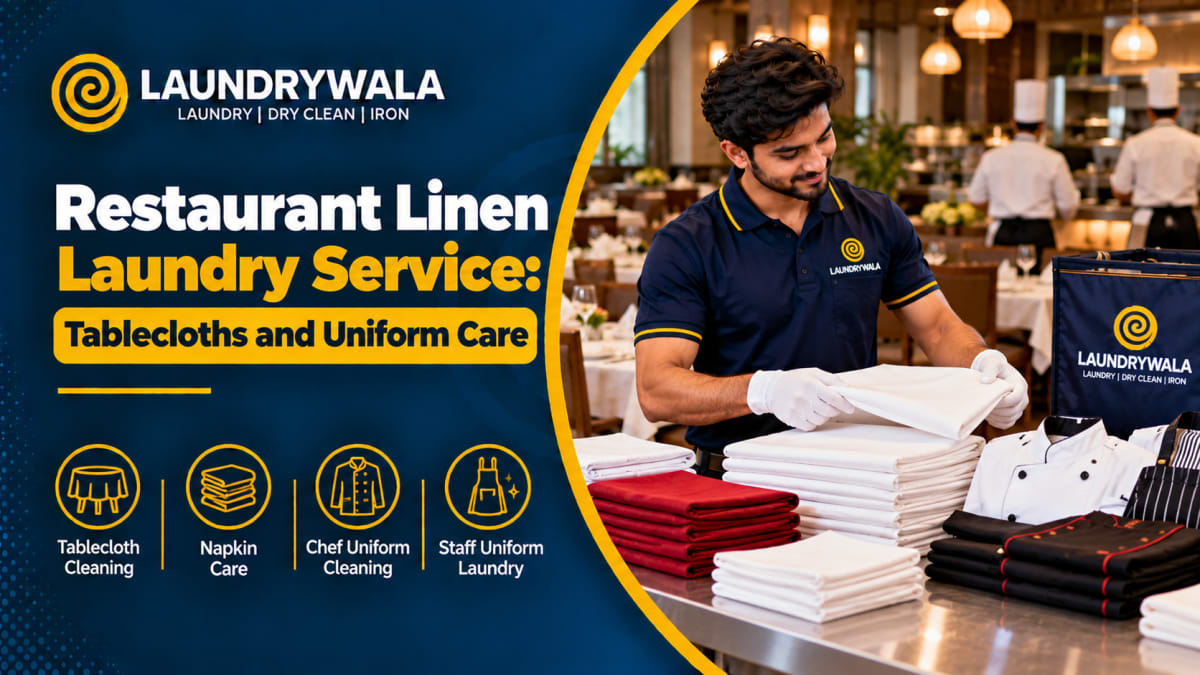
A restaurant’s reputation depends on more than its food. Customers also notice the cleanliness of the tables, the appearance of service staff and the overall condition of the dining environment. Stained tablecloths, greasy chef coats, wrinkled uniforms or kitchen linen with a persistent odour can negatively affect the customer experience.
Managing these textiles is not as simple as putting everything into one washing machine. Restaurant linen is exposed to cooking oil, sauces, beverages, food colours, sweat and repeated handling. Different fabrics also require different washing temperatures, stain treatments, drying methods and ironing settings.
A professional restaurant linen laundry service helps restaurants, cafés, bakeries, cloud kitchens, catering companies and banquet venues manage their recurring textile-cleaning requirements. The service may include scheduled collection, item counting, sorting, stain treatment, washing, drying, ironing, folding, packaging and delivery.
This guide explains how professional restaurant linen cleaning works, which items can be processed, what affects the cost and what food businesses should check before selecting a laundry partner.
Quick answer: Restaurant linen should be collected regularly, sorted according to fabric and soil level, treated for food and oil stains, washed using a suitable programme, dried completely and finished according to operational requirements. Clean and soiled textiles should remain separated during storage and transport.
Why Does Restaurant Linen Need Professional Care?
Restaurant textiles usually experience heavier and more frequent soiling than ordinary household laundry. A tablecloth may receive several food and beverage stains during one service. Chef coats and kitchen aprons can collect cooking oil, gravy, smoke and perspiration throughout a shift.
Incorrect washing may leave stains, grease or detergent residue inside the fabric. Excessive heat can shrink cotton tablecloths, weaken synthetic fibres or damage printed restaurant logos. Improper drying may also leave linen with a damp smell.
A professional laundry process provides a structured approach to:
- Item counting and tracking
- Separation of different textile categories
- Fabric-appropriate washing
- Food and oil-stain treatment
- Complete drying
- Professional ironing and folding
- Scheduled pickup and delivery
- Quality inspection before return
Clean linen supports good presentation and organised operations. However, outsourcing laundry does not replace a restaurant’s responsibility to follow applicable food-safety and workplace requirements.
The Food Safety and Standards Authority of India’s hygiene requirements explain that food businesses should implement suitable food-safety management systems, Good Manufacturing Practices and Good Hygiene Practices according to their operations.
Which Restaurant Textiles Can Be Professionally Cleaned?
A restaurant linen laundry service may process textiles used in dining areas, kitchens, bars, catering operations and employee uniforms.
| Restaurant textile | Common cleaning concerns |
|---|---|
| Tablecloths | Food, curry, oil, tea, coffee and beverage stains |
| Table runners | Sauce marks, candle wax, dust and wrinkles |
| Chair covers | Food spills, handling marks and event-related dirt |
| Chef coats | Cooking oil, masala, sweat and kitchen odours |
| Kitchen aprons | Grease, sauces and heavy daily soiling |
| Service uniforms | Food stains, perspiration and wrinkles |
| Host uniforms | Makeup, dust and appearance maintenance |
| Kitchen towels | Oil, moisture, food residue and odour |
| Bar towels | Beverage stains, moisture and repeated use |
| Catering linen | Food stains, transport dust and folding requirements |
| Banquet linen | High-volume staining and professional finishing |
| Fabric menu covers | Handling marks, food stains and surface dust |
| Reusable fabric bags | Food residue, dust and storage odours |
Service availability depends on the fabric, construction, quantity, existing condition and processing capacity of the local outlet. Restaurants should provide a complete item list before approving a recurring arrangement.
Common Stains Found on Restaurant Linen
Correct stain identification is an important part of commercial linen care. Using the same chemical on every stain may cause fading, fibre damage or permanent discolouration.
Cooking Oil and Grease
Cooking oil, butter, cream and salad dressing may leave dark marks that remain visible after an ordinary wash. Grease can also trap odour inside chef coats, kitchen aprons and towels.
Curry, Gravy and Sauces
Restaurant sauces can contain oil, protein, spices and strong pigments. Turmeric-based stains may become particularly visible on white tablecloths and uniforms.
Tea and Coffee
Tea and coffee contain natural pigments that can penetrate absorbent fabrics. Milk and sugar in the beverage may create additional residue.
Tomato and Coloured Food
Tomato sauce, food colouring and coloured beverages may leave red, orange or artificial-dye marks. Rubbing these stains aggressively can spread them across the fabric.
Chocolate and Dairy Products
Chocolate, cream and dairy-based desserts contain a mixture of protein, fat and pigment. The cleaning process should address each component without using unsuitable heat.
Lipstick and Makeup
Service uniforms, host clothing and table linen may collect makeup marks. These stains can contain wax, oil and strong colour pigments.
Candle Wax
Restaurants using candles may find wax on tablecloths and runners. Directly ironing over the wax can push it further into the fibres or transfer it to another area.
Ink and Marker
Order-taking pens, permanent markers and printed packaging can create difficult stains. Alcohol or solvent-based home remedies should not be applied without checking fabric compatibility.
The age of a stain matters. Restaurants should identify and send stained items for cleaning promptly rather than allowing residue to dry for several days.
How Does a Restaurant Linen Laundry Service Work?
A professional process should match the restaurant’s textile types, daily volume and delivery requirements.
1. Requirement Assessment
Before starting regular service, the laundry provider should understand:
- Restaurant type
- Approximate daily or weekly quantity
- Linen categories
- Uniform quantities
- Fabric composition
- Average stain level
- Required pickup schedule
- Expected turnaround time
- Ironing and folding requirements
- Seasonal or event-related demand
A fine-dining restaurant may require carefully pressed tablecloths and formal uniforms, while a cloud kitchen may need frequent cleaning of chef coats, aprons and kitchen towels.
2. Pickup Scheduling
Collection may be arranged daily, on alternate days or on specific weekdays. The suitable frequency depends on the restaurant’s seating capacity, customer volume, available stock and storage space.
Laundrywala’s online laundry pickup and delivery service explains how collection and return can be scheduled in serviceable locations.
Restaurants should maintain enough stock for active use, laundry processing and unexpected delays. Relying on one working set can interrupt operations when an item needs additional stain treatment.
3. Counting and Recording
Every collection should be counted and recorded before leaving the restaurant.
Tracking methods may include:
- Item-wise collection sheets
- Department-wise laundry bags
- Digital order records
- Barcode or tag systems
- Colour-coded bags
- Quantity confirmation at pickup
- Item-wise invoicing
Accurate records make it easier to identify shortages, damaged items and differences between collected and delivered quantities.
4. Sorting
Restaurant linen should be sorted according to:
- Colour
- Fabric
- Care instructions
- Soil level
- Washing requirement
- Drying requirement
- Front-of-house or kitchen use
- Ordinary or delicate construction
White tablecloths should not automatically be processed with dark uniforms. Similarly, heavily greased kitchen towels should be separated from lightly used decorative linen.
The international GINETEX textile-care symbol guide covers washing, bleaching, drying, ironing and professional textile care. These instructions should be checked whenever a care label is available.
5. Inspection and Stain Treatment
Each batch should be inspected for stains, tears, missing buttons, weak seams and colour damage.
Stain treatment depends on:
- Stain composition
- Fabric type
- Dye stability
- Age of the stain
- Previous treatment
- Exposure to heat
- Existing fabric damage
Restaurant employees should inform the cleaner about unusual stains. Knowing whether a mark came from cooking oil, curry, candle wax, ink or another substance can help the team select an appropriate treatment.
Complete stain removal cannot always be guaranteed. Old, oxidised, heat-set or chemically treated stains may remain visible even after professional processing.
6. Fabric-Appropriate Washing
Water temperature, detergent, mechanical action and cycle duration should match the textile’s care requirements.
A strong cycle is not automatically better. Aggressive washing may shorten the life of tablecloths, damage coloured uniforms or weaken decorative sections.
Laundrywala’s professional laundry services include washing and finishing options for everyday, household and selected commercial laundry requirements.
The FDA Food Code contains useful guidance about clean linen, the handling of soiled textiles and linen storage in food-service environments. Indian restaurants must follow applicable Indian and local requirements, but the document offers useful operational principles.
7. Rinsing and Drying
Proper rinsing helps remove loosened soil and detergent residue. The textiles should then be dried completely before ironing, folding or packaging.
Drying temperature must match the fabric. Excessive heat may:
- Shrink cotton
- Set untreated stains
- Damage synthetic fibres
- Fade coloured textiles
- Weaken elastic sections
- Create permanent wrinkles
- Damage printed logos
The CDC’s linen and laundry management guidance, although written for healthcare environments, highlights broadly useful principles such as complete drying and protecting cleaned linen from dust, debris and soiled textiles.
8. Ironing and Finishing
Professional finishing improves presentation and prepares the items for immediate restaurant use.
Depending on the item, finishing may include:
- Steam ironing
- Flat pressing
- Garment shaping
- Consistent folding
- Hanger packaging
- Department-wise bundling
- Item-wise packaging
Tablecloths should be folded consistently so they can be placed quickly during setup. Chef coats and customer-facing uniforms may need hanger finishing to protect their shape.
Laundrywala’s professional ironing service provides steam finishing for eligible textiles and garments.
Ironing temperature should follow the care instructions. The same heat setting should not be used for cotton, polyester blends, embroidery and printed fabric.
9. Quality Inspection
Before delivery, processed linen should be checked for:
- Visible stains
- Remaining odour
- Dampness
- Colour transfer
- Shrinkage
- Iron marks
- Torn seams
- Missing buttons
- Incorrect folds
- Quantity differences
Existing damage should be documented during pickup or inspection. This helps distinguish pre-existing wear from issues that may occur during processing.
10. Packaging and Delivery
Clean restaurant linen should be folded, packed or covered to protect it during transport.
Clean and soiled laundry should remain separated. The delivery vehicle, bags and containers should also be maintained appropriately.
The Codex General Principles of Food Hygiene provide an international framework for hygiene practices and contamination control in food operations.
After delivery, restaurants should store the clean items in a dry, protected and organised location away from food waste, chemicals, dirty laundry and excessive moisture.
How Frequently Should Restaurant Linen Be Cleaned?
Cleaning frequency should be based on actual use, visible soil, internal policy and applicable regulations.
| Textile | Suggested cleaning schedule |
|---|---|
| Tablecloths | After use or immediately when stained |
| Table runners | According to service rotation and visible condition |
| Chef coats | After each shift or sooner when heavily soiled |
| Kitchen aprons | Daily or whenever visibly dirty |
| Service uniforms | After each shift or according to usage |
| Host uniforms | After use and according to appearance |
| Kitchen towels | Daily and whenever wet or heavily soiled |
| Bar towels | Daily and when wet, sticky or stained |
| Chair covers | After events, visible stains or planned rotation |
| Catering linen | After every event |
| Banquet linen | After every function |
| Decorative textiles | According to dust, stains and care instructions |
A restaurant should not continue using linen merely because only a small stain is visible. Wet, sticky, greasy or unpleasant-smelling textiles should be removed from service.
Care Requirements for Different Fabrics
Cotton Tablecloths
Cotton is absorbent and can provide an elegant appearance. However, it may shrink, wrinkle or fade when washed and dried incorrectly.
White cotton may tolerate a different process from coloured cotton. The presence of embroidery or decorative borders can also change the suitable treatment.
Polyester and Blended Linen
Polyester blends may dry faster and wrinkle less than pure cotton. However, synthetic fibres can retain oil and may be damaged by excessive drying or ironing temperature.
Coloured Restaurant Linen
Coloured linen requires colourfastness assessment. Strong chemicals or unsuitable bleach may create fading, colour loss or uneven patches.
Embroidered and Decorative Linen
Embroidery, metallic threads, lace and decorative trims can react differently from the base fabric. These items may require reduced mechanical action and careful finishing.
Chef Coats
Chef coats can contain buttons, logos, contrasting panels and embroidered names. Heavy food and oil stains should be assessed before washing.
Service Uniforms
Restaurant uniforms may include shirts, trousers, waistcoats, jackets, dresses and scarves. Each category should be separated according to its fabric and care instructions.
Structured jackets, delicate dresses and selected formal garments may require professional treatment instead of regular washing. Laundrywala’s dry-cleaning service provides information about specialist cleaning for eligible garments.
Professional Restaurant Laundry vs In-House Washing
| Factor | In-house washing | Professional laundry service |
|---|---|---|
| Equipment | Purchased and maintained by restaurant | Managed by service provider |
| Employees | Restaurant assigns internal staff | Provider handles processing |
| Water and electricity | Paid directly by restaurant | Included in service pricing |
| Detergent management | Handled internally | Managed according to agreed process |
| Stain treatment | Depends on staff knowledge | Professional assessment may be available |
| Ironing | Requires labour and equipment | Can be included in the service |
| Collection | Not required | Scheduled pickup available |
| Capacity | Limited by internal machines | Confirmed according to provider capacity |
| Tracking | Created by restaurant | Item records may be available |
| Cost | Equipment, labour, utilities and repairs | Per-piece, weight-based or contract pricing |
Outsourcing is not automatically the right option for every restaurant. A business should compare the total cost of machines, space, water, electricity, detergent, maintenance, employee time and replacement stock with the quotation offered by a professional provider.
What Affects Restaurant Linen Laundry Cost?
The cost of a restaurant linen laundry service may depend on:
- Total weight
- Number of individual pieces
- Linen categories
- Fabric composition
- Stain level
- Cleaning frequency
- Washing or dry-cleaning requirement
- Ironing and folding
- Packaging
- Pickup distance
- Delivery frequency
- Turnaround time
- Express requirements
- Monthly contract volume
Pricing may be calculated per kilogram, per item or through a customised commercial contract.
Before accepting a quotation, confirm whether it includes:
- Collection
- Delivery
- Stain pre-treatment
- Washing
- Drying
- Ironing
- Folding
- Packaging
- Taxes
- Minimum-order conditions
- Express charges
- Replacement or damage policy
Laundrywala’s laundry and dry-cleaning pricing page can be used to review general rates. Restaurants should request a separate quotation based on their actual textile volume and operational schedule.
How to Select the Right Laundry Partner
The cheapest quotation may not provide the best long-term value. Restaurants should consider quality, consistency, capacity and service reliability.
Ask potential providers:
- Do you accept commercial restaurant laundry?
- Which types of linen and uniforms can you process?
- Can you manage our regular and peak-season volume?
- How are collected items counted?
- Are heavily soiled kitchen textiles processed separately?
- What stain-treatment options are available?
- What is the normal turnaround time?
- Is urgent processing available?
- Is professional ironing included?
- How are clean and soiled textiles separated?
- How are missing items reported?
- What happens if an item is damaged?
- Is there a minimum order?
- Are taxes and delivery included?
- Who handles service complaints?
Restaurants can begin with a trial order before signing a long-term arrangement. The trial should be evaluated for stain treatment, odour, finishing, folding, packaging, item count and delivery timing.
Businesses reviewing cleaning-product selection may also consult the US EPA Safer Choice programme, which helps purchasers identify products meeting its ingredient and performance criteria. Product suitability for the specific textile and commercial process must still be confirmed.
How Should Restaurants Prepare Laundry for Collection?
Preparing the order correctly can prevent damage and counting errors.
- Remove solid food before placing linen in bags.
- Keep wet items separate from dry items.
- Separate heavily greased kitchen textiles.
- Empty all uniform pockets.
- Remove pens, receipts and personal items.
- Never place knives or sharp objects in laundry bags.
- Count items before handover.
- Record the quantity department-wise.
- Identify urgent items clearly.
- Report unusual stains.
- Mark existing tears or damage.
- Keep coloured and white linen separate where practical.
- Avoid keeping damp laundry in closed bags for long periods.
- Maintain an emergency linen reserve.
Laundry bags should be stored away from food preparation, clean utensils and freshly processed textiles.
Common Restaurant Laundry Mistakes
Keeping Soiled Linen for Too Long
Food and grease stains can become more difficult to remove when left untreated for several days.
Washing Everything Together
Tablecloths, chef coats, coloured uniforms and heavily soiled kitchen towels may require different processes.
Using Excessive Detergent
Too much detergent may not rinse out properly and can leave residue in the fibres.
Applying Bleach Without Testing
Unsuitable bleach may weaken fabric, fade colour or damage decorative work.
Overloading Machines
An overloaded machine may reduce washing, rinsing and movement of the textiles.
Using Excessive Heat
High heat can shrink cotton, set untreated stains and damage synthetic materials.
Folding Items While Damp
Even slightly damp linen can develop an unpleasant odour during storage.
Mixing Clean and Soiled Items
Processed linen should remain protected from dirty laundry, food waste, dust and chemicals.
Ignoring Inventory Records
Without pickup and delivery records, shortages and item differences can be difficult to identify.
Why Choose Laundrywala for Restaurant Linen Cleaning?
Laundrywala provides professional laundry, dry cleaning and ironing services with doorstep pickup and delivery in serviceable locations.
Restaurants can enquire about cleaning for:
- Tablecloths
- Table runners
- Chair covers
- Kitchen towels
- Bar towels
- Chef coats
- Kitchen aprons
- Service uniforms
- Host uniforms
- Catering and banquet linen
Depending on the outlet and local capacity, the service may include scheduled collection, fabric-based sorting, stain assessment, washing, drying, ironing, folding, packaging and delivery.
Restaurants should share:
- Business location
- PIN code
- Linen categories
- Approximate quantity
- Pickup frequency
- Required turnaround
- Ironing requirements
- Special stains
- Billing preference
Use the Laundrywala store locator to find the nearest outlet and confirm commercial-service availability.
To request an assessment and customised quotation, contact Laundrywala or call the toll-free number 1800 889 3225.
FAQs about best Dry Cleaning Tips
Get answers about premium dry cleaning processes, delicate garment handling, and how we care for your fabrics.
Still have questions?
Can't find what you're looking for? Our fabric care specialists and franchise advisors are here to help.