
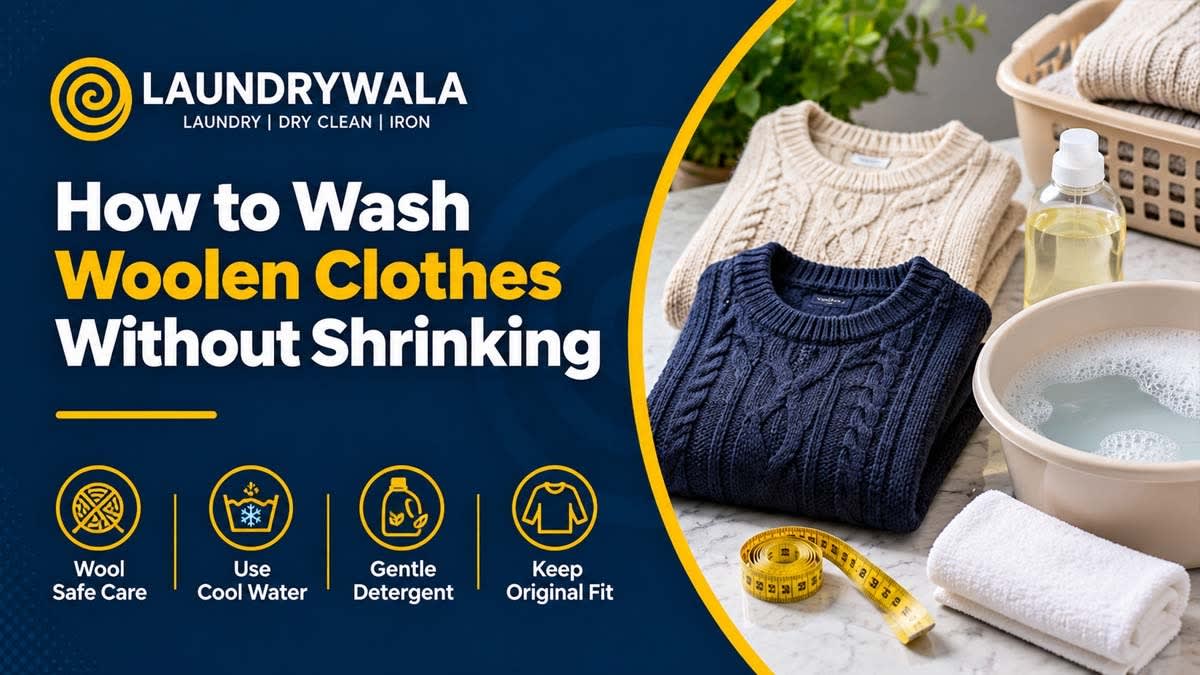
Winter wardrobes are incomplete without soft woolen sweaters, warm cardigans, comfortable scarves and stylish wool coats. These garments provide warmth and comfort during colder months, but they require more careful cleaning than ordinary cotton or polyester clothing.
One common problem is discovering that a favourite woolen sweater has become smaller, tighter or rougher after washing. Sleeves may appear shorter, the neckline may lose its shape, or the fabric may feel unusually dense.
Learning how to wash woolen clothes without shrinking is essential for maintaining their original fit, softness and appearance.
Wool is a natural fibre with a unique structure. Although it is durable in many ways, unsuitable washing conditions can cause its fibres to interlock, producing a change known as felting. Once significant felting occurs, returning a garment to its original size may be impossible.
However, wool does not automatically shrink whenever it becomes wet. Many modern wool garments are designed for hand washing, and some are specifically treated to tolerate approved machine-washing programmes.
The key is understanding the garment's fibre composition, construction and care instructions.
For example, a machine-washable merino wool T-shirt may tolerate a gentle wool cycle, while a structured wool blazer may require professional dry cleaning. A loosely knitted cashmere sweater may need even more careful handling.
This guide explains how to clean woolen clothes safely at home, choose an appropriate water temperature and detergent, prevent shrinkage during drying, manage stains and protect winter garments during storage.
Why Do Woolen Clothes Shrink After Washing?
Wool shrinkage can occur for different reasons, but felting is one of the most important.
Wool fibres have a microscopic surface structure containing overlapping scales. Under certain conditions, movement and moisture can cause these fibres to become more tightly interlocked.
As the structure becomes compact, the garment can shrink and lose some of its original softness.
Heat and Mechanical Agitation
Hot water is often blamed for wool shrinkage, but temperature is only part of the problem.
Mechanical action, friction, unsuitable washing programmes and temperature changes may contribute to changes in wool fabrics.
A regular heavy-duty washing cycle can subject garments to more agitation than they are designed to withstand.
This may lead to felting, especially in untreated wool.
Fibre Type and Fabric Construction
Not all woolen garments behave the same way.
A tightly woven wool fabric, loosely knitted sweater and machine-washable merino garment can have different cleaning requirements.
Some wool products receive shrink-resistance treatments during manufacturing.
Therefore, the fibre label and manufacturer instructions are more reliable than assuming all wool is equally delicate.
Incorrect Drying
Drying can also affect garment shape.
High heat may cause damage or shrinkage in certain wool garments.
Meanwhile, hanging heavy, wet knitwear can stretch it out of shape.
This is why many woolen sweaters should be dried flat.
Using the Wrong Detergent
Some ordinary laundry detergents contain ingredients that may be unsuitable for wool.
Products containing certain enzymes, strong alkalinity or aggressive bleaching agents can affect sensitive wool fibres or finishes.
Use a suitable wool detergent when the garment permits washing.
For additional background, see Laundrywala's guide to why clothes shrink after washing.
Understand Wool Fabric Before Washing
One of the most important parts of preventing shrinkage is identifying the type of garment.
The word "woolen" is often used broadly for winter clothes, but not every winter sweater contains natural wool.
Pure Wool
Pure wool garments contain natural wool fibres.
They may be washable or dry-clean-only, depending on their construction and finishing.
Never assume that a garment containing 100% wool can automatically be machine-washed.
Merino Wool
Merino wool is valued for its relatively fine fibres and comfortable texture.
Many merino garments are designed to be machine washable, but this depends on the individual product.
Some premium merino garments still require hand washing or professional care.
Cashmere
Cashmere is a fine animal fibre known for softness and warmth.
Loosely knitted cashmere clothing can be vulnerable to stretching, abrasion and changes in shape.
Follow the care label carefully and avoid aggressive handling.
Wool Blends
Blended garments may contain wool combined with acrylic, polyester, nylon or other fibres.
The synthetic component does not automatically make the garment safe for regular machine washing.
The complete fabric and garment construction determine the correct process.
Structured Wool Clothing
Wool coats, blazers and tailored trousers may contain internal linings, interfacing and padding.
Even if the outer wool fabric could tolerate water washing, these components may not.
Professional cleaning may therefore be more suitable.
How to Read Woolen Clothes Washing Labels
Before washing any wool garment, check the manufacturer's care label.
This should be the first step, not an optional precaution.
The label may specify hand washing, machine washing, professional dry cleaning or restrictions on certain treatments.
Hand Wash Symbol
A hand-wash instruction indicates that the garment is intended for careful manual washing under specified conditions.
It does not mean vigorous scrubbing in a bucket.
Machine Washable Wool
Some wool garments permit machine washing using an approved wool or very gentle cycle.
Choose the temperature and programme stated by the manufacturer.
Dry Clean Only
If a garment is marked "Dry Clean Only," do not attempt ordinary home washing.
The restriction may relate to fabric finishing, dyes, linings or structural components.
Do Not Tumble Dry
This symbol means the garment should not be placed in a tumble dryer.
Choose the permitted alternative drying method.
Temperature Symbols
Numbers inside the wash-tub symbol indicate the maximum permitted washing temperature, not a temperature that must always be used.
GINETEX's official textile care symbols explain how washing symbols, gentle-cycle bars and drying instructions are interpreted.
Understanding these instructions is one of the most effective ways to prevent avoidable wool damage.
How to Wash Woolen Clothes Without Shrinking: Step-by-Step Hand Washing Method
Hand washing can be suitable for woolen garments labelled for hand washing.
The objective is to clean the fabric without subjecting it to unnecessary friction, twisting or temperature stress.
Step 1: Check the Garment Condition
Inspect the clothing before washing.
Look for loose seams, damaged threads, colour transfer, stains and delicate accessories.
If the garment contains beads, leather trims or complex construction, additional precautions may be necessary.
Step 2: Prepare a Clean Basin
Use a clean sink or basin large enough for the garment.
Fill it with water at the temperature specified on the care label.
Cool or lukewarm water is commonly suitable for many hand-washable wool products.
Woolmark's official guide to washing wool describes hand washing suitable wool garments in approximately 30°C water using a gentle detergent.
However, always follow the garment's own instructions.
Step 3: Add Wool-Safe Detergent
Select a neutral, mild detergent recommended for wool.
Use the quantity stated on the detergent packaging.
Adding extra detergent does not improve cleaning automatically and may make rinsing more difficult.
Step 4: Turn the Garment Inside Out
For suitable garments, turning the clothing inside out can help reduce direct rubbing of the visible outer surface.
This may be especially useful for knitwear prone to surface pilling.
Step 5: Immerse the Garment Gently
Place the woolen garment into the water.
Press it gently so the water passes through the fabric.
Avoid rubbing sections together, scrubbing or pulling the material.
Step 6: Avoid Excessive Soaking
Follow the garment and detergent instructions.
Unnecessarily prolonged soaking can be unsuitable for certain dyes and finishes.
For example, Woolmark provides a short soaking procedure for suitable hand-washable wool garments, but this should not override specific manufacturer restrictions.
Step 7: Rinse Carefully
Remove the detergent with gentle rinsing.
Avoid vigorous agitation or repeated squeezing.
Support the garment while lifting it because wet wool can become heavy.
Step 8: Remove Excess Moisture
Do not twist or wring the garment.
For suitable knitwear, gently press out excess water.
A clean towel can help absorb additional moisture.
Step 9: Restore the Garment's Shape
Place the damp item on a suitable flat surface.
Gently arrange the neckline, sleeves and hem into their intended shape without stretching.
Step 10: Dry Completely
Allow the garment to dry using its approved method.
For many woolen sweaters, flat drying in a well-ventilated area is recommended.
Do not put the item away until it is completely dry.
Can You Machine Wash Woolen Clothes?
Yes, some woolen clothes can be machine-washed.
However, machine washable and hand wash only are not interchangeable instructions.
A regular washing programme should not be used simply because the machine has a delicate setting.
Choose the Correct Cycle
Use the wool programme when permitted and appropriate.
Some machines have specifically tested wool-care cycles.
Follow both the garment label and appliance manual.
Select the Approved Temperature
Do not assume hot water is needed to clean wool effectively.
Use the temperature specified by the garment manufacturer.
Use a Suitable Detergent
A mild wool detergent helps provide appropriate cleaning for compatible wool fabrics.
Avoid unapproved bleaching agents and harsh treatments.
Keep Loads Appropriate
Do not overload the washing machine.
Wool garments require sufficient room for gentle movement and effective rinsing.
Protect Delicate Garments
A suitable mesh laundry bag may help protect certain washable items from friction when recommended.
However, a bag does not make a non-machine-washable garment safe to machine-wash.
Use the Appropriate Spin Programme
Select the spin setting recommended by the garment and machine manufacturer.
Excessive mechanical handling can affect delicate wool.
Remove Clothes Promptly
Take garments out after the cycle finishes.
Leaving wet knitwear compressed inside the drum for long periods can contribute to creases and unpleasant odours.
What Is the Best Water Temperature for Washing Woolen Clothes?
There is no single washing temperature suitable for every wool garment.
The correct choice depends on the care label and wool treatment.
Cool Water
Cool water is often an appropriate choice for delicate, washable wool garments when the label permits it.
However, a low temperature cannot compensate for excessive mechanical agitation.
Lukewarm Water
Some hand-washable wool products permit lukewarm water, commonly around 30°C.
Follow the garment's specified limit.
Warm Machine Washing
Certain specially treated, machine-washable wool products may permit warmer settings under an approved wool programme.
This does not mean all wool garments can tolerate those conditions.
Avoid Unnecessary Temperature Changes
Very different washing and rinsing temperatures may be unsuitable for some wool garments.
Use the manufacturer's guidance rather than repeatedly switching between hot and cold water.
Is Cold Water Enough to Prevent Shrinking?
Not by itself.
Even cool-water washing may damage wool if the fabric is vigorously rubbed or processed using an unsuitable cycle.
Temperature, agitation, detergent and drying all matter.
Which Detergent Is Best for Woolen Clothes?
A detergent formulated for wool is generally preferable when washing is permitted.
The purpose is to clean the fabric while respecting its fibre structure and finish.
Choose Mild, Neutral Products
Woolmark recommends mild neutral detergents, preferably products approved for wool care.
Read the product label before use.
Avoid Ordinary Bleach
Chlorine bleach is generally unsuitable for wool unless an exceptionally specific product and garment instruction allows the treatment.
Never experiment with strong bleaching products.
Check Enzyme Compatibility
Some conventional detergents contain enzymes intended to break down protein-based stains.
Because wool is a protein fibre, a product's compatibility with wool matters.
Do not assume every detergent marketed as gentle is automatically wool-safe.
Avoid Overdosing
Excess detergent can leave residue and increase rinsing requirements.
Follow the recommended dosage.
Are Fabric Softeners Necessary?
Not usually.
Some products are compatible with certain wool garments, but others may be unsuitable.
Use them only where the garment and product instructions permit.
Woolmark's guide to choosing wool detergent provides additional guidance.
How to Dry Woolen Clothes Without Shrinking or Stretching
Drying is one of the most important parts of wool care.
A garment washed correctly can still lose its original shape if it is dried improperly.
Dry Knitted Clothes Flat
Many woolen sweaters and cardigans should be dried flat.
Place the garment on a clean towel or suitable drying rack.
Arrange it into its intended dimensions without pulling the fabric.
Avoid Hanging Heavy Wet Sweaters
Wet knitwear can stretch under its own weight.
Hanging it from a narrow hanger may distort the shoulders, neckline and sleeves.
Choose a Ventilated Drying Area
Allow air to circulate around the garment.
Avoid damp rooms where drying takes excessively long.
Avoid Direct Heat
Do not place delicate wool directly on a heater or radiator.
High heat can damage some wool fabrics and finishes.
Be Careful with Strong Sunlight
Extended exposure to strong sunlight may affect certain dyes.
A shaded, well-ventilated location is generally suitable when the care label recommends air drying.
Can Woolen Clothes Go in a Dryer?
Some machine-washable wool garments are also approved for tumble drying.
If the label explicitly permits it, use the prescribed programme.
Otherwise, avoid tumble drying.
Woolmark's tumble-drying advice for wool explains why only approved garments should be machine-dried.
Washing Different Woolen Garments Safely
Different woolen items require different cleaning and drying decisions.
| Garment Type | Washing Guidance | Drying Guidance |
|---|---|---|
| Woolen Sweater | Hand wash or wool cycle if permitted | Usually dry flat |
| Cashmere Cardigan | Follow delicate care label | Supported flat drying when appropriate |
| Merino Wool T-Shirt | Approved wool programme if machine washable | Follow individual label |
| Wool Coat | Often professional care due to structure | Professional finishing or label-approved method |
| Wool Trousers | Follow manufacturer instructions | Maintain shape and avoid unsuitable heat |
| Wool Scarf | Gentle hand wash if allowed | Flat or supported drying |
| Wool Socks | Approved wool or gentle cycle if permitted | Follow label; avoid unapproved dryer heat |
| Wool Blanket | Depends on size, finish and label | Adequate support and complete drying |
These are general guidelines, not universal instructions.
The care label always takes priority.
For additional sweater-specific advice, read Laundrywala's woollen sweater care guide.
How to Wash Cashmere and Merino Wool Without Damage
Cashmere and merino wool are both valued for softness, but the garments made from them may have different construction and care requirements.
Washing Cashmere
Cashmere garments should be handled gently.
If washing is permitted, use the recommended detergent and approved hand-washing or machine-washing process.
Avoid scrubbing, twisting and stretching.
Loosely knitted cashmere may require extra support while drying.
Washing Merino Wool
Some merino products are designed for machine washing.
Others may need hand washing or professional care.
Do not rely solely on the word "merino" when choosing a wash programme.
Preventing Pilling
Surface friction can cause small fibre balls to form on knitwear.
Washing items inside out when suitable and reducing unnecessary rubbing may help.
Do not aggressively shave or pull at the fibres.
Preserving Softness
Appropriate detergent, gentle washing and correct drying can help maintain the garment's feel.
However, an item that has undergone severe felting may not regain its original softness.
How to Remove Stains from Woolen Clothes
Woolen clothing can develop stains from food, drinks, cosmetics and body oils.
The correct treatment depends on the stain, dye, fabric finish and garment label.
Food Stains
Carefully remove loose food particles without rubbing them into the fabric.
Avoid scrubbing delicate knitwear.
If home stain treatment is permitted, use an appropriate wool-safe method.
Oil and Grease
Oil can penetrate certain fabrics and may require specialist treatment.
Do not apply random household solvents to delicate wool garments.
Coffee and Tea
Blot fresh spills gently using a suitable clean cloth.
Do not apply boiling water or aggressive stain removers.
Makeup Stains
Foundation, lipstick and other cosmetics may contain oils and pigments.
Explain the stain to a professional cleaner if the garment is valuable or marked for dry cleaning.
When to Seek Professional Help
Professional assessment is advisable for persistent marks, expensive garments, colour-sensitive fabrics and items requiring specialist care.
Not every stain can be removed completely.
Laundrywala's professional dry cleaning services include garment-care options for suitable woolens and winter clothing.
Can You Use Vinegar or Baking Soda on Woolen Clothes?
Vinegar and baking soda are frequently recommended in online laundry tips.
However, neither should be considered a universal wool-cleaning solution.
Using Vinegar
Vinegar may affect certain dyes, finishes or garment components.
Do not pour concentrated vinegar directly onto delicate wool clothing.
A household remedy should not replace a manufacturer-approved cleaning method.
Using Baking Soda
Dry baking soda can leave residue, and rubbing it into delicate knitwear may create unnecessary friction.
Avoid using it as an abrasive cleaning agent.
Why Tested Products Are Preferable
A wool-safe detergent provides a more predictable approach when washing is permitted.
For expensive or sensitive garments, professional advice is preferable to experimenting with untested mixtures.
What to Do If Your Woolen Clothes Have Already Shrunk
Accidental shrinkage does not always have the same cause.
Some garments become temporarily distorted, while others experience permanent felting.
The possibility of improvement depends on the severity of the change.
Check the Fabric Texture
If the wool has become dense, stiff and noticeably smaller, significant felting may have occurred.
If the garment is only slightly misshapen, some reshaping may be possible.
Avoid Aggressive Stretching
Pulling hard on wet wool can damage yarns, seams and knit structure.
Do not attempt to force a sweater back to its original size.
Can a Shrunken Wool Sweater Be Restored?
Minor distortion may sometimes respond to suitable professional reshaping.
However, heavily felted wool generally cannot be restored completely.
What About Conditioner-Based Home Remedies?
Hair-conditioner and other home stretching methods are commonly suggested online.
Their effectiveness is inconsistent and depends on the fibre and fabric construction.
They may also leave residue or affect the finish.
For valuable garments, request professional assessment rather than experimenting.
Prevention Is Better Than Restoration
Once severe shrinkage has occurred, cleaning cannot always reverse the damage.
Following the care label from the beginning remains the most reliable approach.
Common Mistakes That Cause Woolen Clothes to Shrink
Several routine washing habits can damage wool clothing.
Washing on a Regular Heavy-Duty Cycle
High mechanical agitation may cause untreated wool fibres to interlock.
Use only approved programmes.
Ignoring the Care Label
Not every wool garment is washable.
A dry-clean-only garment should not be placed in an ordinary washing cycle.
Using Excessively Hot Water
Temperatures above the garment's permitted range can contribute to damage.
Using Harsh Detergent
Unsuitable cleaning products may affect wool fibres and finishing treatments.
Scrubbing Stains Aggressively
Excessive friction can damage the surface and contribute to felting.
Twisting Wet Wool
Wringing may distort knitted garments and strain seams.
Hanging Wet Sweaters
Heavy, damp knitwear may stretch at the shoulders or hem.
Using the Wrong Dryer Setting
High heat or an unapproved tumble-drying programme can cause shrinkage or other damage.
Washing Different Fabrics Together
Rough garments, zippers and hardware can create unnecessary friction against delicate wool.
Storing Clothes Before They Are Dry
Trapped moisture may create unpleasant odours and deterioration during storage.
Avoiding these mistakes can help maintain garment quality.
How Often Should You Wash Woolen Clothes?
Wool does not necessarily require washing after every wear.
Cleaning frequency depends on garment type, skin contact, odours, stains and usage.
Woolen Sweaters
A sweater worn over another garment may need less frequent washing than clothing worn directly against the skin.
Inspect the garment after use.
Wool Socks
Socks generally require more frequent cleaning because they absorb perspiration and experience direct contact with the feet.
Follow their care instructions.
Wool Coats
Structured outerwear may only require periodic appropriate cleaning.
Surface dust and minor debris may be handled using manufacturer-approved maintenance.
Wool Scarves
Clean scarves according to actual use and visible contamination.
Avoid unnecessary washing.
Why Avoid Overwashing?
Every cleaning process involves some handling.
Washing only when necessary can reduce wear while helping maintain cleanliness.
For clean garments with mild odours, suitable airing may sometimes be sufficient.
How to Store Woolen Clothes After Washing
Correct storage helps protect wool clothing during warmer months.
This is particularly relevant in India, where winter garments may remain unused through summer and monsoon.
Clean Before Long-Term Storage
Do not pack garments containing food stains, body oils or other residues.
Such contamination may attract textile pests or create unpleasant odours.
Ensure Complete Drying
Even slightly damp clothes can develop storage problems.
Check thick seams and folded areas carefully.
Fold Heavy Knitwear
Sweaters and cardigans are often better stored folded rather than suspended from narrow hangers.
This helps reduce stretching.
Use Suitable Protective Storage
Choose clean storage bags or containers appropriate for the garments and conditions.
Avoid trapping moisture.
Control Wardrobe Humidity
Inspect wardrobes for leaks, condensation and dampness.
Check Stored Garments Periodically
Look for pests, unusual odours and fabric changes.
For seasonal storage issues, see Laundrywala's guide to removing musty smells from winter clothes.
Hand Washing vs Machine Washing vs Dry Cleaning Wool
The right cleaning method depends on the garment rather than personal preference alone.
Hand washing may be suitable for garments labelled for gentle manual washing. It provides direct control over handling but still requires careful rinsing and drying.
Machine washing may be suitable for wool garments specifically designed for an approved washing programme. It can offer consistent cleaning when the correct settings are used.
Professional dry cleaning may be appropriate for dry-clean-only garments, structured clothing, delicate linings and specialised finishes.
No method is universally superior.
A machine-washable merino T-shirt does not automatically require dry cleaning, while a structured wool blazer may be damaged by home washing.
The most suitable method is the one that meets the garment's care requirements.
When Should You Choose Professional Woolen Clothes Cleaning?
Professional garment care may be appropriate when home washing carries an unnecessary risk.
Dry-Clean-Only Wool Garments
Follow professional cleaning instructions rather than attempting home washing.
Expensive Wool and Cashmere
Premium garments may justify specialist inspection when they contain delicate finishes or complex construction.
Structured Coats and Blazers
Linings and internal shaping materials may be unsuitable for ordinary water washing.
Heavy Wool Blankets
Large items may exceed the capacity of household washing equipment.
Persistent Stains
Certain stains require specialist treatment.
Garments with Existing Damage
Loose stitching, weakened fabric and delicate decorations should be assessed before cleaning.
Laundrywala provides professional laundry services and dry cleaning options for eligible garments in participating service areas.
How Laundrywala Helps with Woolen Clothes Care
Laundrywala offers professional garment-care services for suitable winter clothing, including woolen garments requiring specific cleaning methods.
The appropriate treatment depends on the fabric, care label and condition of the garment.
Garment Inspection
Employees can examine visible stains, existing damage and care requirements before processing.
Fabric-Specific Cleaning
Woolen clothing may require different handling from everyday cotton or polyester laundry.
Suitable Drying and Finishing
Drying and finishing should follow the garment's fabric-care instructions to reduce avoidable distortion.
Stain Assessment
Customers should disclose stains, previous cleaning attempts and special treatment concerns.
Convenient Pickup and Delivery
Participating outlets may provide doorstep collection and delivery.
Customers should confirm local availability and accepted garment categories.
For broader seasonal advice, Laundrywala's winter clothes dry cleaning guide explains the differences between sweaters, coats, jackets and other winter garments.
Woolen Clothes Care Checklist for Winter 2026
Before washing your woolen clothes, follow this practical checklist.
Check the Care Label: Confirm whether hand washing, machine washing or professional cleaning is permitted.
Identify the Fabric: Check whether the garment contains wool, merino, cashmere or a fibre blend.
Choose the Detergent: Use a suitable mild wool detergent.
Select the Correct Temperature: Follow the manufacturer's maximum temperature and programme requirements.
Reduce Friction: Avoid vigorous rubbing, twisting and unsuitable machine agitation.
Rinse Gently: Remove detergent without stressing the garment.
Dry Correctly: Support wet knitwear and dry flat where recommended.
Avoid Unapproved Heat: Do not tumble dry or iron at unsuitable temperatures.
Store Carefully: Clean and dry garments completely before seasonal storage.
Following these steps can help preserve the fit, softness and appearance of wool clothing.
Conclusion: Keep Woolen Clothes Soft, Clean and Shrink-Free
Understanding how to wash woolen clothes without shrinking begins with recognising that different wool garments require different care.
Some products are suitable for hand washing, while others can safely use an approved wool machine cycle. Structured coats, delicate garments and dry-clean-only items may require professional treatment.
The main priorities are following the care label, selecting suitable detergent, controlling mechanical agitation and drying garments correctly.
Avoid harsh scrubbing, excessive heat, twisting wet wool and hanging heavy knitwear without support.
If a wool garment has already shrunk significantly, complete restoration may not be possible, especially after felting.
Preventive care is therefore more reliable than attempting to reverse damage.
Laundrywala provides professional garment-care options for eligible woolen clothes and other winter garments, helping customers maintain their favourite clothing with convenient service choices.
Keep Your Winter Clothes Soft, Fresh and Beautiful with Laundrywala.
Explore professional laundry and dry cleaning services, or contact a participating outlet for suitable winter garment care.