India’s laundry and garment-care industry is gradually moving from informal neighbourhood services towards organised, technology-enabled brands. Working professionals, apartment residents, students, hotels, salons, healthcare businesses and busy households increasingly look for dependable laundry, dry cleaning, ironing and doorstep pickup services.
For an entrepreneur, selecting the best laundry franchise in India 2026 requires more than comparing an advertised investment or ROI figure. The decision should consider the store format, machinery, location, service portfolio, operating expenses, brand support, technology, agreement terms and working-capital requirement.
Laundrywala offers three franchise formats with indicative investments ranging from ₹13.49 lakh to ₹20.99 lakh. The brand currently operates across 150+ stores in 75+ cities and provides assistance with location evaluation, store setup, staff training, technology, marketing and operational processes.
This guide explains the Laundrywala franchise model, investment plans, infrastructure requirements, revenue sources, potential margins, risks and practical steps involved in starting a professional laundry business.
Quick answer: Laundrywala can be considered by entrepreneurs looking for a structured laundry and dry-cleaning franchise with multiple investment formats. Its current plans start at approximately ₹13.49 lakh, while the final business performance depends on location, rent, order volume, service mix, operating costs and active management.
What Makes a Laundry Franchise Worth Considering?
The best franchise is not automatically the one with the lowest investment or highest advertised return. It is the business model that fits the investor’s budget, city, available property and ability to manage daily operations.
A laundry franchise should ideally provide:
- A clearly defined investment structure
- Professional machinery and store-layout guidance
- Standard operating procedures
- Staff and owner training
- Multiple garment-care services
- Technology for orders and billing
- Pickup-and-delivery support
- Local marketing assistance
- Quality-control processes
- Post-launch operational support
- Transparent franchise-agreement terms
- Realistic financial planning
Investors should be cautious about promises of guaranteed profits, unusually fast payback or fixed monthly earnings. Every outlet operates in a different market, and actual results can vary significantly.
Why Professional Laundry Is a Growing Service Category
Laundry is a recurring household requirement. Clothes, uniforms, towels, bedsheets, office wear and home fabrics need regular cleaning throughout the year.
The India laundry service market report from IMARC Group estimates that the Indian laundry-services market was worth approximately US$2.62 billion in 2024 and may reach US$3.93 billion by 2033. These are industry-level estimates and should not be treated as a forecast for any individual franchise outlet.
Several consumer trends support organised laundry businesses:
- More dual-income and working households
- Growth of apartment communities
- Increasing demand for doorstep services
- Greater use of digital payments and online booking
- Demand for specialist care for premium garments
- Growing preference for transparent pricing
- Higher expectations regarding hygiene and packaging
- Expansion of organised services into Tier 2 and Tier 3 cities
A laundry outlet can also generate repeat orders. Unlike a one-time purchase, customers may require washing, ironing or dry cleaning every week or month. However, repeat demand only develops when the outlet provides reliable quality, accurate garment tracking and timely delivery.
Laundry Franchise vs Independent Laundry Business
Entrepreneurs can either build an independent laundry store or join an established franchise. Both models have advantages and responsibilities.
| Factor | Laundry franchise | Independent laundry |
|---|---|---|
| Brand development | Existing brand identity | Must be created from the beginning |
| Store setup | Standard layout and guidance | Designed independently |
| Machinery selection | Recommended according to the model | Owner researches and selects |
| Training | May be included | Arranged independently |
| Operating procedures | Established SOPs | Created through experience |
| Technology | Billing, CRM and order systems may be provided | Owner must source software |
| Marketing | Brand and campaign support may be available | Fully managed by the owner |
| Business flexibility | Must follow franchise standards | Greater operational freedom |
| Fees and terms | Governed by franchise agreement | No franchise agreement |
| Learning curve | Usually more structured | More trial and error |
A franchise reduces the need to build every system independently, but it does not make the business passive. The franchise owner remains responsible for staff, service quality, customer complaints, delivery schedules, expenses and local sales.
Before investing, compare the value of the support provided with the total franchise cost and contractual obligations.
Why Consider Laundrywala?
Laundrywala operates a professional laundry and dry-cleaning model supported by a growing store network. According to its current laundry franchise opportunity in India, the brand is operating through 150+ stores across 75+ cities.
Multiple Services Under One Brand
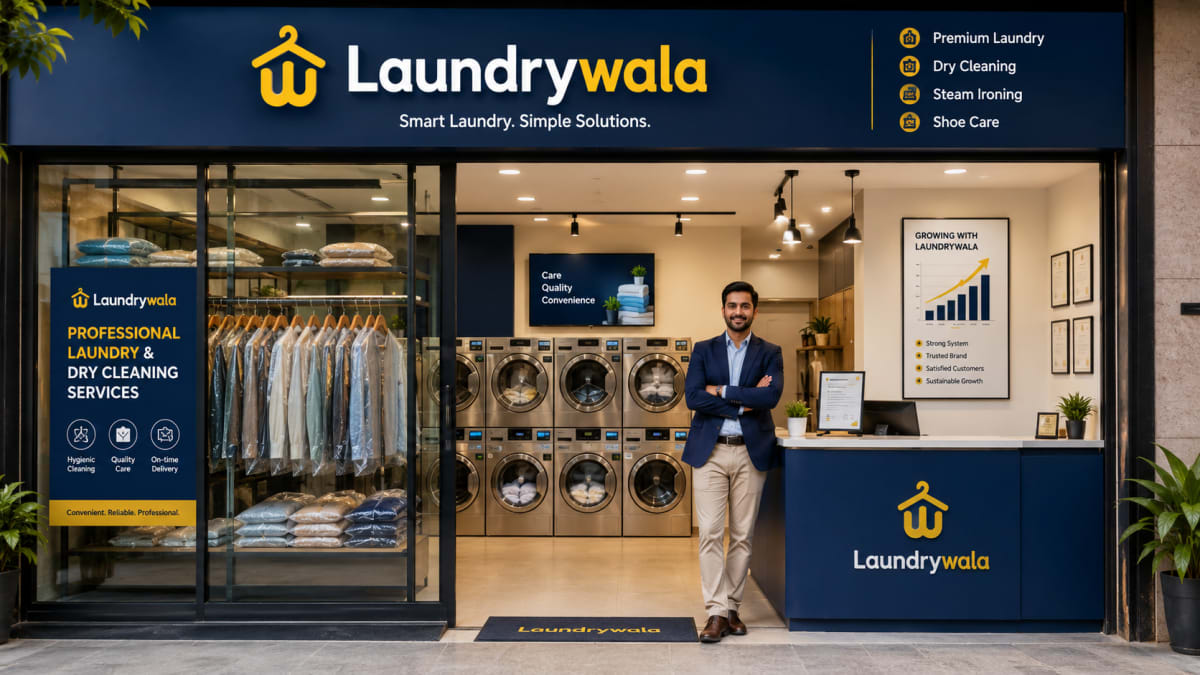
A Laundrywala outlet can serve different customer requirements through:
- Wash and fold
- Wash and iron
- Steam ironing
- Dry cleaning
- Shoe cleaning
- Bag cleaning
- Curtain cleaning
- Carpet cleaning
- Blanket and comforter cleaning
- Wedding-wear and premium-garment care
Customers can review the wider Laundrywala service portfolio before selecting the appropriate cleaning service.
Multiple services can help an outlet avoid depending entirely on low-value everyday laundry. Regular washing can provide order volume, while dry cleaning and specialist services may increase the average bill value.
Technology-Enabled Operations
Laundrywala’s model includes technology for order management, billing, pickup scheduling and customer records. Proper garment tagging and order tracking are important because a single customer order may contain several garments requiring different processes.
Technology can assist with:
- Customer information
- Garment counts
- Order status
- Service selection
- Payment records
- Pickup schedules
- Delivery updates
- Customer follow-ups
- Repeat-order analysis
Software improves visibility, but staff must still inspect, tag and process every garment correctly.
Setup and Training Support
Laundrywala provides guidance in areas such as location assessment, store layout, machinery, branding, staff training, operating procedures and launch preparation.
You can also review the company’s background and service standards on the About Laundrywala page before requesting a commercial proposal.
Laundrywala Franchise Investment Plans
Laundrywala currently presents three franchise formats. The figures below are indicative and may change according to the city, approved property, equipment specifications, taxes, transportation and final commercial proposal.
| Franchise format | Indicative investment | Store area | Staff | Power | Water storage |
|---|---|---|---|---|---|
| Alpha – Basic | ₹13.49 lakh | 200–250 sq. ft. | 2–3 | 8 kW | 1,000 litres |
| Classic | ₹15.99 lakh | 250–300 sq. ft. | 2–3 | 15 kW | 1,000 litres |
| Combo – Premium | ₹20.99 lakh | 300–350 sq. ft. | 3–4 | 16 kW | 2,000 litres |
Alpha – Basic
The Alpha format is designed as a compact retail laundry and dry-cleaning outlet.
Its listed equipment includes a 15 kg LG washer and dryer, an ironing setup and a 4 kW boiler. It may suit an investor targeting a residential neighbourhood with controlled rent and a primarily retail customer base.
The indicative investment is ₹13.49 lakh, while the recommended area is approximately 200–250 sq. ft.
Classic
The Classic format provides additional washing capacity. Its listed equipment includes a 15 kg LG washer-dryer stacker, a 10 kg LG washer-dryer stacker and an ironing setup with a 4 kW boiler.
It may suit areas containing larger apartment communities, working professionals, hostels and consistent household demand.
The current indicative investment is ₹15.99 lakh, with a recommended store area of 250–300 sq. ft.
Combo – Premium
The Combo Premium format is intended for retail orders as well as higher-volume B2B opportunities involving hotels, salons, institutions and other businesses.
Its listed equipment includes an 18 kg Fabcare washer and dryer for B2B processing, a 10 kg LG washer and dryer for retail orders, and an ironing setup with a 6 kW boiler.
The indicative investment is ₹20.99 lakh, with approximately 300–350 sq. ft. of store area.
Calculate the Complete Opening Budget
The franchise-package amount should not be treated as the only amount required to open and operate the outlet.
A practical calculation is:
Total cash requirement = Franchise package + excluded setup expenses + property deposit + pre-opening expenses + working capital + contingency reserve
Depending on the final proposal, investors may need to budget separately for:
- GST
- Machinery transportation
- Property security deposit
- Monthly advance rent
- Electrical-load enhancement
- Plumbing or drainage modifications
- Municipal registrations
- Staff recruitment
- Delivery vehicle or rider arrangements
- Fuel and delivery expenses
- Initial local marketing
- Working capital
- Unexpected site-related expenses
Ask for a line-by-line written cost sheet explaining exactly what is included and excluded. Keep sufficient working capital aside instead of spending the complete budget on machinery and interiors.
Store and Infrastructure Requirements
The selected property should satisfy operational requirements, not merely offer an attractive frontage.
Store Area
Depending on the chosen model, Laundrywala currently recommends approximately 200–350 sq. ft. The space must accommodate:
- Customer counter
- Garment inspection area
- Sorting and tagging
- Washing and drying machines
- Ironing and finishing station
- Clean garment storage
- Packaging materials
- Utility connections
- Staff movement
Electricity
The listed power requirement ranges from approximately 8 kW to 16 kW. Confirm whether the property can obtain the required sanctioned load before signing the lease.
Water and Drainage
A dependable water supply, suitable storage and proper drainage are essential. The current formats list water-storage requirements ranging from 1,000 to 2,000 litres.
Water quality should also be assessed because hardness and mineral content may affect washing quality, chemical consumption and machine maintenance.
Access and Frontage
A ground-floor shop with visible signage and easy pickup access can be more useful than a larger property in an inconvenient location. Delivery staff should be able to collect and dispatch orders without disrupting customers or neighbours.
How a Laundry Franchise Generates Revenue
A professionally operated outlet can earn through several service categories.
Everyday Laundry
Wash-and-fold and wash-and-iron services can create regular household demand. These services generally contribute order volume and repeat business.
Customers can learn about eligible garments through Laundrywala’s professional laundry services.
Dry Cleaning
Suits, sarees, blazers, lehengas, coats and structured garments may require specialised treatment. Dry cleaning can improve the average bill value, although it also demands trained handling and quality control.
Laundrywala’s dry-cleaning services cover selected formal, delicate and premium garments.
Specialist Cleaning
Shoe, bag, curtain, carpet and wedding-wear cleaning can expand the outlet’s revenue mix. These services may be booked less frequently than ordinary laundry, but individual order values can be higher.
Pickup and Delivery
Doorstep collection allows the outlet to serve a wider residential catchment instead of relying only on walk-in customers.
The delivery radius should remain manageable. An excessively wide area may increase fuel costs, delivery delays and rider requirements without generating sufficient order density.
B2B Orders
Potential business clients may include:
- Hotels and guest houses
- Salons and spas
- Gyms and fitness centres
- Restaurants
- Clinics
- Offices
- Hostels and PG accommodation
- Uniform-based businesses
B2B volume can improve machine utilisation, but pricing, payment cycles, fabric condition and delivery commitments must be evaluated carefully.
Profit Margin and Break-Even Planning
Laundrywala’s current planning model presents an indicative net margin range of 22%–30% after key operating expenses and a possible 14–20-month break-even window.
These figures are not guaranteed. Actual profitability depends on:
- Daily order count
- Average order value
- Service mix
- Rent
- Staff salaries
- Electricity and water costs
- Detergent and chemical consumption
- Delivery expenses
- Rewash or complaint rate
- Local marketing cost
- Equipment maintenance
- Discounts
- Customer retention
Instead of asking only, “How much can this franchise earn?”, investors should calculate three scenarios:
| Scenario | Planning approach |
|---|---|
| Conservative | Lower order volume, slower customer growth and higher marketing cost |
| Expected | Realistic local demand and controlled operating expenses |
| Optimistic | Strong repeat business, higher average bill and efficient capacity use |
Break-even should be calculated using actual net operating cash flow rather than total sales.
Monthly operating profit = Revenue − rent − salaries − utilities − consumables − delivery − marketing − maintenance − taxes and other expenses
Do not rely on gross-margin percentages or advertised ROI alone. Request the assumptions behind every projection and compare them with local rents, salaries and customer pricing.
How to Choose the Right Location
Location has a major influence on customer acquisition, delivery efficiency and rent.
A suitable catchment may contain:
- Gated apartment societies
- Working professionals
- High-income households
- Hostels and PGs
- Colleges
- Technology or office parks
- Hotels and guest houses
- Salons and spas
- Healthcare facilities
- Families requiring doorstep service
Evaluate the practical service radius surrounding the store rather than studying the whole city.
Before finalising a property, check:
- Residential population within the delivery radius
- Number and quality of competing laundries
- Current local laundry and dry-cleaning prices
- Monthly rent and deposit
- Road visibility and signage opportunity
- Pickup and delivery access
- Electricity-load availability
- Water supply and drainage
- Space for machinery and garment storage
- Demand for premium and specialist services
Ask the franchise team to review the shortlisted property before signing a long-term lease.
Support Provided Before and After Launch
A franchise should provide support throughout setup and operations rather than ending its involvement after receiving the initial payment.
Laundrywala describes support across three stages.
Before Launch
Support may cover:
- Location and catchment evaluation
- Store-layout planning
- Machine selection
- Branding and interiors
- Vendor coordination
- Setup guidance
- Pre-opening checklist
During Launch
The owner and staff may receive training in:
- Garment sorting
- Tagging
- Fabric identification
- Stain-handling basics
- Wash programmes
- Drying
- Finishing
- Packaging
- Customer handling
- Daily reporting
Launch support may also include brand creatives, local campaigns and assistance with billing, app and CRM setup.
After Launch
Ongoing assistance may include operational reviews, quality-control checks, customer-retention guidance and monitoring of key performance indicators.
Important store-level KPIs include:
- Orders per day
- Average order value
- Repeat-customer percentage
- On-time delivery rate
- Rewash rate
- Complaint rate
- B2B receivables
- Utility cost per order
- Monthly operating profit
Registrations and Business Compliance
The exact registrations depend on the business structure, city, state, turnover and local regulations.
Potential requirements may include:
- Proprietorship, partnership, LLP or company registration
- PAN and business banking arrangements
- GST registration, where applicable
- Shop and Establishment registration
- Municipal trade licence
- Commercial electricity connection
- Employee-related registrations, where applicable
- Local waste-water or environmental permissions, where required
- Insurance for property, equipment and business risks
Eligible micro and small businesses can review the official Udyam Registration portal for MSME registration.
The official GST registration guidance explains the online application process and required business details.
Entrepreneurs can also explore the Startup India scheme and business resources. Eligibility and benefits should always be confirmed from the relevant authority or a qualified professional.
Risks Investors Should Evaluate
A laundry franchise is an operating business, not a guaranteed passive-income investment.
Common risks include:
- Selecting an expensive or low-demand location
- Underestimating working capital
- Hiring more staff than early demand requires
- Inconsistent garment quality
- Delivery delays
- High customer-acquisition costs
- Poor stain documentation
- Garment-mixing or tagging errors
- Machine downtime
- Uncontrolled discounts
- Weak follow-up with dissatisfied customers
- Depending excessively on one B2B client
Investors should also review the franchise agreement carefully. Check territory rights, franchise fees, royalty conditions, renewal charges, equipment ownership, marketing responsibilities, exit terms, dispute resolution and post-termination obligations.
Verbal claims should be included in the written proposal or agreement before payment.
Who Is Suitable for This Business?
A Laundrywala franchise may suit:
- First-time entrepreneurs
- Existing retailers
- Working professionals planning a business transition
- Family-business operators
- Women entrepreneurs
- Property owners
- Investors interested in recurring service demand
- Business owners with access to hotels, salons or institutions
Previous laundry experience may not be essential because training is provided. However, the owner should be willing to monitor operations actively.
The ideal partner should have adequate capital, local market understanding, attention to quality and the discipline to follow established processes.
Steps to Start a Laundrywala Franchise
1. Define Your Total Budget
Separate the franchise investment from property deposit, working capital and contingency funds.
2. Select the City and Catchment
Shortlist residential and commercial zones based on population, competition, rent and delivery potential.
3. Request the Current Proposal
Obtain the latest investment sheet, inclusions, exclusions, agreement terms and city availability.
4. Evaluate the Property
Check area, power, water, drainage, visibility and operational suitability before signing the lease.
5. Review the Agreement
Have a qualified legal or financial adviser review the commercial and contractual terms.
6. Complete Setup and Training
Finalise machinery, interiors, branding, staffing, registrations, technology and operating procedures.
7. Prepare Local Marketing
Create a launch plan covering apartment societies, Google Business Profile, local digital campaigns, referral offers and B2B outreach.
8. Launch and Track Performance
Monitor daily orders, average bill, complaints, repeat customers, delivery timing and monthly cash flow.
To check territory availability and receive the latest commercial proposal, contact the Laundrywala franchise team or call 1800 889 3225.
FAQs – India's Best Laundry Franchise Chain
Straight answers for entrepreneurs evaluating Laundrywala as a profitable laundry business and low investment franchise in India.
Still have questions?
Can't find what you're looking for? Our fabric care specialists and franchise advisors are here to help.